Category: Golden Age Article

Radio’s Most Essential People Countdown #2: Jack Benny

Previous Posts: 3456,78,91012-1114-1316-1518-1720-19,22-2124-2326-2528-2730-2933-3136-34,

39-37,42-4045-4348-4651-4954-5257-5560-5865-6170-66,  71-7576-80,

81-8586-9091-9596-100

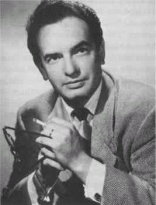
2) Jack Benny

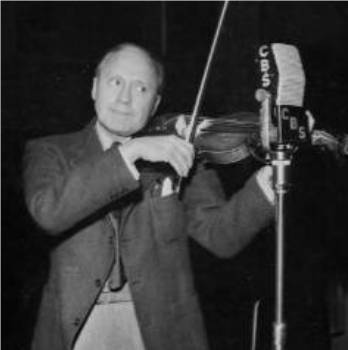
Jack BennyBenny’s radio program was one of its mainstay beginning in 1932 and ending in 1955 and continuing in reruns several years thereafter, while his television career lasted another decade.

Benny was an Americann icon who set the pace for other comedians. His signature gags such as his fudging on his age (always said to be 39), playing the violin, his ego, and more than anything else, his cheapness. made for great comic fodder. Of course, in many ways, Benny’s radio persona was contrary to actual nature. His willingness to play himself as a cheap egotist actually made room for many others to play off of him, and the nature of Benny’s program allowed fellow performers such as Dennis Day, Eddie “Rochester” Anderson, Phil Harris, and Don Wilson to shine and become nationally known figures in their own right.

Benny’s gags were fodder for other comics, particularly his stinginess   In late 30s and early 40s, many radio comics were trying to add it to their own repertoire, but progressed nearly working a joke about Benny being cheap when they could.  Benny was often quite generous with guest appearance and would give life to his “cheap” characterization  with an in-performance. Benny also carried on a memorable on-air feud with fellow comedian Fred Allen for years that also became one of his hallmarks.

Benny’s influence over radio was telling in that his jump from NBC to CBS spurred other performers including his long time friends George Burns and Gracie Allen to make the jump as it became known as a talent raid. At CBS, Benny was the man their line up was built around, at NBC, the focus was on finding some way to compete for ratings with Benny. No other radio entertainer could define the strategies of two networks so well.

Benny was beloved by millions and truly respected by his own industry colleagues.  The idea of the golden age of radio without Jack Benny is almost unthinkable and clearly he belongs near the top of our list.

If you enjoyed this post, you can have new posts about Detective stories and the golden age of radio and television delivered automatically to your Kindle.
Book Review: His Last Bow

His Last Bow was once again intended to be the last Sherlock Holmes Collection by Sir Arthur Conan Doyle. However, it didn’t quite turn out that way. Although he did get Holmes retired, there’d be many more adventures written of previously unchronicled cases.

This book has the fewest stories in it it of all the Holmes collections: seven in British version and eight  if you read the U.S. version. Mostly, it’s a strong collection: “The Adventure of Wisteria Lodge,” “The Red Circle,” “The Adventure of the Bruce Partington Plans,” and “The Adventure of the Devil’s Foot” are as good as any Holmes story out there. The best of these is Wisteria Lodge, there are so many great features in there: a great mystery, international intrigue  and perhaps the most clever official detective introduced in the Holmes Canon.

“The Disappearance of Lady Frances Fairfax,” and “The Adventure of the Dying Detective” are good not great stories and “His Last Bow” is one that’s enjoyable for its sentiment and patriotism far more than its cleverness or any sort of suspense.

The somewhat controversial story “Adventure of the Cardboard Box” was left out of American editions of The Memoirs of Sherlock Holmes because it dealt with marital infidelities. It’s not for this reason that I didn’t enjoy the story . Holmes himself asked not to have his name mentioned in association with it because it was so simple. And perhaps, Watson (or Doyle) would have done better heed it. The problem with the story is that Holmes doesn’t do much and the focus instead becomes on a sensation and sordid crime rather than a mind of great detectives. The results are mediocre at best.

Overall, the book holds up pretty well and shows that Doyle was just as adept at writing great mysteries in the early 1910s as he had been in the 1880s and 1890s which is why he’d find himself writing several more Holmes adventures in the 1920s.
Rating: 4.5 out of 5.0

If you enjoyed this post, you can have new posts about Detective stories and the golden age of radio and television delivered automatically to your Kindle.
Radio’s Most Essential People Countdown #3: Bob Hope

Previous Posts: 456,78,91012-1114-1316-1518-1720-19,22-2124-2326-2528-2730-2933-3136-34,

39-37,42-4045-4348-4651-4954-5257-5560-5865-6170-66,  71-7576-80,

81-8586-9091-9596-100

3) Bob Hope

Bob Hope
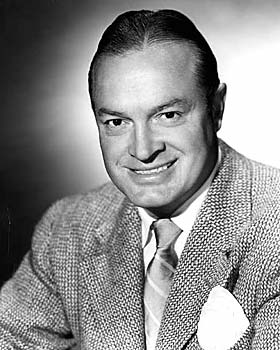
Bob Hope’s radio persona would be glad to have top billing over Bing Crosby (last week’s #4). However, Hope certainly earned the spot.

Hope began his own program in 1939 on the strength of early film success on the Pepsodent Show where he would spend most of his years on the radio. In his early days, his brand of humor frequently bristled the network censors with some of his humor, but this is less remembered  today.

World War II would forever change Hope and how he was perceived by the American people. While World War II brought out patriotism in Hollywood with innumerable celebrities doing their bit to help defeat the Axis, it was Bob Hope who took the lead, visiting troops more often than other. During the war, nearly every week, his program came from an overseas base. In addition to this, he was  a frequent host of AEF programs like Command Performance and GI Journal. 

Hope would have plenty of laughs during his show. However, his closing monologue would often be on a more serious note as an instrumental version of his signature theme “Thanks for the Memories” played, urging Americans earnestly to support worthy causes such as the March of Dimes, the Red Cross, and the Crusade for Freedom. Hope’s passion comes across today unashamed and sincere even many years later. Hope’s rapport with the public made him a trusted and liked personality. In 1945, Lux Radio Theater broke with its tradition of dramatizing plays and movies to dramatize Hope’s book about visiting the troops, I Never Left Home.  He was called upon  in 1950 to do a short four part series on the emerging post-Atom Bomb world called The Quick and Dead. 

Of course, this wasn’t to say Hope became a serious figure. His comedy continued to delight millions. Like many Golden Age comedians, Hope relied on running gags. He began most shows for Pepsodent with a rhyming greeting. Many of the jokes focused on Hope as a “Wolf” even as he advanced through his 40s into his late 50s.  Some radio fans pan hopes Humor as “too topical.” Monologues have that issue, but then so did those of most radio comedians.

What makes Hope well worth listening to is that he was one of radios best ad-libbers, bar none. Hope would even ad-lib his way through radio performances of movies he’d appeared in on Lux Radio Theater and Screen Guild Theater. Hope also had great chemistry with so many great stars of the era. Of course, there was Hope’s longtime friend and occasional partner Bing Crosby, however in his radio days Hope performed with a wide variety of stars including Humphrey Bogart, Chico Marx, Gracie Allen, and Jack Webb.  His ability to play straight man or comic as well as to throw out the script when he had a better idea made Hope a great performer. His charaacter and personality made him a class act that made radio great.

If you enjoyed this post, you can have new posts about Detective stories and the golden age of radio and television delivered automatically to your Kindle.


Radio Drama Review: The Green Valley Line

The Green Valley Line was a syndicated radio drama from the 1930s. Told in 26 quarter hour parts, it tells the story of Bill Reed, the son of a wealthy railroad baron who comes to work for the Green Valley Line, a small western railroad that his father wants to buy out. His decision gains suspicion from locals who support the Green Valley Line as well as the condemnation of those who favor the acquisition as he’s going against his father.

His sincerity becomes clear and that’s important when an injury to railroad superintendent Pop Harkness forces Bill into taking over as acting superintendent of the line. His father and his supporters are determined to take the line by hook or by crook. The daughter of the President of the railroad Carrie Graham initially despises Bill but then at the urging of Harkness becomes a friend and an eventually ally against Bill’s father and her father who is backing the acquisition.

The series was most likely produced in Detroit according to the Radio Goldindex. It featured the voice talents of John Dodd (Tonto from the Lone Ranger) and Bill was played by Rollen Parker who appeared frequently in WXYZ’s famous radio programs The Lone Ranger, the Green Hornet, and Challenge of the Yukon.

There’s much to like about this series. The business story of the Green Valley Line and Bill Reed’s various clever maneuvers make for a solid entertainment with lots of twist. The story’s weak spot is the predictable romantic subplot between Bill and Carrie. That it’s predictable is not the problem, but Bill’s blossoming feelings for Carrie leave him willing to quit his job as Superintendent and leave local investors who supported him in a lurch and allow his effort to fail. This doesn’t make him look good in the eyes of listeners or of Carrie. The romance is pretty badly handled in the last few episodes which is a pretty sorry state of affairs given that the plot was so basic. The romance instead of adding to the story, became a detriment.

But the earliest episodes are good and enjoyable which makes up for the weak romantic plot. For a 1930s syndicated show, it was pretty good.

Rating: 3.5 out of 5.00


You can download episodes of the Green Valley Line from Archive.org

If you enjoyed this post, you can have new posts about Detective stories and the golden age of radio and television delivered automatically to your Kindle.

Radio’s Most Essential People #4: Bing Crosby

Previous Posts: 56,78,91012-1114-1316-1518-1720-19,22-2124-2326-2528-2730-2933-3136-34,

39-37,42-4045-4348-4651-4954-5257-5560-5865-6170-66,  71-7576-80,

81-8586-9091-9596-100

4) Bing Crosby

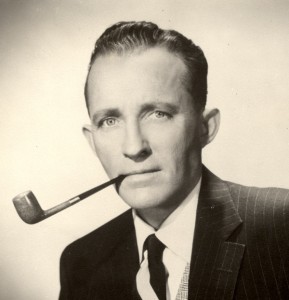
Bing CrosbyFrom the early 30s to the early 50s, no singer had the star power of Bing Crosby. Crosby’s musical talent was well-known. Not only he was a frequent guest on others shows and constantly in demand on record request programs, he had a long line of his own programs including stints hosting the Kraft Music Hall, Philco Radio Time, the Chestfield Program, General Motors, Woodbury, and Ford. His consistent signature song was,  “When the Blue of the Nigh.” Crosby’s popularity also made his films a no-brainer for adaptation to radio.
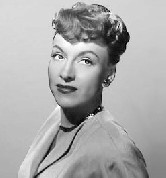
He was a legendary and charismatic crooner who partnered often with Bob Hope on Hope’s programs, Crosby’s programs, and on Command Performance. Christmas time was particularly strong for Crosby as his singing of Adeste Fideles along with a selection of sacred and secular Christmas songs.

As much of an institution as Crosby was at Christmas, the other 364 days a year,  he remained a consistently popular voice throughout radio’s golden age who set a standard that other singers aimed to follow.

If you enjoyed this post, you can have new posts about Detective stories and the golden age of radio and television delivered automatically to your Kindle.


Telfilm Review: Dumb Witness

Dumb Witness was the last episode of the sixth series of Poirot and the series went on a four year hiatus afterwards.

Poriot receives an urgent letter from a woman who fears she will be murderered by her family. Poirot goes to the scene and advises her to make a change to her will. She ends up dying apparently of natural causes, but there’s some suspicious circumstances as two old ladies think there was a supernatural origin. And Poirot finds that the old women’s dog is the key witness in the case.

This was probably my least favorite Poirot mystery of what was a solid sixth series. The Novel Dumb Witness was an expanded version of a short story called, “The Incident of the Dog’s Ball.” The short story actually works quite well, but this expansion really felt like it just made the story drag on rather than adding true meat to it.

However, it must be said that David Suchet turned in a good performance as Poirot in an otherwise forgettable adaptation.

Rating: 3.75 out of 5.0

This post contains affiliate links, which means that items purchased from these links may result in a commission being paid to the author of this post at no extra cost to the purchaser.

If you enjoyed this post, you can have new posts about Detective stories and the golden age of radio and television delivered automatically to your Kindle.

Radio’s Most Essential People Countdown #5: Virginia Gregg

Previous Posts 6,78,91012-1114-1316-1518-1720-19,22-2124-2326-2528-2730-2933-3136-34,

39-37,42-4045-4348-4651-4954-5257-5560-5865-6170-66,  71-7576-80,

81-8586-9091-9596-100


Virginia Gregg

5) Virginia Gregg

Virginia Gregg was many things over radio. She landed recurring roles most often playing detectives’ girlfriends and girl Fridays. She was Nicki Porter to Lawrence Dobkin’s Ellery Queen, Clarie Brooks to Bob Bailey’s George Valentine, she was Helen Asher to Dick Powell’s Richard Diamond, and then she was Betty Lewis to Bob Bailey’s Johnny Dollar.  She was also Miss Wong,  the Chinese Girlfriend of Ben Wright’s Hey Boy on Have Gun Will Travel.

As impressive as these numerous recurring and ongoing rolls were, it barely touches on the depth of what she contributed. She was a true artist, a character actress par excellence. She could play a dozen femme fatales opposite Jack Webb’s Pat Novak for Hire, but also old ladies, heart broken mothers, busybodies, and little girls.

Virginia Gregg was the type of actress that made radio work.  She was the type of professional that radio depended on.  She could counted on to play any role and play it to the hilt. Jack Webb on Dragnet could call on Gregg to be tough as nails, quirky, or heartbroken, and she’d do it. During the Yours Truly Johnny Dollar serials, Gregg appeared regularly. One week she’d play a girl gone wrong, the next she’d play a big and rowdy Irishwoman who ran a dive.

Certainly Gregg wasn’t the only actress who could do this. But she was one of the most prolific, and she was the best. Without her performances, the Golden Age of radio wouldn’t have shined near as much. So she is clearly one of radio’s most indispensable people.

If you enjoyed this post, you can have new posts about Detective stories and the golden age of radio and television delivered automatically to your Kindle.

Book Review: Three Witnesses

This Nero Wofe novella collection published in 1956 contained Nero Wolfe stories originally published in 1954 and 1955.

“The Next Witness” finds Wolfe called as a witness to a peripheral matter in a murder trial. While being out and watching the trial, he becomes convinced that the prosecution’s case is wrong and leaves the courtroom with Archie, with going on the run from the law while Wolfe tries to find the truth.

“The Next Witness” is truly a top notch story and it shows Wolfe at his wiliest and most resourceful as he’s forced to stay in a strange house, travel around in a car, and question witnesses in strange places. The payoff scene in the courtroom is a brilliant strategem.

Rating: Very Satisfactory

“When a Man Murders”-

This is Nero Wolfe’s Enoch Arden case as a millionaire husband returns from after being declared Killed in Action in the Army. However, the wife has a new husband and needs Wolfe’s help in trying to reason with the old one. When the old husband’s found murdered and suspicion falls on the couple that benefits most, Wolfe is hired to investigate. The Enoch Arden plot has been done quite a bit in mystery fiction. This one is fairly well thought out.

Rating: Satisfactory

“Die Like a Dog”

A man accidentally takes Archie’s coat rather than his own. Archie goes to switch coats and finds homicide crawling detectives  all over the scene and given his history, he leaves. However, a dog follows him home.  Wolfe bends over backwards to try and keep the dog while making Archie the one to blame for it. However, Inspector Cramer throws a monkey wrench it when its revealed the dog belongs to the man murdered at the apartment.

This one is good for the characterization as  Wolfe’s interplay with the dog is definitely a humanizing factor. The solution seems pretty simple in retrospect but if you read the whole story with everyone walking around it, it seems clever by the time you reach it.

Rating: Satisfactory

The last two stories are above average but the Next Witness is enough to carry the collection to:

Rating: Very Satisfactory


You can find all the Nero Wolfe books in Kindle, Audiobook, and book form on our Nero Wolfe page.

If you enjoyed this post, you can have new posts about Detective stories and the golden age of radio and television delivered automatically to your Kindle.

Radio’s Most Essential People Countdown #6: Gale Gordon

78,91012-1114-1316-1518-1720-19,22-2124-2326-2528-2730-2933-3136-34,

39-37,42-4045-4348-4651-4954-5257-5560-5865-6170-66,  71-7576-80,

81-8586-9091-9596-100

6) Gale Gordon

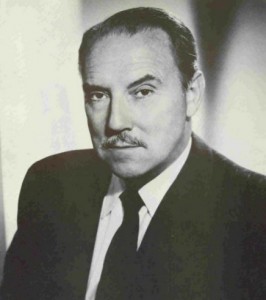
Gale GordonFor fans of classic television, Gale Gordon earned a reputation for playing crochety authority figures. He was the second Mr. Wilson on the classic Dennis the Menace series and in his association with Lucille Ball in programs like Theodore Mooney in The Lucy Show and Harrison Carter in Here’s Lucy.
Some of this began over radio with his role of Osgood Conklin in Our Miss Brooks as Rudolph Atterberry. However as memorable as these roles were (particularly Conklin), Gordon’s repertoire was more multi-faceted than that. He was the first actor to play Flash Gordon over the radio. He played Mayor La Trivia on Fibber McGee and Molly. He also was chosen to play the suave amateur detective Gregory Hood in 1946 for Petri Wine and Mutual. There were countless other appearances in a wide variety of character roles that established Gordon as equally talented as a dramatic and comedic actor on programs ranging from Tarzan to Burns and Allen, and Suspense.

To be sure, his performances as Osgood Conklin were inspired and some of radio’s most hilarious performances, but when taken with the amazing depth and breadth of Gordon’s radio performances, he earn the sixth highest spot on our countdown.

If you enjoyed this post, you can have new posts about Detective stories and the golden age of radio and television delivered automatically to your Kindle.

Telefilm Review: Dead Man’s Folly

In Dead Man’s Folly, Hercule Poirot (Peter Ustinov) and Hastings (Jonathan Cecil) head to a small island where Adrienne Oliver (Jean Stapleton) has set up a murder hunt game but fears a real murder is in the offing. Her fears are confirmed and Poirot investigates to solve this real-life crime.

This was a decent made-for-television film, carried as usual by the talents of Sir Peter Ustinov and the mystery as told by Agatha Christie. Jean Stapleton was kind of hard to believe as Oliver, but perhaps that’s because she’s been typecast in my mind as Edith Bunker. However, that doesn’t detract much from an enjoyable mystery.

It’ll be interesting to see David Suchet’s version of this story next year as it is one of few Poirot mysteries he hasn’t done. Filming is set to begin in May 2013.

Rating: 3.75 out of 5.00

This post contains affiliate links, which means that items purchased from these links may result in a commission being paid to the author of this post at no extra cost to the purchaser.

If you enjoyed this post, you can have new posts about Detective stories and the golden age of radio and television delivered automatically to your Kindle.


Radio’s Most Essential People Countdown #7: William Conrad

8,9, 1012-1114-1316-1518-1720-19,22-2124-2326-2528-2730-2933-3136-34,

39-37,42-4045-4348-4651-4954-5257-5560-5865-6170-66,  71-7576-80,

81-8586-9091-9596-100

7. William Conrad-

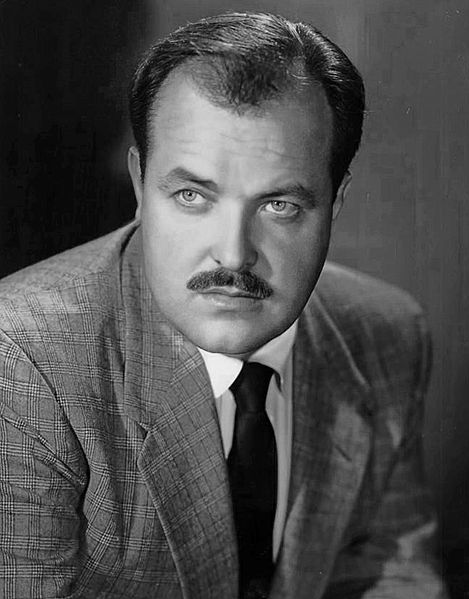
William ConradConrad’s great overarching claim to radio fame is a significant one. He played the role of Marshall Matt Dillon on Gunsmoke for its entire 9 year run. Gunsmoke began its run after radio in 1952 after television had eclipsed radio as a profit making enterprise  Nevertheless, Gunsmoke began its long run and also spawned a slew of new adult Westerns in the latter 1950s and Conrad played a large part in that. He also became a symbol of television’ shallowness when he was denied the ability to continue in the Dillon role on television due to his weight.
However, Conrad was more than just the star of this classic Western. He was also a great character actor often playing heavies or policemen in programs such as Tales of the Texas Rangers, Pat Novak for Hire, The Lux Radio Theater, I Was a Communist for the FBI, and Yours Truly Johnny Dollar among others.  His deep distinct voice also served to make him a good announcer, most notably on Escape and Mr. President.

He was a consummate team player who in radio and every other medium he appeared in, was  a true professional willing to step into any role, no matter how large or small and play it with great talent.  This made Conrad a great career in all mediums, and made his nearly two decades on radio truly phenomenal.

If you enjoyed this post, you can have new posts about Detective stories and the golden age of radio and television delivered automatically to your Kindle.

Radio Drama Review: Powder River, Season One

Colonial Radio Theater’s most successful radio series has been Powder River, which just concluded its six season. This remains an improbable series: A successful western produced at a time when the western genre is practically moribund and the series is produced Boston of all places.

The first fifteen episode season was originally released in 2004. It follows Britt McMasters (Jerry Robbins) and his son Chad (Derek Aalerud) as he starts a new life for himself as a rancher in Claremont, Wyoming near the Powder River in Wyoming. McMasters had been a U.S. Marshal but had retired after an incident he’d rather not discuss.

However, his past will not leave him alone. The series begins with the Ryan gang attempting to kill McMasters, and it becomes clear that it’s either McMasters or the gang.

There is much to like about this first season. Robbins is great as McMasters. In addition the character of Doc (Lincoln Edwards), the town doctor who is even more handy with a gun than he is a doctor’s bag is well-developed and fun. In addition, the show has a great sense and feel of Old West life with a dedication to realism without becoming hopelessly dark. At its best, it feels ike Have Gun Will Travel or Gunsmoke.

At times, this first season does stumble, mainly with stories that just don’t feel right. Episodes that found Chad trying to help a disabled girl with an overprotective mother through riding horses,  or where the McMasters helped a war deserter, or the one where Mark Twain shows up and spouts famous quotes the whole episode were ones I bore more than enjoyed.

However, the show’s inconsistent quality took a decided turn for the best that moved it from 3 stars to 4 stars with the last few episodes that dealt with the resolution of the Ryan gang story line. The last episode had an absolutely stunning plot twist that has to be heard to be believed. It’s an incredible finale.

The series wasn’t originally intended to become the multi-season success it has been. As such, the writers felt free to kill off some significant characters. The old west was a harsh place and that’s definitely reflected in these stories.

Overall, I give it a solid 4.0 out of 5.0 stars.

If you enjoyed this post, you can have new posts about Detective stories and the golden age of radio and television delivered automatically to your Kindle.

Radio’s Most Essential People Countdown #8: Fibber McGee and Molly

Previous Posts:
9, 1012-1114-1316-1518-1720-19,22-2124-2326-2528-2730-2933-3136-34,

39-37,42-4045-4348-4651-4954-5257-5560-5865-6170-66,  71-7576-80,

81-8586-9091-9596-100

8) Fibber McGee and Molly

Fibber McGee and MollyJim and Marion Jordan starred in the roles of Fibber McGee and Molly. Their show was an outstanding comedy hit that introduced Americans to the town of Wistful Vista with its memorable cast of characters. The most memorable was, of course, the lovable blowhard Fibber who was famous for such antics as his never quite clean closet. Their program was one of those most referenced by other comedy programs.
Fibber McGee and Molly was one of the first programs in history to spawn spin-offs with both The Great Gildersleeve and Beulah having their genesis as secondary characters on Fibber McGee and Molly.

The Jordans managed to survive the transition from the depression to World War II to the hopeful post-war era. Along the way, they made some memorable guest appearances including doing an appearance on the Family Theatre as Fibber McGee and Molly and also appearing in totally different characters in a well-done episode of Suspense. While other programs such as Burns and Allen, Life of Riley, and Our Miss Brooks made the move to television, the Jordans kept performing as Fibber McGee and Molly to an ever-shrinking audience in the mid-to-late 1950s as the show became a fifteen minute daily serial and then a series of shorts on NBC’s Monitor program. A television version was tried without them, but the play failed. America would not except substitutes.

With hundreds of episodes in circulation from their SC Johnson Wax sponsored runs, the duo remain one of radio’s most memorable couples to this day.

If you enjoyed this post, you can have new posts about Detective stories and the golden age of radio and television delivered automatically to your Kindle.

Book Review: The Valley of Fear

The Valley of Fear is the last Sherlock Holmes novel. It was originally published in 1915 but is set prior to the events of “The Final Problem.” Doyle ignores at least one fact stated by Watson in, “The Final Problem” where Watson claims not to have heard of Moriarity. Here, Holmes introduces Watson far before that as the two go to a castle to investigate the murder of a mysterious American.

The mystery at the castle is well-laid out with a lot of intriguing clues and some nifty deduction. However, the Holmes portion of this story is fairly light. It reads like a slightly longer Short Story rather than a novel. The rest of the novel, much like in A Study in Scarlet is consumed by a look at the back story of the crime which began in America.

The idea of solving a mystery and then telling us the story behind the crime is rarely a good writing method. I had to really slog through Doyle’s use of in A Study in Scarlet. I put the book aside when I came on it when a child and didn’t pick it up for 20 years. However, this story is more interesting with its focus on the Scowrers, an American secret society that terrorized Pennsylvania and a mysterious stranger that joined them. It was quite riveting reading, so I didn’t mind the digression much.

However after that great story, the ending of the book left a bad taste. The 1935 movie, The Triumph of Sherlock Holmes was based on this story but gave a radically different end and with good reason. Without spoiling the end I will say, that  for the first time that for all concerned, everyone would have been better off had Holmes not investigated the case.

Rating: 4.0 out of 5.0

If you enjoyed this post, you can have new posts about Detective stories and the golden age of radio and television delivered automatically to your Kindle.

Radio’s Most Essential People Countdown #9

Previous Posts: 1012-1114-1316-1518-1720-19,22-2124-2326-2528-2730-2933-3136-3439-37,

42-4045-4348-4651-4954-5257-5560-5865-6170-66,  71-7576-8081-8586-9091-9596-100

9) Elliott Lewis

Elliott LewisLewis was often known as Mr. Radio. His career over the air was multi-faceted and has left an indelible mark. He was a talented dramatic actor. He played Captain Philip Kearney in the well-remembered Voyages of the Scarlet Queen. He also took his turn as a radio detective in both The Casebook of Gregory Hood and played Archie Goodwin in Mutual’s Amazing Nero Wolfe, and then starred with his then-wife Cathy Lewis in On Stage which pushed him into a wide variety of genres.

He was also a great comic actor, providing fantastic character work on Burns and Allen, in addition to enjoying a memorable recurring role on the Phil Harris and Alice Faye show.

Yet, with all that said, Lewis did not particularly enjoy acting. He wanted to produce and direct radio. In the 1950s, this happened as he served as producer/director of Broadway is My Beat, a program that captured the full flavor of New York’s diverse population and where characters often spoke in memorable  and brooding poetry. He took the helm at Suspense and pushed the show in different directions including adapting Othello and the Moonstone in multi-part episode, doing a two part episode that proposed an ending to Charles Dickens’ unfinished novel The Mystery of Edwin Drood, and giving guest spots to comedy actors like Bob Hope and Jack Benny who rarely got dramatic roles.

While he worked in television, his dedication to radio and his reputation for excellence continued. When Rod Serling experimented with radio drama in 1973 with his Zero Hour  series, Lewis once again found himself as producer/director.  And he also got the call for 1979’s Sears Radio Theater. 

Elliot Lewis, a talented actor, and great producer of radio dramas well deserves his ranking as one of radio’s ten most essential people.

If you enjoyed this post, you can have new posts about Detective stories and the golden age of radio and television delivered automatically to your Kindle.