Blackie is kidnapped for his knowledge where stolen loot is and it’s a race against time for Mary, Shorty, and Inspector Farraday to find him.
Original Air Date: November 22, 1945
Click here to download, click here to add this podcast to your Itunes, click here to subscribe to this podcast on Zune, click here to subscribe to this feed using any other feed reader.
A bank teller confesses to stealing $20,000 to secure the release of his kidnapped wife.
Original Radio Broadcast Date: May 12, 1950
Originating from Hollywood
Starring: Larry Thor as Lieutenant Danny Clover; Charles Calvert as Sergeant Gino Tartaglia; Jack Kruschen as Sergeant Muggavan; Howard McNear; Joseph Granby; Virginia Gregg; Hal Marsh; Marlene Ames
Dragnet has a reputation for its no-nonsense, tough-on-crime stories. Particularly in the 1960s, Sergeant Joe Friday was known for bringing down the hammer on scummy criminals, which was particularly cathartic in the midst of rising crime. Friday told off criminals in a satisfying way, as when he confronted a racist child molester. “Now you listen to me, you gutter-mouthed punk. I’ve dealt with you before, and every time I did, it took me a month to wash off the filth.”
Yet Dragnet was dedicated to realism and reality, which is often more complex in the ways that human brokenness can lead to crime. Among the perpetrators Sergeant Friday came upon were kids with negligent parents, desperate people, lonely people, and others who’d just lost their way. Despite the pop culture image, Friday didn’t try to throw the book at everybody, and the series didn’t try to make the audience hate them. There are many more examples from both the 1960s TV series and the original radio and TV series of criminals getting a more sympathetic portrayal.
Below are my Top Five. Note when I refer to Friday’s partner, he had one partner in the radio version and another in the TV version.
Spoilers ahead for programs that were all broadcast more than 50 years ago.
Mrs. Sterling (Peggy Webber) isn’t an obvious choice for a sympathetic criminal. She is the well-dressed wife of a wealthy doctor who commits a string of acts of shoplifting that throws suspicion on an innocent sales associate and costs that sales associate her job. When she finally confesses, she reveals that her shoplifting is part of a long-running kleptomania that is aggravated by her loneliness and feelings of low self-esteem. After telling her story, she asks Friday if there is an answer. He laments that there is, but she won’t find it in jail.
Stover (Tim Donnelly) commits a series of burglaries of superhero movie memorabilia. He is in costume as “The Crimson Crusader” and claims to be such. The costume looks silly, as it reflects both being homemade and a bit of 1960s color palette. It is only under questioning that Stover reveals what drove him into a fantasy world and a life of crime. He reveals that he was abandoned by his father and was bullied and beaten up in school. He says the pain didn’t bother him as much as the fact that he hadn’t done anything. He was a fat kid. “Why should people hate a kid for being fat? It’s hard enough being a fat kid without people hating you for it.”
Lewis (Virginia Gregg) reports that she found a seven-week old baby that had been abandoned by his mother on a bus Lewis had been riding from Phoenix. Friday and his partner investigate and find the truth: the young mother was invented. The driver tells them that Lewis got on the bus with the baby. They confront her with the evidence and she tells them what happened. She had been married to an Army Captain who left her alone when he went overseas. She had gone to a party and ended up having one night stand that led to the pregnancy. She had to choose between her husband and her baby. She asks Friday to help tell her husband about what happened and he and his partner agree to help.
Friday and Smith are searching for a burglar who has committed eighteen small burglaries and leaves behind a bottle of milk at each robbery. The culprit turns out to be a nearly fifteen-year-old boy named Elroy Graham (Sammy Ogg). He refuses to talk until he can be assured he’ll appear in the newspaper. One of the other officers pretends to be a newspaper reporter. Eventually, he breaks down and tells his story in tears. He has been bullied by the other kids because he’s small (4’7″, 85 pounds). The only way he could think of to gain respect was do something big, and the only he could think of was the burglaries. “I didn’t mind the kids saying I was little, but I didn’t want them to think I was small.”
Friday and his partner are called to a hospital where a baby has been kidnapped from a nursery. They get a few tips and are able to locate the baby. A Mrs. Salazar (Peggy Webber) had taken the baby from the hospital and claimed him as her own. They arrive at the Salazar home to find a party going on for the baby’s baptism. When confronted, Mrs. Salazar reveals what had happened. She and her husband had gone through more than a decade of infertility, and finally got pregnant. Her husband (Harry Bartel) had to continue to work but sent her to a relative in Phoenix to have the baby because he thought the climate would be better. However, the baby died at birth and she feared having to tell him what happened, when she walked by the hospital and saw her chance due to a hospital security lapse.
Webber turns in a beautifully tragic performance, and Bartel deserves plaudits for his performance in the TV version as he conveys Mr. Salazar’s heartbreak that he doesn’t really express verbally, as he’s trying to be there for his wife. It’s one aspect that the TV version offers that the radio performance can’t.
Of course, these sort of episodes could stir up controversy. Some accused the TV version of The Big Show of condoning adultery.
None of these episodes pretends the crimes committed were right or somehow excusable. Dragnet maintained a strong moral core throughout its radio run and both TV runs. However, the series also reflected compassion and understanding for those whose crimes were the result of mental disturbances and human frailty. Dragnet saw no contradiction between those two ideas.
James Earl Jones passed away on September 9th. He was a part of American culture in so many ways. His voice was Darth Vader and Mufasa, and his “People Will Come” speech from Field of Dreams is something every good baseball fan watches every year.
Yet there were other roles. One of my earliest experiences with James Earl Jones was in the 1980s “Mathnet” sketch on PBS’ Square One TV, where Jones plays Chief Thad Green. These programs helped build my love of mysteries. I decided to review one of these cases that made its way onto the Internet.
Background:
Square One TV aimed to teach kids mathematic principles through a series of sketches. These included game shows, sitcom parodies, a Pacman-themed video sketch called “Mathman”, an animated do-gooder called Dirk Niblick, and there was even music videos. Who could forget the Meatloaf-inspired 8% of My Love?
But the segment I loved the best, and which came to dominate the show in its later seasons was “Mathnet.” This Dragnet pastiche features two mathematicians who use math to solve criminal cases. The narrator/Joe Friday parody was Kate Monday (Beverly Leech). In later seasons, she’d be replaced by Pat Tuesday (Toni Di Buono). The partner throughout was Office George Frankly (Joe Howard), who leaned into the zaniness Harry Morgan brought to the role of Bill Gannon. Jones played their boss, Chief Thad Green.
The character’s name is a major Easter egg for fans of the original Dragnet. The name of the second boss on the Dragnet radio series and during the first Dragnet TV episode in 1951 was Thad Brown. This indicates the level of awareness and respect the creative team had for the source show, even though they were making a kids’ TV sketch.
“The Problem of the Passing Parade” was aired as a 9-minute segment on each daily episode of Square One between February 9 and February 13, 1987. The program begins when Green asks the two mathematicians to help him use some math to plan the logistics for a parade to honor music legend Steve Stringbean (a Bruce Springsteen knock-off played by Alan Schrock). They work out various aspects of security and crowd control using math, but then get word that Stringbean has been kidnapped. With the aid of a young eyewitness, and drummer nicknamed Rimshot (Andre Gower), who is a friend of the kidnapped superstar, they set out to solve the case.
Educational Value:While I was very entertained by the series as a kid, watching it as an adult nearly forty years later, I realized, “They were teaching us some things.” Some of the mathematics in this particular episode may have been a bit over viewers’ heads, likely with the hope that they would retain them long-term as they dealt with some of the mathematics of music and the chromatic scale. But for the purpose of the episode, they make it simple enough that your average elementary school kid can follow it. Beyond just the type of math, the episode teaches problem-solving skills. It also introduces kids to the ideas of databases and gives an understanding of how those work, which is something that would become very relevant in the lives of many viewers. In addition, the whole episode makes math look like something relevant that viewers would use in their everyday lives, without being preachy about it. It’s a very solid and worthwhile approach that still stands up.
Comedy: Joe Howard is a delight as George Frankly, making the character hilarious and lovable. While he’s a bit kookier than Gannon, that works for fine on children’s television. Yet he’s never too wacky, can contribute to the problem-solving and knows his math. However, whenever they’re not calculating, George can deliver the most unexpected lines as Kate Monday somehow tries to keep the case moving along despite George’s beautiful strangeness, such as when he does an oral recitation of “I Love a Parade.”
Kate Monday begins segments after Monday by saying they’re watching clips from the previous day’s show, which is an amusing bit of fourth wall breaking.
The Mystery: The case has a reasonable benefit. Like Dragnet, it’s a procedural approach, as they use different mathematical methods and follow clues in order to locate Steve Stringbean. One of the key clues involves touch-tone dialing, which many children of the 1980s and 1990s might appreciate, but might be unfamiliar to more recent arrivals to the planet. Beyond that, it’s a good mystery story that, due to the nature of being told in nine-minute segments, requires big cliffhanger moments every few minutes.
The episode also captures some of the key stylistic beats of Dragnet without becoming farcical about it. Two scenes in particular stood out: a press conference in Green’s office where they speak to reporters about the case, and the capture of the criminals. This was a series that (when it wanted to) could really capture the cadence of the show was imitating.
The Chief: Given that Jones’ passing led to me taking this trip down memory lane, I focused a bit more on his performance. Chief Green, like the captains on the old Dragnet series, has the job of being the voice of authority, and the one who assigns cases to our heroes. In this episode, Green also interacts with the press. Jones was a pro and he delivers everything you could ask for. At this point in his career, he had already won a Grammy, a Tony, and a Golden Globe, and gotten nominated for an Emmy and Oscar. He was arguably overqualified for the part, but still, he adds an air of legitimacy to the proceedings.
Negatives: If there is one part of the proceeding that’s a bit off, it’s Rimshot, in particular, some of his dialogue, which seemed weirdly anachronistic and unnatural. It feels like dialogue from the late 1950s or 1960s, not the 1980s. For me, this sounded a discordant note.
Overall thoughts: This is a fun “Mathnet” story that has all the elements that would make it a beloved favorite that connected with so many viewers. It’s a great mix of math, mystery, and clever nods to Dragnet. Some elements (such as the evolution of databases and telephone technology) do make the story a bit of a cultural artifact that shows how things used to be done rather than providing insight into the way things are currently done. However, it also represents an approach to educational TV that’s not often taken in the 21st century and deserves another look.
Hugh Drummond’s wedding is delayed yet again when he has to go to Africa to rescue Colonel Nielsen. Join us as Captain Drummond navigates a series of comedic and thrilling events leading up to his wedding day, involving missing trousers, kidnapped colonels, and a daring rescue mission in Africa. With stellar performances from HB Warner, Heather Angel, J. Carrol Naish, and a young Anthony Quinn, this episode is packed with action, humor, and unexpected twists. Tune in for a delightful mix of suspense and comedy!
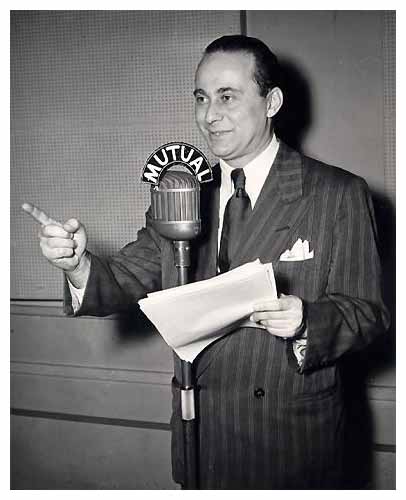 Blackie is kidnapped for his knowledge where stolen loot is and it’s a race against time for Mary, Shorty, and Inspector Farraday to find him.