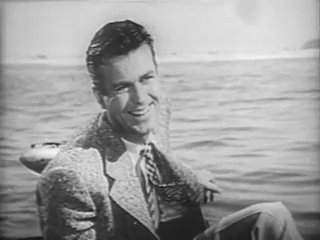
Mr. and Mrs. Blandings: Twin Oaks Lodge (AWR0225)

Amazing World of Radio
A stressed-out Jim and Muriel take a vacation to the site of their honeymoon.

Original Radio Broadcast Date: April 8, 1951

Originated from Hollywood

Starred: Cary Grant as Jim Blandings, Betsy Drake as Muriel Blandings

Go to http://amazing.greatdetectives.net to subscribe to the podcast.

Brought to you by the support of our Patreon listeners…http://patreon.greatdetectives.net

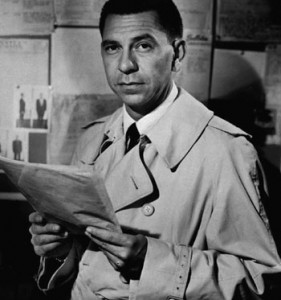
Dragnet: The Big Book (Encore) (EP4127)

Jack Webb

Originally Released 2,000 days after the Podcast Launched (April 18, 2015)

Today’s Mystery:

Friday and Romero investigate the distribution and sale of pornography in public schools.

Original Air Date: April 6, 1950

Originated from Hollywood

Starred: Jack Webb as Joe Friday, Barton Yarborough as Ben Romero

Check out all of our past series at https://biglist.greatdetectives.net

Subscribe to our Dragnet Podcast Feed.

Become one of our monthly patreon supporters at patreon.greatdetectives.net

Support the show on a one-time basis at http://support.greatdetectives.net.

Mail a donation to: Adam Graham, PO Box 15913, Boise, Idaho 83715

Take the listener survey at http://survey.greatdetectives.net

Give us a call at 208-991-4783

Follow us on Instagram at http://instagram.com/greatdetectives

Follow us on Twitter @radiodetectives

Join us again tomorrow for another detective drama from the Golden Age of Radio.

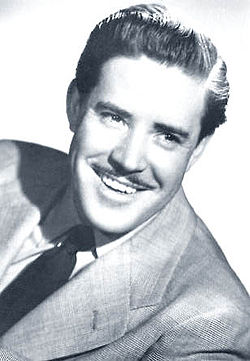
Nick Carter: Drums of Death (Encore) (EP4126)

Lon ClarkOriginally Released 1,501 days after the Podcast Launched (December 5, 2013)

Today’s Mystery:

A wealthy woman comes to Nick because she has a problem with her doctor – who is a witch doctor.

Original Radio Broadcast Date: March 25, 1945

Originated from New York

Starred Lon Clark as Nick Carter

Check out all of our past series at https://biglist.greatdetectives.net

Subscribe to our Nick Carter podcast feed.

Become one of our monthly patreon supporters at patreon.greatdetectives.net

Support the show on a one-time basis at http://support.greatdetectives.net.

Mail a donation to: Adam Graham, PO Box 15913, Boise, Idaho 83715

Take the listener survey at http://survey.greatdetectives.net

Give us a call at 208-991-4783

Follow us on Instagram at http://instagram.com/greatdetectives

Follow us on Twitter @radiodetectives

Join us again tomorrow for another detective drama from the Golden Age of Radio.

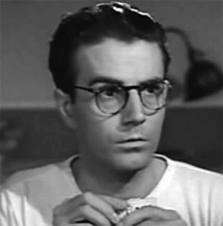
Frank Race: The Adventure of the Hackensack Victory (Encore)

Tom Collins

Originally Released 1,001 days after the Podcast Launched (July 23, 2012)

Today’s Mystery:

Frank is brought in when a freight company belonging to a wealthy family has an undue disappearance.

Audition Date: February 1949

Originated from Hollywood

Starred: Tom Collins as Frank Race, Tony Barrett as Mark Donovan

Check out all of our past series at https://biglist.greatdetectives.net

Subscribe to our Frank Race podcast feed.

Become one of our monthly patreon supporters at patreon.greatdetectives.net

Support the show on a one-time basis at http://support.greatdetectives.net.

Mail a donation to: Adam Graham, PO Box 15913, Boise, Idaho 83715

Take the listener survey at http://survey.greatdetectives.net

Give us a call at 208-991-4783

Follow us on Instagram at http://instagram.com/greatdetectives

Follow us on Twitter @radiodetectives

Join us again tomorrow for another detective drama from the Golden Age of Radio.

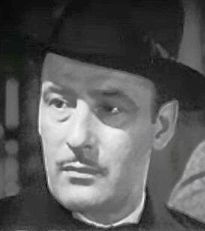
Sherlock Holmes: The Singular Affair of the White Cockerel (Encore) (EP4124)

Tom Conway

Originally released 500 days after the podcast Launched (March 26, 2011)

Today’s Mystery:

While Sherlock Holmes is retired on his bee farm, he is asked to investigate a missing chicken. He finds that the case is far more serious than he first thought, as a human life is at stake.

Original Radio Broadcast Date: December 28, 1946

Originated from Hollywood

Starred: Tom Conway as Sherlock Holmes, Nigel Bruce as Doctor Watson

Check out all of our past series at https://biglist.greatdetectives.net

Subscribe to our Sherlock Holmes feed

Become one of our monthly patreon supporters at patreon.greatdetectives.net

Support the show on a one-time basis at http://support.greatdetectives.net.

Mail a donation to: Adam Graham, PO Box 15913, Boise, Idaho 83715

Take the listener survey at http://survey.greatdetectives.net

Give us a call at 208-991-4783

Follow us on Instagram at http://instagram.com/greatdetectives

Follow us on Twitter @radiodetectives

Join us again tomorrow for another detective drama from the Golden Age of Radio.

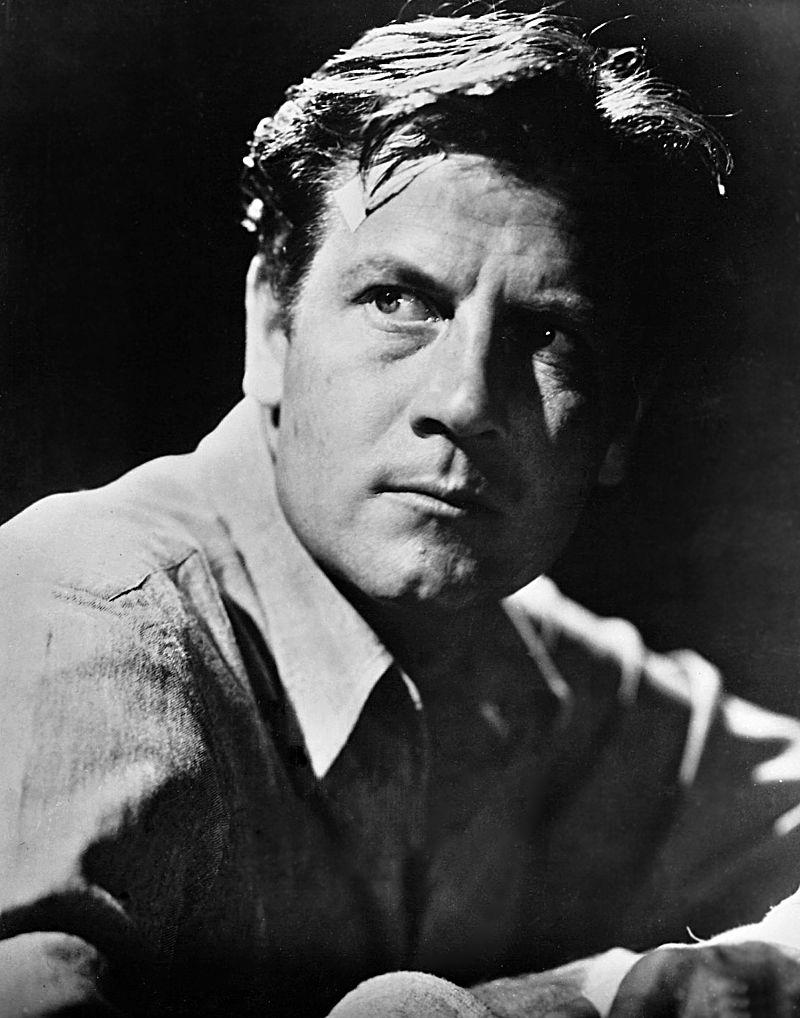
Tales of the Texas Rangers: Displaced Person (EP4124)

Today’s Mystery:

A mother and her son find an unidentified woman dead in the woods.

Original Radio Broadcast Date: August 31, 1952

Originiated from Hollywood

Starred: Joel McCrea as Jace Pearson, Tony Barrett, Virginia Gregg, Richard Beals, Herb Ellis, Henry Roland, Dan Riss

Become one of our monthly patreon supporters at patreon.greatdetectives.net

Support the show on a one-time basis at http://support.greatdetectives.net.

Mail a donation to: Adam Graham, PO Box 15913, Boise, Idaho 83715

Take the listener survey at http://survey.greatdetectives.net

Give us a call at 208-991-4783

Follow us on Instagram at http://instagram.com/greatdetectives

Follow us on Twitter @radiodetectives

Join us again tomorrow for another detective drama from the Golden Age of Radio.

The Bob Bailey Matter, Part Four

Continued from Part Three

“You’re not Johnny Dollar.”

The words had to sting. According to Bailey’s daughter, Roberta, Bob Bailey was given this message by CBS Television producers who had flown him across the country to New York to talk about a pilot for a Yours Truly Johnny Dollar television program. Bailey was taken aback. “I am. I’ve been.”

He was then told that Johnny Dollar was six foot tall and 200 pounds. Bailey stood at five feet, nine and a half inches tall, and weighed all of 150 pounds. Unlike the previous Let George Do It pilot, CBS didn’t even bother with any test footage but instead sent Bailey packing. The TV pilot had been announced in Billboard on November 17, 1956, after the end of the serial run, with a script by E. Jack Neumann. But Bailey not fitting the expectations of how a TV hero should look, and the paradoxical fact that Bailey’s radio performance is what made a TV show plausible, essentially ended the project for the time being. In 1962, Blake Edwards, who wrote for the radio series during the Lund era, would produce a TV pilot, but it would never be aired.

Bailey was not the only talented radio actor to be shafted for looks. William Conrad was brilliant as the voice of Matt Dillon on radio’s Gunsmoke but TV executives rejected Conrad and the rest of the radio cast in favor of a completely new cast led by James Arness. The TV cast was talented and lived up to Hollywood’s superficial expectations. Conrad didn’t land a lead role on 1971. In the intervening years, he got away from the superficial life in front of the camera by forging a career as a successful TV producer/director, as well as being a narrator on various shows, including The Adventures of Rocky and Bullwinkle and The Fugitive.

As we talked about in the previous installment, this was the sort of career change Bailey wanted for himself, and he thought that writing scripts would get him there, and, after his disappointment with Johnny Dollar, he hadn’t quite let go of the idea. He and writing partner Hugh King wrote nine scripts of the Canadian TV series Hawkeye and the Last of the Mohicans, which was also syndicated in the US. The series is remembered for having a more realistic view of America and Native Americans than most other programs of the time.  In addition in a 1957 interview with Zuma Palmer, there were two other projects* mentioned that were not discussed in Part Three.

First, it’s stated that Bailey and King had written thirteen episodes (or one third of a typical syndicated TV season of the time) of a series called The Phantom Pirate. The odd thing about this is that there was a pilot for a series called “The Phantom Pirate” which starred Robert Stack and was produced back in 1952** but no record of a latter project. It’s possible that there had been an attempt to revive the concept that fell through. Regardless, whatever work Bailey and King did on the series didn’t make it to screen.

The same would be true of a film project for RKO, Below the Timberline. There’s no record of the film being made, but that’s no surprise. The situation at RKO had deteriorated. Six months after the release of Underwater! and after a lot of corporate drama, Hughes sold RKO to General Tire, who did their best to revive the studio. But by 1957 General Tire had begun a slow process to shut down and sell off existing productions to Universal. It’s quite possible that Bailey and King had sold another story to RKO, but in all the chaos, it never made it to the production stage.

From all appearances, Bailey’s scriptwriting efforts petered out. He wrote the 1957 Yours Truly Johnny Dollar Christmas radio episode, “The Carmen Kringle Matter”, under the pen name Robert Bainter and wrote one more script for Fury in 1958. There’s no record of him writing further.

In the interview with Palmer, Bailey wondered if he’d have had more success if he’d had greater focus. Bailey was a creative person, but that creativity flowed in a lot of directions. He built early American furniture and even sold some pieces. He’d painted and been encouraged to show work at an art gallery. He’d often take over the kitchen on a whim to try out a recipe. Bailey wasn’t cut from the same cloth as Hollywood workaholics like Jack Webb, who put in ridiculous hours on all the TV and film productions he made. Bailey, at least in 1957, was content with this.  “If I would concentrate on one field, I would probably go further, but being creative in several, I feel, enriches my life.”

The radio show continued as a mostly self-contained half-hour series airing on Sunday evenings, but with several recurring characters both in terms insurance agents and eccentric company clients that wanted Johnny Dollar’s services. The series didn’t land a sponsor and the show’s budget was reduced, which meant that the series eventually couldn’t pay for the high caliber of writers who wrote the serials. Eventually, Jack Johnstone, who didn’t have any writing credits prior to Johnny Dollar, began scripting all the episodes. CBS moved away from the single-sponsor model to taking multiple commercial sponsors. While this would pay the bills, the number of commercials led to a reduction in the actual space to tell a story. Sometimes, Johnstone struggled with only 18-19 minutes. He liked stories that featured little details that made them realistic, having interesting characters, comedy, and heartfelt moments. Sometimes, Johnstone couldn’t do everything he wanted and tell a compelling mystery story too. Still, the audience came back and much of that came down to Bailey, whose performance never faltered.

As Bailey’s scriptwriting waned, he took on more screen acting work. He had a small part in the 1958 film The Line Up, a noir that was connected to the TV and radio show of the same name. He also made his first two confirmed television appearances*** in two separate anthology series. In 1959, Bailey appeared in the first episode of the Mike Connor-led crime drama Tight Rope, and in 1960, he appeared on M Squad.

September of 1960 would mark Bailey’s fifth year as the star of Yours Truly Johnny Dollar, and the series did something unusual: it turned the episode “The Five Down Matter” into a celebration in which several of the series’ recurring characters threw a party for Johnny. The uninformed observer who listened to the episode out of its context could be forgiven for finding it cheesy and self-indulgent. It was also unusual for the Golden Age of Radio, where if an honor or a milestone were honored, it would be marked by the announcer or occasionally a guest giving a thirty-second presentation and the star saying a brief thank you.

Yet, in context, it was entirely appropriate. The past five years had been an achievement Golden Age radio programs were beginning canceled left and right. New programs had struggled to get started. The idea that the relaunched Yours Truly Johnny Dollar would still be standing in 1960 was worth celebrating. The series also stood out because it was neither a Western nor a daytime soap. “The Five Down Matter” was a love letter to loyal listeners, to the supporting players who created memorable recurring characters, and of course, to Bob Bailey himself.

Also, if “The Five Down Matter” seemed like a lot of pomp and circumstance, it may have been because Johnstone knew that if the show ended, it would be unceremonious. I doubt that, when Johnstone wrote the script, he knew what fate exactly awaited the series. However, the brief recession of 1958 had hastened the end of the Golden Age of Radio and led to lots of discussions about the future. In September, there was an affiliates meeting and then CBS management began to discuss how to enact a new plan.

In October, the producers of all of CBS’ soaps were given a month to resolve all of their long-standing storylines and bring their shows to a conclusion. Have Gun Will Travel and Suspense were canceled. The radio version of Gunsmoke would continue. Yours Truly Johnny Dollar would also continue, but in New York rather than in Hollywood. Bob Bailey declined to move his family to New York. Given the general trajectory of radio that would lead to the end of dramatic radio less than two years later, it’s hard to imagine a scenario where he’d have agreed to the move. On November 27, 1960, the last Hollywood episode of Yours Truly Johnny Dollar aired. It ended with no acknowledgment of Bailey’s years on the show or notice of a new actor taking over the role next week.

The casual radio listener who didn’t pay attention to radio news would tune in the next week to find a young man named Bob Reddick playing Johnny Dollar.

After Radio

Bailey continued to work on-screen though less so than many of his former radio peers. According to IMDB, Bailey made three TV guest appearances in 1961****. Compare that to nine for Gerald Mohr or more than a dozen by Herb Vigran. In 1962, Bailey had a short uncredited role in the film The Bird Man of Alcatraz and also made a guest appearance on 87th Precinct. In 1962 and 1963, Bailey had his only recurring TV role, playing a judge in three different episodes of NBC’s legal drama Sam Benedict, which starred fellow former Johnny Dollar Edmond O’Brien.

The radio listener who had been a fan of Bailey and caught one of his early 1960s TV appearances might have smiled on hearing Bailey’s familiar voice and imagined he was doing well after the end of the Golden Age of Radio. This couldn’t have been more wrong. Bailey was dealing with more than career disappointments.

His life was falling apart.

In 1961, his nine-year-old son died. In 1962, his quarter-of-a-century marriage came to an end. Bailey, who was secretly an alcoholic, and had been an AA member for twenty-two years, gave up his sobriety and began to drink heavily. We don’t have enough information to understand how each of these things fed into each other. What we do know is that Bailey’s life headed downhill fast.

His daughter Roberta lost touch with him after the divorce. But that wasn’t the last the world heard of Bob Bailey. He made one final uncredited appearance in the 1964 Disney film A Tiger Walks. The film began shooting on May 13, 1963, a month before Bailey’s 50th Birthday.

Bailey’s fifth decade had begun with a family trip to Hawaii and a promise of an exciting new career in screenwriting. Even though that hadn’t worked out, he’d done the best work of his career, but two and a half years after he left Yours Truly Johnny Dollar, Bailey had lost everything: career, family, home, and car. Reviewing stills of Bailey, it was clear that the hardness of the years had taken a toll, as he looked far older than fifty.

Around the time of his fiftieth birthday, in the few weeks that A Tiger Walks was in production, Bob Bailey went to the Disney movie lot and filmed his last acting role, likely in one day, certainly no more than two.

And then, as far as anyone who cared about him knew, Bob Bailey dropped off the face of the Earth.

Concluded in Part Five

Next time: A comeback, another tragedy, gratitude, and then comes the Internet.

*Palmer’s article also mentioned The Big Rainbow and Underwater! as separate projects when “The Big Rainbow” was the story that was adapted into Underwater!

**One source suggested that producer William Broidy intended to make a series about the history of piracy. In Pioneers of B Television by Richard Irvin, it’s stated that the Phantom Pirate “fought for justice and thwarted criminals on the high seas’: which suggests a slight lack of understanding of the nature of pirates!

***Prior to 1958, IMBD credits Bailey as appearing in a 1954 episode of Mr. and Mrs. North, but the character listed did not appear in that episode. It also lists a 1957 episode of the TV version of The Line-Up, but that appearance has not been verified.

****One of the three programs Bailey appeared in during 1961 was the pilot episode of the short-lived crime program The Asphalt Jungle. Additional footage was shot to extend the runtime and turned into the movie The Lawbreakers which was released in Europe and Mexico starting with West Germany in August 1961. An earlier version of this article stated Bailey made four TV appearances in 1961.
Yours Truly Johnny Dollar: The Fathom Five Matter, Episodes Three, Four, and Five (EP4123)

Bob Bailey

Today’s Mystery:

Johnny is convinced that a struggling businessman, who disappeared after a boat caught fire and sunk, is alive.

Original Radio Broadcast Dates: February 29, March 1 and 2, 1956

Originated from Hollywood

Stars: Bob Bailey as Johnny Dollar.

When making your travel plans, remember http://johnnydollarair.com

Take the listener survey at http://survey.greatdetectives.net

Give us a call at 208-991-4783

Follow us on Twitter @radiodetectives

Join us again tomorrow for another detective drama from the Golden Age of Radio.

Philo Vance: The Whirlaround Murder Case (EP4122)

Today’s Mystery:

Philo investigates the murder of a carnival concessions operator.

Original Radio Broadcast Date: May 30, 1950

Originated in: New York City

Starred: Jackson Beck as Philo Vance, George Petrie as District Attorney Markham

Today’s program was provided by Radio Archives. Email detectives@radioarchives.com to get a free audiobook, a free ebook, and free old time radio collection.

Listerners to the GDOTR can get 50% off on a subscription to receive 600 transcription transfers per month for the next five years through Radio Archives. You can try a sample month for $59.98 (proceeds go to the Great Detectives of Old Time Radio) and support the Great Detectives of Old Time Radio at this link.

Support the show monthly at patreon.greatdetectives.net

Support the show on a one-time basis at http://support.greatdetectives.net.

Mail a donation to: Adam Graham, PO Box 15913, Boise, Idaho 83715

Take the listener survey at http://survey.greatdetectives.net

Give us a call at 208-991-4783

Follow us on Instagram at http://instagram.com/greatdetectives

Follow us on Twitter @radiodetectives

Join us again tomorrow for another detective drama from the Golden Age of Radio.

Mr. and Mrs. Blandings: Jim is Justice of the Peace (AWR0224)

Amazing World of Radio

Plot:

Jim is apointed acting Justice of the Peace just as Bill gets a traffic ticket.

Original Radio Broadcast Date: April 1, 1951

Originated from Hollywood

Starred: Cary Grant as Jim Blandings, Betsy Drake as Muriel Blandings, Gale Gordon as Bill Cole

Go to http://amazing.greatdetectives.net to subscribe to the podcast.

Brought to you by the support of our Patreon listeners…http://patreon.greatdetectives.net

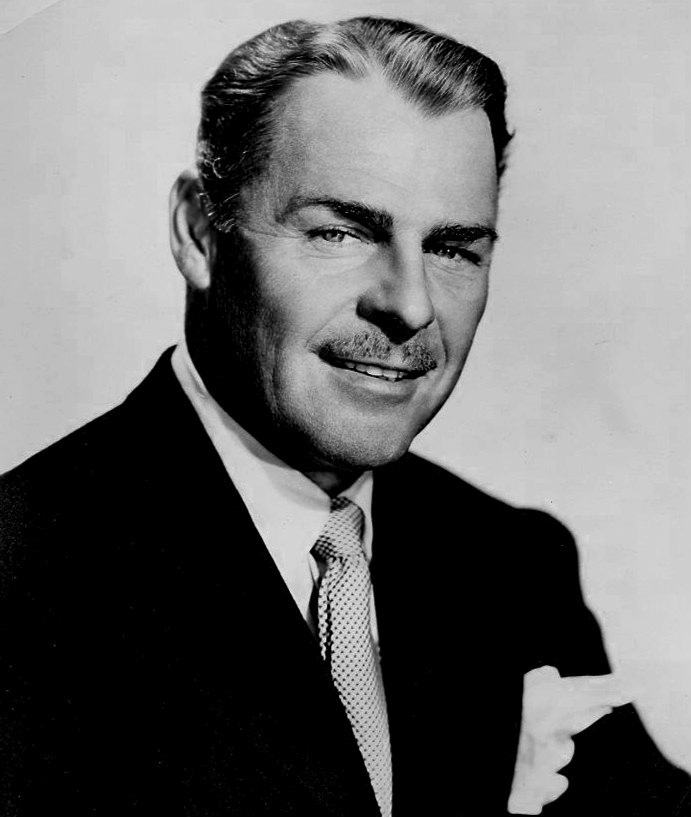
Dangerous Assignment: Stolen UN Documents (EP4121)


Today’s Mystery:

Steve goes to the Middle East to find out how sensitive diplomatic information disappeared from an official’s home, and finds himself investigating the official’s wife’s murder.

Original Radio Broadcast Date: April 14, 1951

Originated in Hollywood

Stars: Brian Donlevy as Steve Mitchell, Herb Butterfield as the Commissioner, Jan Arvan, Don Diamond, Wally Maher, Paul Dubov

Support the show monthly at patreon.greatdetectives.net

Support the show on a one-time basis at http://support.greatdetectives.net.

Mail a donation to: Adam Graham, PO Box 15913, Boise, Idaho 83715

Take the listener survey at http://survey.greatdetectives.net

Give us a call at 208-991-4783

Follow us on Instagram at http://instagram.com/greatdetectives

Follow us on Twitter@radiodetectives

Join us again tomorrow for another detective drama from the Golden Age of Radio.

Yours Truly Johnny Dollar: The Fathom Five Matter, Episodes One and Two (EP4120)

Bob Bailey

Today’s Mystery:

Johnny goes to Miami to find out if an insured man died in a boat fire, and, if so, whether it was an accident, murder, or suicide.

Original Radio Broadcast Dates: February 27 and 28, 1956

Originated from Hollywood

Stars: Bob Bailey as Johnny Dollar. Mary Jane Croft, Barney Phillips, Carleton Young, Eleanor Audley, Sam Edwards, Shepard Menken, John Dehner

When making your travel plans, remember http://johnnydollarair.com

Take the listener survey at http://survey.greatdetectives.net

Give us a call at 208-991-4783

Follow us on Twitter @radiodetectives

Join us again tomorrow for another detective drama from the Golden Age of Radio.

Sam Spade: The Prodigal Panda Caper (EP4119)

Steve Dunne

Today’s Mystery:

Sam is hired by a 9 year-old who claims to have been robbed of a toy panda

Original Radio Broadcast Date: December 29, 1950

Originated from Hollywood

Starred Steven Dunne as Sam Spade, Lurene Tuttle as Effie, William Conrad, Wally Maher, Tommy Cook, Cathy Lewis, Sidney Miller, Tony Barret

Support the show monthly at patreon.greatdetectives.net

Support the show on a one-time basis at http://support.greatdetectives.net.

Mail a donation to: Adam Graham, PO Box 15913, Boise, Idaho 83715

Take the listener survey at http://survey.greatdetectives.net

Give us a call at 208-991-4783

Follow us on Instagram at http://instagram.com/greatdetectives

Follow us on Twitter @radiodetectives

Join us again tomorrow for another detective drama from the Golden Age of Radio.

Tales of the Texas Rangers: Three Victims (EP4118)

Today’s Mystery:

A middle-aged husband and wife are found dead, with their son surviving as the witness.

Original Radio Broadcast Date: August 24, 1952

Originated from Hollywood

Starred: Joel McCrea as Jace Pearson, Ken Christy, Roy Glenn, Tony Barrett, Virginia Gregg

Become one of our monthly patreon supporters at patreon.greatdetectives.net

Support the show on a one-time basis at http://support.greatdetectives.net.

Mail a donation to: Adam Graham, PO Box 15913, Boise, Idaho 83715

Take the listener survey at http://survey.greatdetectives.net

Give us a call at 208-991-4783

Follow us on Instagram at http://instagram.com/greatdetectives

Follow us on Twitter @radiodetectives

Join us again on Monday for another detective drama from the Golden Age of Radio.

The Bob Bailey Matter, Part Three

Continued from Part Two

A Career Change

A November 30, 1953 item in the Los Angeles Evening Citizen announced that fellow Chicago radio alum Olan Soule had succeeded Bailey as George Valentine on Let George Do It. The item states that Bailey had left the role after seven years to focus on scriptwriting. Soule would play George Valentine for the final ten months the series was on the air.

To Bailey, scriptwriting was a means to an end, He didn’t view himself as a great writer according to a 1957 interview, but rather viewed writing as a “bridge” to his real ambitions: becoming a direction on television or the movies

Bailey may have started down the writing path walk working on Let George Do It. Thirteen circulating episodes of the series from 1951 and 1952 give as a writing credit a Lloyd London, an obvious pseudonym that references the Lloyds of London auction house. There’s no record of the name being used on any other series. As Bailey’s daughter Roberta Goodwin explained in a 1982 interview, the use of an alias by an actor who also wrote a script is to get rid of network policies that would rather not pay the same person the salary for writer and actor even if the person happened to do work for both. This is why Bailey wrote his one Yours Truly Johnny Dollar script under a pseudonym (the more obvious Robert Bainter). We can’t say for sure that Bailey was Lloyd London, but given the direction of Bailey’s career and the fact that television was enticing many writers with much higher pay, it seems a logical inference that he probably was.

Bailey had an evident plan of attack based on events. Instead of having a regular radio program, he’d focus on screenwriting and do a little bit of acting to supplement his income. He makes his second film appearance of the 1950s in a small uncredited part in the star-studded medical noir Not as a Stranger. Beyond that, his guest appearances were on radio: He appeared on Stars Over Hollywood, he did several minor guest roles on The Lux Radio Theater just as he’d done a decade before when he came from Hollywood, and even guest starred in another detective drama starring John Lund called Yours Truly Johnny Dollar.  He also recorded his best work outside of the detective genre in the anthology series Romance. While some might assume that Romance only was doing light fluffy romantic comedies, that was definitely not true in 1950s. His May 28, 1954 performance in “Affair at Aden” is without a doubt the drama highlight of his radiography outside of the detective.

Life Isn’t Always Better Where It’s Wetter

The writing side of things had moments of promise, but there were disappointments. Bailey and writing partner Hugh King sold their story “The Big Rainbow” to RKO. It became the movie Underwater!, an undersea adventure film that was going to star the very bankable Jane Russell in lead role. Newspapers reported that Bailey took his family on a Hawaiian vacation in the summer of 1953 as he was turning forty. It’s possible that Bailey did something related to the film (which would start filming a few months later), but we have no information that indicates that.

Underwater! was produced by corporate tycoon and aviation legend Howard Hughes (who had effective control of RKO at the time) and that made the difference between Underwater! being a good solid adventure story that would launch the Bailey and King writing duo as capable of writing for the movies, and an infamous debacle. With Hughes involved, it could only end one way. Russell hated doing the project and was fairly and rightfully disgusted by Hughes at this point in his career for all the creepy things he had done. Hughes decided the perfect time to start filming this thing in Hawaii was in November…during the rainy season. There was an explosion on set that led to higher production costs. Hughes wanted to use live sharks to shoot a scene and an extra nearly lost his leg. The whole filming had to be stopped and relocated to the Bahamas at great cost and it took eight months from start to finish for filming to be completed. The film had a $300,000 budget but came in at more than $3 million.

The film’s trailer tried to lean into this to get people to show up at the theater, boasting that it’d taken three years to make the movie (this likely included pre-production time) and cost three million dollars to film. This might have impressed an unwary filmgoer. But anyone who knew anything about movies knew that a film by Howard Hughes taking that long and costing that much didn’t get into that condition because it took that long to make it perfect. The trailer was an invitation to a trainwreck (or boatwreck if you’d rather).

The film premiered at a Florida resort in January 1955 twenty feet under the water. Twenty-four reporters actually swam out in deep sea diving gear led by Russell. Hughes provided fodder for waggish journalists. UP’s Aline Mosby opined, “I was too busy to keep from drowning to see the film.”  Add to that that the film was the first film released in Superscope and that release had some major bugs that needed to be worked out by local theater operators, and Underwater! was a weird, controversial release and a horrible vehicle for a first-time story writer looking to gain a foothold in movies.

Beyond that, Bailey and King also wrote an episode of the television anthology series The Ford Television Theatre called “The Legal Beagles.” Like many anthology program episodes of the era, “The Legal Beagles” has the feel of a backdoor television pilot. The series features two stars who could carry a television program in Richard Denning (who’d just spent two seasons starring in the TV version of Mr. and Mrs. North) and Laraine Day, two telegenic stars who were definitely what television executives were looking for. The story is about a couple of married lawyers (Denning and Day) who have successfully gotten an impatient’s client case delayed so they can have a second honeymoon, only for the wife to take an interest in helping an indigent boy who faces potential reform school time over a poaching complaint from a grumpy old woman.

I’ve seen the episode and, as backdoor pilots go, it’s middle of the road. It had the potential to be a solid program with a very likable performance by Day, but it also had rough spots. Of course, many TV pilots have elements that need to be fixed and the right producer might have been willing to make the show work. Legal Beagles as a series I could have imagined being greenlit but I can still understand why it wasn’t.

Beyond this, Bailey (without King listed as co-writer) wrote an episode of the Peter Graves-led children’s Western Fury. As far as we can tell, two TV episodes and a single movie are all Bailey had netted from his scriptwriting focus.

Bailey’s Best

Bailey’s struggles would be CBS’ gain. CBS had the idea of turning one of their existing half-hour detective programs into a prime-time Monday-Friday fifteen minute serial. They’d tried this concept with Mr. and Mrs. North and Mr. Keen, Tracer of Lost Persons. They’d also recorded an audition for Rocky Jordan (which had begun as a serialized program) to be done in this format. None of it had settled.

They’d decided to try again with Yours Truly Johnny Dollar, a series that followed a freelance insurance investigator who went wherever insurance investigators sent him and narrated his adventures through the device of reading his “action-packed expense account.” Three other actors had played Johnny Dollar on the air from 1949-54 during its original 30-minute run. Gerald Mohr, best known to old time radio fans as the voice of Philip Marlowe and who’d recently played Private Detective Mike Malloy in serialized adventures for ABC, recorded an audition for the role in August 1955 and, according to the radio researcher Stewart Wright, at least one trade publication had prematurely reported that Mohr would star in the new serialized Johnny Dollar.

Either Mohr or CBS decided against going forward and so CBS proceeded with an audition to be the next Johnny Dollar. Potential Johnnys would have 20 minutes to convince producer Jack Johnstone, and then do a five-page audition script with veteran radio actress Lillian Buyeff. Among those who auditioned were actors who had starred in detective mystery programs: Jack Moyles (Rocky Jordan and O’Hara), Larry Thor (Broadway is My Beat), and Paul Dubov (Frank Race and Jeff Regan) auditioned, along with several talented veteran radio actors, and also former baseball and basketball star Chuck Connors, a few years before he would star in the TV Western The Rifleman. 

While the audition is standard practice, until reading Wright’s article, it never occurred to me that this had happened. To most old time radio fans, Bob Bailey as Johnny Dollar is a no-brainer.* No one else could have taken the roll. This is all down to his performance.

The serial era of Johnny Dollar went for a glorious run of 280 episodes from October 1955 to November 1956 comprising fifty-five serialized stories. All but two were five episodes in length, the “The Kranesburg Matter” being a six-episode story and “The Phantom Chase Matter” being nine episodes long.

To be clear, Bailey wasn’t the only key to the series’ success.  The series was blessed with some solid writing talent in E. Jack Neuman (writing as John Dawson.), Les Crutchfield, and Robert Ryf. The five-episode length of most of the serials represented a sweet spot for writing quality stories. It allowed more space for more character and more fleshed-out storytelling than 30-minute self-contained episodes but also didn’t allow for the overly-padded storylines that many earlier serials featured that often created a glacial pace.

The series had one of the best directors of the Golden Age of Radio in Jack Johnstone. He brought a real creative force and direction to the series that all the writers implemented in their own way that put Yours Truly Johnny Dollar years ahead of television in terms of continuity and character development. Bailey was also supported by a sort of radio rep company of versatile character actors like Buyeff, Virginia Gregg, Howard McNear, Herb Vigran, and Barney Phillips.

And yet Bailey’s portrayal of Johnny Dollar was superlative. His take on Dollar is one of the most human, relatable, and likable characters in the Golden Age of Radio. His Dollar could be a relentless force, both in terms of tough-guy tactics, as well as putting heat on subjects, but he also was kind and empathetic. He had a sense of justice and a sense of humor. Bailey’s performance was compelling. He created his own take on Johnny Dollar that audiences embraced. He played well off so many actors and played the role as if he was born to do it.

While many had given up on radio as anything other than a source of news, sports, and music, Yours Truly Johnny Dollar showed all that radio drama could be. For Bailey, it was the best work of his career and showed the full range of his talent.

To be continued in Part Four

Next time.. disappointments and tragedies mount and end in a real-life mystery.