EP3498: Mystery is My Hobby: Death Has a Hotfoot

Bart and Inspector Danton investigate the death of a member of an all-female diving troupe.

Support the show monthly at patreon.greatdetectives.net

Support the show on a one-time basis at http://support.greatdetectives.net.

Mail a donation to: Adam Graham, PO Box 15913, Boise, Idaho 83715
(more…)

AWR0164: General Electric Theater: Enchanted Cottage

Amazing World of Radio

A disfigured woman has isolated herself in a cottage that served as a wealthy family’s honeymoon location for decades.

Original Air Date: September 24, 1953

Go to http://amazing.greatdetectives.net to subscribe to the podcast.

Brought to you by the support of our Patreon listeners…http://patreon.greatdetectives.net

EP3497: Man Called X: Japan Underground

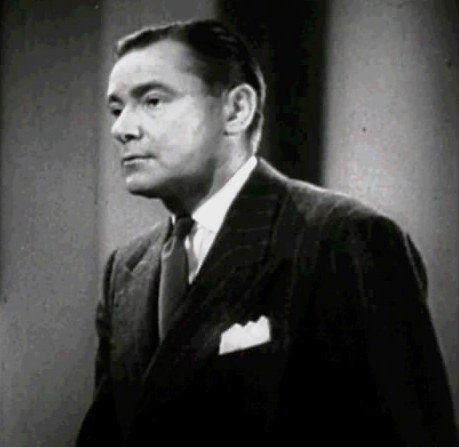
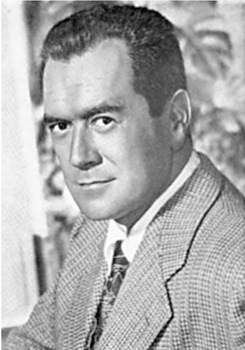
Herbert Marshall

Ken goes to Japan to stop a Communist plot to introduce a new group of Kamikaze terrorists.

Original Air Date: January 20, 1951

Support the show monthly at patreon.greatdetectives.net

Support the show on a one-time basis at http://support.greatdetectives.net.

Mail a donation to: Adam Graham, PO Box 15913, Boise, Idaho 83715

(more…)

EP3496: The Fat Man: Murder Appears Out of the Past (AU)

A wealthy man calls in Brad when a disgruntled business associate threatens to kill him.

Original Air Date: July 21, 1955

Support the show monthly at patreon.greatdetectives.net

Support the show on a one-time basis at http://support.greatdetectives.net.

Mail a donation to: Adam Graham, PO Box 15913, Boise, Idaho 83715
(more…)

EP3495: Casey, Crime Photographer: Miscarriage of Justice

Stats Cotsworth

A man wrongfully convicted of killing his unfaithful wife is released when it’s discovered that she’s alive. She’s then murdered.

Original Air Date: October 2, 1947

Support the show monthly at patreon.greatdetectives.net

Support the show on a one-time basis at http://support.greatdetectives.net.

Mail a donation to: Adam Graham, PO Box 15913, Boise, Idaho 83715

Take the listener survey…http://survey.greatdetectives.net

Give us a call 208-991-4783

Become one of ourfriends on Facebook.

Follow us on Instagram at http://instagram.com/greatdetectives

Follow us on Twitter@radiodetectives

The American Audio Drama Tradition, Part Three: The Decline of Network Radio Drama

Continued from Part Two

As television rose, radio drama declined. The year 1951 saw the first time television advertising revenues surpassed those of radio. This led to rising budgets for television and falling budgets for radio. On radio, the big stars’ appearances became less and less frequent. Radio’s most talented writers began writing for television, often pulling out old radio scripts, dusting them off, and rewriting them for television.

The budget cuts showed up in music. As television rose, some programs saved money by switching from orchestral scores to organ scores. NBC saved money in the early-to-mid 1950s by using the same musical bridges on nearly all of their dramatic programs. Radio appearances by big stars on programs such as Suspense became rarer as the decade went on. The quality of films getting adaptations on the Lux Radio Theater declined as well.

A vicious cycle emerged. Declining budgets led to declining quality of on-air programs which led to further declines in listenership which led to budget cuts which led to declining production quality, which led to more declines in listenership which led to more budget cuts

Radio did have one last great moment of major pop culture influence. In 1953, the series Gunsmoke appeared and began a major trend: the adult western program. Westerns had a place on radio since the 1930s. However, Gunsmoke dealt with more mature themes and featured rich, well-developed characters. The series would run for eight years and spark a revolution on radio and television that would carry over into the 1950s.

Gunsmoke would make the jump to television but not with the radio version of Marshall Matt Dillon. The character was played by William Conrad, who was viewed as too fat for the role. The role went to James Arness, who would do a superb job. However, Conrad being left in the lurch was a reminder that television was a far more shallow medium than radio.

Quite a few TV shows attempted to continue to air separate radio episodes. It was a win for the networks who saw having separate radio and television programs as an opportunity to cross-promote. For the actors, it meant more money. Yet for most shows, it began to make less sense with declines in radio listenership reduced the amount of the revenue, and the burnout that comes with doing the same thing repeatedly took a tool. Ozzie and Nelson record thirty-nine episodes on television and another thirty-nine on radio, Dragnet recorded fifty-two on radio. At some point, it began to not make sense for TV successes to hang around radio.

1955 saw some major departures: Jack Benny and Bob Hope left radio along with Dragnet and the Lux Radio Theater. Beloved programs were leaving in droves, yet radio drama would survive until the 1960s.

How Network Radio Drama Survived the 1950s

Among fans of the golden age of radio, by far, the most beloved radio programs of this era came from CBS. While the big stars became scarce on radio, CBS was buoyed by a de facto radio repertory theater where the same actors appeared over and over again in CBS various radio productions. Actors like Virginia Gregg, Parley Baer, Peggy Webber, and John Dehner were the backbone of CBS’s Hollywood radio output of the late 1950s. None would be famous, but each were talented and performed with thousands of radio appearances under their belt. That sort of talent and competence kept radio interesting.

Their work could be heard in CBS’s surviving anthology programs: Suspense and Romance. In addition, they appeared in the CBS Radio Workshop, an experimental program that harkened back to the groundbreaking Columbia workshop of the late 1940s and 1950s.

Outside of this, CBS maintained many soap operas and launched a new one, The Couple Next Door, in 1957. Several Westerns also aired during this period, including Gunsmoke. In a reversal of adapting radio shows to television, CBS launched a radio version of its western TV Show Have Gun, Will Travel with Dehner as the lead.

The big surprise during this era was Yours Truly Johnny Dollar. The series had run from 1949-54 with three different actors playing the lead over the course of more than 200 episodes. However, CBS wanted to bring the show back as a serialized version with stories told in 15-minute segments Monday-Friday. Bob Bailey was cast as the new Johnny Dollar. The serialized episodes often expanded upon previous half an hour stand-alone detective scripts or combined concepts from multiple scripts. In 1956, the series continued on as a half-hour program. (For more on the Johnny Dollar in this era, see my recent article on the top five detective dramas of the declining years of the golden age of radio.)

NBC also contributed to this era, starting with its Monitor series, a weekend-long block of a variety of radio programs. This included occasional bits of vintage radio, most notably five-minute episodes of Fibber McGee and Molly.

However, NBC’s greatest contribution to this era came in April 1955 when they launched a science fiction series called X Minus One. The series ran only seven weeks and advised listeners if they wanted to continue hearing the program to write in. That says a lot about the reluctance of Network radio to go into Science Fiction. However, luckily for science fiction fans, interest was high and the series returned to radio and continued to air until New Year’s 1958. It adapted the works of great science fiction authors like Ray Bradbury, Robert Heinlein, and Isaac Asimov. It would be re-aired as part of NBC’s Monitor series through the 1970s and there would be a brief attempt to revive the series with new episodes.

Another Science Fiction anthology series began to air over Mutual called Exploring Tomorrow, which aired for 55 weeks twice a week from December 1957-December 1958. It also adapted a similar high quality number of stories. It’s not as well-remembered as X Minus One. The production is hurt by the fact circulating examples of the series have much poorer sound quality than X Minus One and there are far less of them.

Mutual continued to try to be competitive in the world of radio drama into the late 1950s. It became the new home of the long-running radio hit Counterspy and also brought over Gangbusters and another Philip H. Lords program Treasury Agent. They also launched programs of their own, but few of them are in circulation among listeners.

ABC also aired a program called Police Blotter at least into 1957.

However, by 1960, except for an occasional bit of radio drama on Monitor, the sole home of mainstream network radio drama was CBS. On Yours Truly Johnny Dollar on September 25, 1960, the show featured an episode “The Five Down Matter.” The episode celebrated five years of the series revival and continuance. At the height of the golden age, anniversaries or episode milestones passed without notice, or perhaps just a comment after the episode. However, surviving five years when great programs were failing deserved celebrated. Johnny Dollar featured Bailey and all of the most memorable supporting characters from his five-year run.

Five weeks later, Bailey’s run on the show came to a sudden and unceremonious end without on-air acknowledgment. The series moved to New York without either Bailey or the supporting cast.

November 1960 would be brutal. CBS canceled nearly every remaining radio drama. It gave the remaining soap operas a month to wrap up their storylines. It canceled the radio version of Have Gun, Will Travel. After that November, all that remained on the radio was Gunsmoke and Yours Truly Johnny Dollar. 

The Golden Age of Radio’s Final Months

Yours Truly Johnny Dollar acclimated to New York with an entirely different feel to the series and Bob Readick in the lead. In June 1961, CBS radio line-up had one last shake-up. Gunsmoke ended and Suspense returned to the air in New York. This meant all of CBS’ radio operations would be centered in New York and would rely upon actors it worked with on its daytime soap operas. Mandel Kramer, a veteran radio actor, and a supporting character on the TV soap Edge of Night became the last actor to play Johnny Dollar.

For the next 15 months, both programs carried on as best they could. However, on September 30, 1962, both programs aired their last episode on a day that is considered the end of the Golden Age of Radio. But what exactly ended? And how has the legacy of the Golden Age of radio endured since?

We’ll talk about that in our next installment.

EP3494: The Silent Men: Trouble at Suez

A special agent has got top secret microfilm, but is on his own to figure out how to get them to the U.S. consulate.

Original Air Date: April 2, 1952

Become one of our monthly patreon supporters at patreon.greatdetectives.net

Support the show on a one-time basis at http://support.greatdetectives.net.

Mail a donation to: Adam Graham, PO Box 15913, Boise, Idaho 83715

Take the listener survey…http://survey.greatdetectives.net

Give us a call 208-991-4783

Become one of our friends on Facebook.

Follow us on Instagram at http://instagram.com/greatdetectives

Follow us on Twitter @radiodetectives

EP3493: Yours Truly Johnny Dollar: The Walter Patterson Matter

John Lund

A reliable witness states that she met a dead man who supposedly died and the insurance company paid off on his life insurance.

Original Air Date: December 26, 1952

When making your travel plans, remember http://johnnydollarair.com

Take the listener survey…http://survey.greatdetectives.net

Give us a call 208-991-4783

Become one of our friends on Facebook.

Follow us on Twitter @radiodetectives

EP3492: Mystery is My Hobby: Death Has Blue Eyes

A wealthy party girl calls Bart because she thinks she murdered her father but isn’t sure.

Support the show monthly at patreon.greatdetectives.net

Support the show on a one-time basis at http://support.greatdetectives.net.

Mail a donation to: Adam Graham, PO Box 15913, Boise, Idaho 83715
(more…)

EP3491: The Man Called X: Five Ounces of Treason

Herbert Marshall

Ken goes to Cuba to find the source of a sabotage guide.

Original Air Date: January 13, 1951

Support the show monthly at patreon.greatdetectives.net

Support the show on a one-time basis at http://support.greatdetectives.net.

Mail a donation to: Adam Graham, PO Box 15913, Boise, Idaho 83715

(more…)

AWR0163: Confession: The Martin Everett Case

Amazing World of Radio

The confession by a young college student of how he was drawn into a crime by another man who looks similar to him and has the same birthdate.

Original Air Date: July 12, 1953

Go to http://amazing.greatdetectives.net to subscribe to the podcast.

Brought to you by the support of our Patreon listeners…http://patreon.greatdetectives.net

EP3490: The Fat Man: Murder Pays Dividends (AU)

The Fat Man’s hired by a wealthy man who’s been receiving threatening phone calls.

Original Air Date: July 14, 1955

Support the show monthly at patreon.greatdetectives.net

Support the show on a one-time basis at http://support.greatdetectives.net.

Mail a donation to: Adam Graham, PO Box 15913, Boise, Idaho 83715
(more…)

EP3489: Casey, Crime Photographer: Treasure Cave

Stats Cotsworth

Casey, Ann, and Captain Logan decide to try to solve a series of murders in a cave near a small town.

Original Air Date: September 25, 1947

Support the show monthly at patreon.greatdetectives.net

Support the show on a one-time basis at http://support.greatdetectives.net.

Mail a donation to: Adam Graham, PO Box 15913, Boise, Idaho 83715

Take the listener survey…http://survey.greatdetectives.net

Give us a call 208-991-4783

Become one of ourfriends on Facebook.

Follow us on Instagram at http://instagram.com/greatdetectives

Follow us on Twitter@radiodetectives

EP3488: The Silent Men: Murder in Vienna

A U.S. special agent is killed in Vienna in the Soviet zone before he can reveal what he knows about a smuggling operation.

Original Air Date: March 26, 1952

Become one of our monthly patreon supporters at patreon.greatdetectives.net

Support the show on a one-time basis at http://support.greatdetectives.net.

Mail a donation to: Adam Graham, PO Box 15913, Boise, Idaho 83715

Take the listener survey…http://survey.greatdetectives.net

Give us a call 208-991-4783

Become one of our friends on Facebook.

Follow us on Instagram at http://instagram.com/greatdetectives

Follow us on Twitter @radiodetectives

The American Audio Drama Tradition, Part Two: The Rise of Television

Continued from Part One

It’s impossible to talk about the final years of the golden age of radio without talking about what brought about its decline. In the years immediately after the War, television was a joke on radio. It was said to feature little more than professional wrestling and old movies that weren’t that good when they were first shown in theaters.

Long-time radio comedian Fred Allen said in 1950, “I’ve decided why they call television a medium. It’s because nothing on it is well done.”

In the same year, on Life of Riley radio program, Chester Riley (played by William Bendix) talked about when he was planning on getting a television. He cited waiting for new models come out with improvements. When asked what improvements Riley was waiting for, he replied, “Someday, they’ll put on entertainment.”

There was truth behind the jokes. In the early days of television, home viewing audiences were smaller, the technology was experimental, and the limited audience meant limited advertising revenues and smaller budgets. TV stations didn’t have the money to license A-films to be played on television. When they made original productions, they couldn’t afford glamourous talented actors, so they often settled for those who were glamourous but with minimal talent. Actresses being hired to show skin exasperated actor William Gargan, who left his role on the successful Martin Kane, Private Eye television program with a 7 year contract to go back to radio.

Television also came with a steep learning curve. Like radio, most television programs were live. However, on radio an actor could flub a line and find his place by looking at the script. Television required working without a net. Yet, Americans wanted television to succeed. Development of the medium had been ongoing since before World War II. Now, with hard-earned savings, America wanted television. My father came at age around this time and he waxed nostalgic about actors blowing their lines on live TV. With America hungry for television, even its bugs became features.

Most radio performers suspected it would catch on and most would play a part in it. Fred Allen would spend his last days on a TV game program, and William Bendix would come to TV as Chester Riley as soon as Bendix’s studio would allow it.

Television Built on the Foundation of Radio

Television set out to give Americans the same programs they enjoyed on radio. Early TV was filled with detective shows,  dramatic anthologies, family comedies, and soap operas. The links between early television and the golden age of radio run deep.

Perhaps the greatest television hit of all time, I Love Lucy, hit radio in 1952. The series starred Lucille Ball, who had starred in another domestic comedy My Favorite Husband. Many scripts used on I Love Lucy were reworked scripts from My Favorite Husband. 

Oftentimes, the programs directly moved from radio to television. TV programs like The Life of Riley, Our Miss Brooks, My Friend Irma, Dangerous Assignment, The Line-Up, Suspense, the Adventures of Superman, The Lux Video Theater, and You Bet Your Life all had roots in radio. In some cases, cast members were changed, but in others, you got to see all the old radio favorites that you’d only heard for all these years.

Radio comedy legends like Red Skelton, Burns and Allen, and Jack Benny also made the transition to television. In addition, the Colgate Comedy Hour became a place where noted radio stars like Eddie Cantor, Abbott and Costello, and Dean Martin and Jerry Lewis took center stage in live shows.

Many programs became so successful and so associated with television, only the most dedicated even knows there was a radio version. Dragnet aired two and a half years over radio before coming to television and would air for eight seasons in the 1950s and make four more seasons in a comeback in the 1960s. The Adventures of Ozzie and Harriet aired on radio seven and a half years before the television show premiered and would last on television for fourteen seasons. Guiding Light had fifteen years on radio before its television debut and would continue on television for fifty-seven years.

Other programs crashed and burned, often hard. Radio hits like GangbustersLife with Luigi, and The Great Gildersleeve didn’t last long on television. An ill-considered version of Fibber McGee and Molly without Jim and Marion Jordan also failed to catch on on television.

Some radio shows proved to work better on television. Audience participation programs like People are Funny and Truth or Consequences are better when the audience can see the outrageous stunts the contestants are sent on and Candid Camera was far more enduring than Candid Microphone. In addition, physical comedians like Lou Costello or Jerry Lewis were limited by radio and television allows their full zaniness to show.

Other radio shows used techniques that didn’t work on television. In the finale of the Dragnet radio episode, “The Big Bar,” the audience gets to hear the police radio as police cars chase down the suspects, with occasional commentary from our heroes and people in the radio room. In the television version, we’re treated to several minutes of the cameraman trying to find interesting shots of people standing around the radio room, listening to the chase on the radio.

Baby Snooks (Fanny Brice) was a beloved seven-year old girl who bedeviled her daddy with her questions and bad behavior. A decision was made to do a television version with the 59-year-old Brice accompanied by her father, who was played by Hanley Stafford, a man eight years her junior. Her television audience didn’t appreciate an adult actress playing a child’s role on a live action show, so she didn’t repeat the appearance again.

While many of those who made the golden age of radio special moved to television, radio drama still continued. In our next article, we’ll look at the final years of the golden age of radio.