Author: Yours Truly Johnny Blogger

TV Series Review: Father Brown

In 1974, Father Brown came to ITV with Kenneth More starred as G.K. Chesterton’s sleuth. The series adapted thirteen of the Father Brown Mysteries to television. The results were a bit of mixed bag.

Kenneth More’s acting as Father Brown was certainly not a mixed bag. He played a delightful but cunning Father Brown, embodying the great clerical detective with warmth and humanity.

To be fair to the producers, as I said with the Colonial Theatre adaptations, the Father Mysteries are challenging to adapt because they were never written with dramatization in mind. Oracle of the Dog, for example, features a mystery where  Father Brown never visits the scene of the crime, while Curse of the Golden Cross features a murderer who never even finds out he’s been found out. Such results may make for interesting thought experiments and mental puzzles, but it makes for poor television.

The additional challenge with this Television series is that they had an hour for each episode. As both Colonial Radio Theatre and BBC Radio 4 have proved, half an hour is more than sufficient to tell Chesterton’s stories. The one hour format could allow them to flesh out the stories and make them more compelling and dramatic or it could allow them to merely pad the stories.  The producers did a little of both.

Several episodes hit the spot. “The Hammer of God” was faithful to Chesterton’s story with additional details added that made the story more compelling and interesting as a mystery. The same could be said for “The Eye of Apollo,”  “The Dagger With Wings,”  and “The Man With Two Beards.”  The series made some minor changes to “The Head of Caesar” but it still was quite well done. They also managed to neatly insert Father Brown into the action in, “The Oracle of the Dog.”

These were fine and perhaps the best of the lot was “The Hammer of God” which was powerfully told as well as faithful to Chesterton’s story. Perhaps the most interesting was, “The Secret Garden” which remained faithful to the spirit of Chesterton’s story while changing some details.  While I might have been biased by having read the story and hearing the Colonial Theatre adaptation, to me it seemed the telefilm made obvious who the murderer was, which gave the episode an almost Columbo-like feel as Father Brown seemed to take on a few more odd mannerisms. Columbo was, of course, based in part of Father Brown. So if the creators of the Father Brown TV series were consciously or subconsciously mimicking Columbo which was consciously based partially on Father Brown, then everything had come full circle.

Where the series had its weak spots was in realizing when something didn’t need changed or making the wrong change. In, “The Curse of the Golden Cross” the writers managed to replace Chesteron’s unsatisfying ending with an even worse one that makes Father Brown look  foolish. In “The Three Tools of Death” and “The Arrow of Heaven,” perhaps the Father Brown stories most suited for adaptation, the writers got far too cute for their own good in their attempts to doctor what were already fine stories. They also happen to be two of my favorites, so they annoy me.  Their changes to “Three Tools of Deaths” were tedious and merely padded the story.  Their version of “The Arrow of Heaven” made one unforgivable mistake. They set the story in England when Chesterton set in America. The strength and power of the story comes from not only the mystery, but the feeling of Father Brown in being in a foreign land with a foreign set of values on the issue of justice. Consider this line from the story:

Even as he did so he realized that he was an Englishman and an exile. He realized that he was among foreigners, even if he was among friends. Around that ring of foreigners ran a restless fire that was not native to his own breed; the fiercer spirit of the western nation that can rebel and lynch, and above all, combine. He knew that they had already combined.

Placing the story in England means that not only doesn’t the program communicate this idea, it discards it completely.

One other criticism of the series is that the show seemed to be at war with Chesterton at times.  Chesterton created Father Brown as a very orthodox Catholic Priest. Yet show creators put words into Father Brown’s mouth that totally violated his character. In one episode he declares that he likes talking to atheist because “he doesn’t have to talk shop.” and in another decries that as a priest, he’s often called upon to reunite families that would be better off separated. A more “cool” modern 1970s British priest might say that, but Father Brown?

Also, in, “The Quick One” Father Brown bemoaned the murder of a somewhat crankish Tory saying he was one of the few men who could have saved England. The show’s creators decided to insert an aggrieved daughter of the Tory who had been bullied and kept from her true love. This had nothing to do with the mystery, but it served to make the writers’ political point in disagreeing with Chesterton and added a good ten minutes to the story.

If you can get past the mis-steps and revisionism, the series offers several good adaptations and whether the material is good or poor, Kenneth More’s performance is always a saving grace.

Rating: 3.5 Stars

If you enjoyed this post, you can have new posts about Detective stories and the golden age of radio and television delivered automatically to your Kindle.
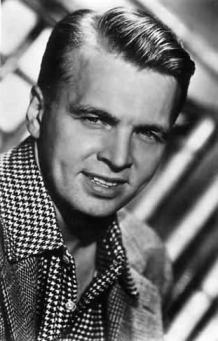
Yours Truly Johnny Dollar: The Brisbane Fraud Matter (EP0625)

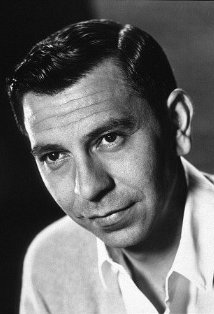
John Lund
Johnny searches for a missing ban who was bonded by an insurance company for $25,000

Original Air Date: May 26, 1953

Support the show… http://support.greatdetectives.net

Save more and combine hotel and airline fare at http://www.johnnydollarair.com

Cast your vote for the show on podcast alley http://podcastalley.greatdetectives.net

Become one of our friends on Facebook…http://www.facebook.com/radiodetectives

Take the listener survey at http://survey.greatdetectives.net

Click here to add this podcast to your Itunes, click here to subscribe to this podcast on Zune, click here to subscribe to this feed using any other feed reader.

Sherlock Holmes: The Disappearance of Lady Frances Carfax (EP0624)

Holmes dispatches Watson to look into the disappearance of a wealthy woman.

Original Air Date: March 28, 1948

Take our listener survey…http://survey.greatdetectives.net

Become one of our friends on Facebook… http://www.facebook.com/radiodetectives

Vote for the show on Podcast Alley…http://podcastalley.greatdetectives.net

Call 208-991-4783 to leave a voicemail.

Click here to add this podcast to your Itunes, click here to subscribe to this podcast on Zune, click here to subscribe to this feed using any other feed reader.

Let George Do It: The Bookworm Turns (EP0623)

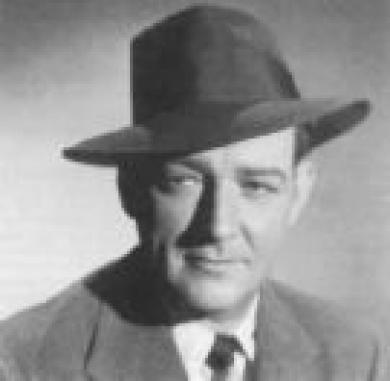
Bob Bailey

George is hired by a bookstore owner who suspects someone sneaking into his shop after hours to read. Quickly, George finds himself entangled in a case with counterfeiting, arson, and murder.

Original Air Date: December 11, 1950

Take our listener survey…http://survey.greatdetectives.net

Cast your vote for the show on podcast alley…. http://podcastalley.greatdetectives.net

Become one of our friends on Facebook… http://www.facebook.com/radiodetectives

Call 208-991-4783 to leave a voicemail.

Click here to add this podcast to your Itunes, click here to subscribe to this podcast on Zune, click here to subscribe to this feed using any other feed rea

Murder Clinic: The Tragedy at Marsden Manor (EP0622)

Maurice Tarplin

Poirot is called upon by the insurance to investigate the apparent natural death of a wealthy man who just passed a physical for a life insurance policy for his young wife.

Original Air Date: October 6, 1942

Take our listener survey…http://survey.greatdetectives.net

Become one of our friends on Facebook…http://facebook.com/radiodetectives

Follow us on http://www.twitter.com/radiodetectives

Vote for the show on Podcast Alley….http://podcastalley.greatdetectives.net

Click here to add this podcast to your Itunes, click here to subscribe to this podcast on Zune, click here to subscribe to this feed using any other feed reader.

Barrie Craig: For Love Of Murder (EP0621)

William Gargan

Barrie bails out a Runyanesque character who attacked an agent that had stolen his girl. Craig comes to regret it when the agent is murdered and the character he bailed out is a top suspect.

Original Air Date: August 3, 1954

Become one of our friends on Facebook… http://www.facebook.com/radiodetectives

Take the listener survey at http://survey.greatdetectives.net

Give us a call 208-991-4783

Follow us on Twitter @radiodetectives

Click here to add this podcast to your Itunes, click here to subscribe to this podcast on Zune, click here to subscribe to this feed using any other feed reader.

Radio Review: My Son Jeep

By the middle of the 1950s, the heyday of the radio sitcom had passed, at least as far as new programming was concerned. In the midst of radio’s decline, “My Son, Jeep” came to NBC radio in January 1953.
The show was somewhat different from the typical family sitcom as it featured a single father named Dr. Robert Allison (Donald Cook). living in a small town with his son, Jeffrey (aka “Jeep”) (Martin Huston) and his daughter, Peg. They have a housekeeper (Mrs. Bixby) and in the first episode, Jeep manages to wrangle a job for his substitute teacher, Ms. Miller as Dr. Allison’s assistant.

Of course, men raising kids in a motherless situation was not the norm, but it was hardly new. The long-running Great Gildersleeve featured a surrogate father played Harold Perry and later Willard Waterman. After many fits and stars, Perry reverted to that format after leaving Gildersleeve towards the end of his flop The Harold Peary Show.

Jeep was the center of the show and his antics provide the impetus for most of the comedy. Jeep’s mix of cute mischievousness works and really provides nearly all the comedy. In one episode, when Dr. Allison states that he can’t afford to hire an assistant, Jeep proceeds to go through Dr. Allison’s medical records and go and collect. In another, Mrs. Bixby is being installed as Minnehaha of her Indian-themed lodge and Jeep writes an acceptance speech for her filled with “ughs” and”hows.” Jeep is cute. My Son Jeep has been compared by some to Dennis the Menace but if anything Jeep was a forerunner to the Dennis the Menace series which wouldn’t come to television until 1959, although the comic strip launched in 1951.

The rest of the series was mostly stock characters: the “oh-so-mature” teenage daughter, the fussy housekeeper, and the hapless father who is constantly outmaneuvered by his two offspring.

The one thing that’s remarkable about the series is that the Allison family is a loving sacrificing one. When his older sister wants a new dress and Dr. Allison refuses to buy it, Jeep offers to paint the fence in order to purchase the dress. Most of the situations that arise come from the Allisons trying to help each other rather than through selfish pursuits or attempts to cover up wrongdoing. In this way, My Son Jeep is a relatively wholesome and sweet family comedy that is deserving of the oft-used descriptions, “Not the best comedy, but better than most stuff on television.”

After Jeep’s run over NBC radio, it premiered on television in the 1953, but didn’t last. According to John Dunning’s Encyclopedia of Old Time Radio, the series was revived in 1956 as a five night a week fifteen minute serial with a new cast. No episodes of this serial version survive.

Radio episodes of the 1953 run of  My Son Jeep are available on the Internet Archive.

If you enjoyed this post, you can have new posts about Detective stories and the golden age of radio and television delivered automatically to your Kindle.
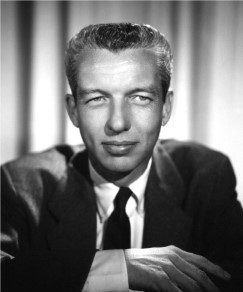
Yours Truly Johnny Dollar: The Rochester Theft Matter (EP0620)

John Lund
Johnny works with the police to try and solve a woman’s murder as the murderer was behind a theft in Rochester that cost the insurance company dearly.

Original Air Date: May 12, 1953

Save more and combine hotel and airline fare at http://www.johnnydollarair.com

Cast your vote for the show on podcast alley http://podcastalley.greatdetectives.net

Become one of our friends on Facebook…http://www.facebook.com/radiodetectives

Take the listener survey at http://survey.greatdetectives.net

Click here to add this podcast to your Itunes, click here to subscribe to this podcast on Zune, click here to subscribe to this feed using any other feed reader.

Sherlock Holmes: Death is a Golden Arrow (EP0619)

Sherlock Holmes is called in by members of an archery club to stop a rivalry from getting out of hand, but it’s not long before Holmes is looking for a murderer.

Original Air Date: March 21, 1948

Take our listener survey…http://survey.greatdetectives.net

Become one of our friends on Facebook… http://www.facebook.com/radiodetectives

Vote for the show on Podcast Alley…http://podcastalley.greatdetectives.net

Call 208-991-4783 to leave a voicemail.

Click here to add this podcast to your Itunes, click here to subscribe to this podcast on Zune, click here to subscribe to this feed using any other feed reader.

Let George Do It: And Hope to Die (EP0618)

Bob Bailey

George tries to help a temperamental aging actress who is being threatened while living in a house filled with loyal lackeys.

Original Air Date: December 4, 1950

Take our listener survey…http://survey.greatdetectives.net

Cast your vote for the show on podcast alley…. http://podcastalley.greatdetectives.net

Become one of our friends on Facebook… http://www.facebook.com/radiodetectives

Call 208-991-4783 to leave a voicemail.

Click here to add this podcast to your Itunes, click here to subscribe to this podcast on Zune, click here to subscribe to this feed using any other feed reader.

Campbell’s Playhouse: The Murder of Roger Akroyd (EP0617)

Orson Welles

While trying to retire, Poirot investigates the murder of a rich man in the country.

Original Air Date: November 12, 1939

Take our listener survey…http://survey.greatdetectives.net

Cast your vote for the show on podcast alley…. http://podcastalley.greatdetectives.net

Become one of our friends on Facebook… http://www.facebook.com/radiodetectives

Call 208-991-4783 to leave a voicemail.

Click here to add this podcast to your Itunes, click here to subscribe to this podcast on Zune, click here to subscribe to this feed using any other feed reader.

Barrie Craig: Death Buys a Bedroom (EP0616)

William Gargan

On board a train heading for a fishing vacation to the Adirondacks, Barrie runs into mystery and murder when a beautiful woman asks him to guard an envelope.

Original Air Date: July 27, 1954

Take the listener survey at http://survey.greatdetectives.net

Give us a call 208-991-4783

Follow us on Twitter @radiodetectives

Click here to add this podcast to your Itunes, click here to subscribe to this podcast on Zune, click here to subscribe to this feed using any other feed reader.

Audio Drama Review: Colonial Radio Theatre’s 2nd Father Brown Collection

Last year, I reviewed Colonial Radio Theatre’s first Father Brown collection adapting classic stories from G.K. Chesterton.  I was pleased recently to finally download and listen to their second collection. As with the first collection, production values remain high with quality acting, and well-done sound effects.

This is a tougher collection for the adapters in some ways as two of the four stories they adapted are challenging ones to dramatize, but overall they carried it off quite well.

The Flying  Stars: It’s crime time at Christmastime. Father Brown is one of several visitors to a wealthy English home, including a young socialist where a valuable jewels called, “The Flying Stars” make an admirable target for thieves. And thieves strike-during a pantomime event.  This one was a bit slow getting to the crime as it dragged through preparations for the pantomime.  However, the story as written by Chesterton was equally slow-paced. As slow it was, it was also necessary for the character development of Flambeau and Colonial does listeners a favor by actually showing Flambeau reform. They also did a nice job setting up a transition to the next story.

Point of a Pin: Noisy construction workers are waking Father Brown up every morning as they work on an apartment building, but a potential union strike or lock out threatens to stop construction. The owner of the construction company  lays off his workers and then is murdered. A threatening note points to union radicals as the likely culprit but Father Brown has other ideas.  This was a lot of fun for me, particularly because “Point of a Pin” is a lesser known and later Father Brown story that I hadn’t read yet and Colonial did a great job in bringing this baffling story to radio.

The Three Tools of Death: Along with “The Blue Cross” this may be one of the best Father Brown mysteries.  I actually based much of my Father Brown chapter in my book, All I Needed to Know I Learned from Columbo on this story. However, it’s not always gotten the respect it deserved. In the 1970s, the BBC ruined the story when they adapted Father Brown for television because the original story was so politically incorrect. Colonial didn’t try to airbrush the story. They let it speak for itself and produced a faithful and well-done adaptation of this mystery that centers around Britain’s leading optimist and teetotaler being found murdered. At first, there are no weapons found, and then all the sudden, there are too many. Father Brown says something’s wrong with the crime scene, that all these weapons are “not economical.”  Colonial does a great job telling the story. They even preserved the post-solution ending. It features Father Brown, after having unraveled one of the greatest mysteries in the history of detective fiction, going on about his rounds as a clergyman. That right there tells  you all you need to know about Father Brown.

The Invisible Man: A young man wants to marry a beautiful woman, but finds her being menaced by an invisible man. Threatening notes are left, but no one seems to be around. A threatening poster was put up, but no one was seen in the vicinity. Finally, a man is murdered under the watchful eyes of a man who swore that he saw no one go in.  What’s going on? This story like, “The Sign of the Broken Sword” is one of Chesterton’s most influential stories. It’s also, like “The Sign of the Sword” in that it’s incredibly hard to adapt based on the bizarre ending that Chesterton gave the original story. Colonial tries to work around this by having Father Brown narrate the story, which really doesn’t work all that well. Still, it’s a good story and other than Colonial’s attempt to deal with Chesterton’s quirky ending,  the adaptation is thoroughly enjoyable as well.

Overall Rating for the Set: 4.0 out of 5.0 stars.

Colonial turned out another great Father Brown set.

Sleuths of My Youth: Dr. Mark Sloan

Previous in this series: MathnetPerry Mason and Ben MatlockBatmanHardy Boys, Nancy Drew, and Tom Swift Sherlock Holmes, and Encyclopedia Brown.

This is the last installment in the series.

Diagnosis Murder came just as I was entering my teen years. The show was a long-time success for so many reasons throughout its eight seasons.

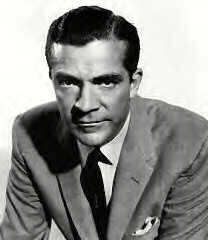
First and foremost was Dick Van Dyke, one of America’s most beloved actors, a TV legend whose Dick Van Dyke show was already an American classic. Van Dyke was charismatic and multi-talented, and he brought that to his role as Sloan.

Van Dyke was backed up by a strong supporting cast including Victoria Rowell as Dr. Amanda Bentley, the pathologist and Van Dky’es real life son Barry played his TV son Police Lieutenant Steve Sloan, and the younger demographic was served by sidekicks Dr. Jack Stewart (Charles Baio) and the Dr. Jesse Travis (Charlie Schlater). The likable and talented cast did a great job with each week’s program.

Van Dyke’s stature commanded great guest stars and the program offered all sorts of surprising crossover, including allowing Mike Connors to solve another case of Matlock and allowing Ben Matlock to appear on his third network. They also had several themed episodes were guest stars all had something in common. One such episode centered on an alleged alien abduction. Guest stars included Star Trek alum Majel Barrett,  Walter Koenig, Will Wheaton, and George Tekei as well as Lost in Space’s Billy Mummy.

As a mystery show, the program transition over time. It began as more of “Murder She Wrote” series with straight whodunits. Later seasons played around with different styles including Columbo-style inverted mysteries with Dr. Sloan as the relentless detective. Other episodes would be more soft boiled mysteries that Jessica Fletcher might easily undertake. Other episodes were action-packed adventures. The program mixed it up and managed to be great entertainment throughout its eight year run. It managed to show that a mostly PG detective story could be quite successful, even in the turbulent 1990s.

If you enjoyed this post, you can have new posts about Detective stories and the golden age of radio and television delivered automatically to your Kindle.