A man comes to Rogue, claiming to have proof that a fur warehouse fire was arson. As Rogue’s making a deal to investigage with the insurance company, his witness is hot.
Click here to download, click here to add this podcast to your Itunes, click here to subscribe to this podcast on Zune, click here to subscribe to this feed using any other feed reader.
tClick here to download, click here to add this podcast to your Itunes, click here to subscribe to this podcast on Zune, click here to subscribe to this feed using any other feed reader.
In 1950, NBC produced won of radio’s greatest spectacles of talent, a 90 minute variety show.
The late 40s had been bad for NBC as rival CBS had raided their stable of talent, luring Jack Benny, Burns and Allen, Harold Peary (Star of The Great Gildersleeve) over to their network with higher wages.
NBC had not come up with an answer for how to challenge Jack Benny’s Sunday Night supremacy and from this was born, The Big Show. It was planned as a 90 minute variety show, which was extraordinary. There had been other variety programs that had been an hour in length such as The Shell Chateau, The Good News programs of the late 30s and early 40s, The Kraft Music Hall, and Fred Allen’s Texaco Show of the early 40s. However, 90 minutes was unpreceded for a radio variety show outside of a few specials.
The Big Show alternated between Hollywood and New York, allowing it to access most of America’s major talent wherever they happened to live. With a budget of $30,000 an episode, they managed to land solid talent, producing a fine mix of comedy, music, and drama. The Big Show had many great ingredients:
Tallulah Bankhead
“The glamorous unpredictable Tallulah Bankhead” was the show’s host. Her voice was one of the most recognizable in radio. It was deep and distinct. She called her guests “darling.” Bankhead was best known as a stage actress on Broadway and in London. The highlight of her film career had been Alfred Hitchcock’s Lifeboat. Finding other movie roles that suited Bankhead’s unique personality was a challenge.
Bankhead was a rare talent. Her range of duties included comedic banter with the guests who, in the tradition of old time radio variety shows poked fun at her age, her low voice, her offkey attempts at singing, and her rivalry with Betty Davis. Bankhead also would get a chance to showcase her dramatic talent, performing several pieces including several one woman scenes. She also did her fair share of comedic performances. Bankhead also mixed in occassional sincere moments such as when she paid tribute to the nation’s troops overseas or a great performer. She would signal the station identification on each half hour by saying she was ringing her chimes, which would signal the famous NBC Chimes.
The Comedians
The Big Show played host to some of the greatest and best loved comedians America ever produced.
The Big Show’s most frequent guests were Fred Allen and his wife Portland Hoffa. Allen had had his own show for many years, but a combination of declining ratings, declining health, and the rise of television led to the end of his program.
Allen was known for his biting satirical wit which stood as Allen’s unique genius in this era. Allen got off the show’s most memorable line when he declared the reason television was called a medium was because nothing was well done.
Jimmy Durante was also a frequent guest on the program. His mangling of the English language, self-depreciating manner, and jolly singing made him a delightful addition to the show.
Other comedians making multiple appearances included Groucho Marx, Bob Hope, Eddie Cantor, Ed Wynn, Joan Davis, and Martin and Lewis. These programs led to some interesting combinations. In one episode, Groucho groused about having to play straight man to Jerry Lewis at this point in his career. Dean Martin would have a similar thought a few years later.
Every comedian I’ve listed so far had their own radio shows, so The Big Show is a great way for OTR fans to find new comedy favorites. In addition, two men who would have great careers in television (Danny Thomas of Make Room for Daddy and Phil “Sergeant Bilko” Silvers) made an appearance each.
Music and Meredith Wilson
The musical portion of the show included top shelf talent with appearances by Ethel Merman, the Andrews Sisters, Jack Carson, Mindy Carson, Judy Garland, Ethel Waters, and Railroad Hour host Gordon McRae among others. Perhaps the biggest novelty of the show is the three appearances by then-first Daughter Margaret Truman.
However, the musical delight of the show remained Meredith Wilson, the music director who was charged with a 40-piece orchestra. Wilson not only came up with great arrangements, the first season of the Big Show was punctuated with several original Wilson songs. Wilson’s creativity was not limited to music. In the only full Season 2 episode in existence, the cast performs scenes from Wilson’s novel, “Who Did What to Fedalia?”
Perhaps Wilson’s greatest hit was the show’s closing anthem, “May the Good Lord Bless and Keep You.” Bing Crosby called it a song of faith and good will. On the Big Show, the song was sung at the end by the week’s entire cast, including those who weren’t regular singers. Each would distinctly whether it was Groucho Marx or Fred Allen or one of the dramatic stars. Those who couldn’t sing would speak their parts including Tallulah. This gave the show a memorable and classy ending.
Even after the Big Show ended, Wilson’s creation endured. “May the Good Lord Bless and Keep You” has been performed by artists as diverse as Tammy Wynette, Bing Crosby, Jim Reeves, and the Mormon Tabernacle Choir. It’s an enduring classic and the biggest thing to come out of the Big Show.
Drama
The Big Show took a few episodes to live up to the show’s promise of providing drama in addition to the comedy and music, however when it did, it it did the dramas well. Movie actors would come and perform scenes from new film releases or when the Big Show was in New York, radio audiences could get a taste of the latest Broadway play, including many who would never make it to New York to watch the performance. Actors who made dramatic appearances on the show included Peter Lorre, Edward G. Robinson, Rex Harrison, and George Sanders.
The Big Show would often follow up a serious well-done drama with uproarious comedy. Tallulah and male guest star could perform a deadly serious piece and then a comedian like Jimmy Durante would ask permission to perform his version of the scene. After the heavy scene that came just before, the humorous takeoff was made even more funny.
The Demise of the Big Show
Sadly, the Big Show didn’t last but two seasons. It couldn’t have done much better. Television was coming on strong and advertising dollars would not support the Big Show’s big budget. Indeed, one of the advertisers for The Big Show was RCA which promoted it’s new television console. The day of big radio were clearly numbered.
The entire First Season of The Big Show survives to this day but only 1 and 2/3 episodes of 31 survive from Season 2. Still, what remains is a fantastic program put on by some of the finest talent radio produced. Truly the Big Show was worthy of its big name.
If you enjoyed this post, you can have new posts about Detective stories and the golden age of radio and television delivered automatically to your Kindle
Click here to download, click here to add this podcast to your Itunes, click here to subscribe to this podcast on Zune, click here to subscribe to this feed using any other feed reader
While in retirement, Sherlock Holmes investigates a seemingly random burglary of the local vicar’s home but finds something far more sinister is afoot.
Click here to download, click here to add this podcast to your Itunes, click here to subscribe to this podcast on Zune, click here to subscribe to this feed using any other feed reader.
Click here to download, click here to add this podcast to your Itunes, click here to subscribe to this podcast on Zune, click here to subscribe to this feed using any other feed reader
Click hereto download, click here to add this podcast to your Itunes, click here to subscribe to this podcast on Zune, click here to subscribe to this feed using any other feed reader.
Click here to download, click here to add this podcast to your Itunes, click here to subscribe to this podcast on Zune, click here to subscribe to this feed using any other feed reader.
A recent study shows that Americans don’t know their history. According to the NAEP report card, 22% of American students are proficient at grade level in American History, dropping to 13% for High School graduates.
Of course, it hasn’t always been like the case. During the golden age of radio, the radio not just the theater of the mind, it told the story of America’s heritage, passing it on like an ancient storyteller around a campfire.
And those who told these stories of America were some of the best at it. Thankfully, many of these great shows are preserved so that we can find those unique and exciting stories that are part of American history.
We cannot hope to cover every single series that was about some portion of American History. The field of radio programs is far too vast. Rather, in this piece we’ll highlight four shows that represent a good jumping off point. Nor does this list included the almost never-ending list of programs that because of their age, give us an insight into history.
1) Cavalcade of America: 1935-53:
The term “Cavalcade” is one that was used often during the golden age of radio and television but not commonly today. A Cavalcade is a procession, a noteworthy series. The theme of Cavalcade of America’s early years was that as Americans we were part of a cavalcade that kept moving on. Early episodes would take a look at a theme. In the first episode, “No Turning Back,” the program began with the pilgrims electing to stay through the hard winter at Plymouth Rock and then turned to farmers who had been hit by the dust bowl who found the courage to keep on. Both, according to the program’s creators were part of that same procession. Future episodes focused on virtues of self-reliance, industry, and the will to rebuild. Each took vignettes from American history and tied them together through this Cavalcade theme.
And the stories that were told were magnificient. There were, of course, the ones you’d expect such as the Wright Brothers flight. However, there were many marvelous little known gems from American history. Examples include:
A steamboat race from St. Louis to New Orleans that captured the imagination of the world.
The settlement of Oklahoma and why the state was called the Sooner State.
The man who struggled to make a business of exporting ice from the United States and selling it overseas in tropical climates in the 19th Century.
The program did evolve and the Cavalcade theme became less prominent, particularly during the War years. If you listened to other radio programs during the war you’d hear about the work done by the Army, Navy, Air Force, and Marines, but the Cavalcade of America took pains to portray the Merchant Marines, ambulance drivers in Africa, and those who brought supplies to the front.
Cavalcade of America featured some of the finest talent in radio. Among those who appeared were: Orson Welles, Humphrey Bogart, Gregory Peck, Jimmy Stewart, Dick Powell, Bob Bailey, and a host of others.
Cavalcade continued to tell remarkable true stories, along with a few fictionalized plays that were popular in the era. While occassional bias in the selection of material or the portrayal of controversial figures was on occassion, apparent, the series remains a marvel.
The show was sponsored by the Dupont Corporation and here Dupont deserves some plaudits. Unlike other sponsors who threw old transcription discs out like old rubbish, Dupont has held on to most of these discs, and they deserve some credit for the series being so well-catalogued and with more than 700 episodes in circulation. Dupont’s ads themselves are great history as they describe how the company is working for “better living through Chemistry” and some of Dupont’s latest advances, many of which we take for granted in the 21st Century.
The Old Time Radio Researchers set of this series remains one of the best collections, providing a good look at the breadth of this series. Click here to sample some of the single episodes.
2) Inheritance: 1954-55
This program, filled the void of Cavalcade of America. It was sponsored by the American Legion and aired over NBC. It featured stories from American History, both well-known figures such as Davy Crocket and George Washington Carver, as well as lesser known figures such as the first female American physician, Elizabeth Blackwell.
It was Orson Welles with his, “War of the Worlds” broadcast that first highlighted the dramatic storytelling power of a fictional newscast. In 1947, CBS News used the power of radio to teach history in its radio programs (and later television version), You Are There.
CBS is There/You Are There showed how historical events would have been covered by a modern news organization. In this Case, CBS, brought to life such events as the passage of the Declaration of Independence, the Battle of Gettysburg, and the assassination of Abraham Lincoln. It should be noted that not every episode of You Are There focused on American History, with CBS covering global events such as the last days of Pompeii and deaths of Joan of Arc and Socrates. CBS offered a great product and episodes are available at the Internet Archive. The Digital Deli has put together a wonderful log that arranges the episodes of You Are There in historical order.
4) Mr. President: 1947-53
Each episode of Mr. President tell a real story from the life of the President of United States. Often the stories are exciting or little known chapters in the lives of the men who have filled the office. Mr. President in all of his persons is played by Edward Arnold.
The series was noted for not telling listeners what President was being profiled until the end with listeners guessing who it was. Sadly, many OTR collectors have ruined that aspect of the series by labeling the shows with the name of the President.
As stated at the start of this article, we’re only scratching the surface of historical old time radio.There were plenty of other shows that profiled American History. The OTRR, a few years back assembled a collection of radio shows on American History with excerpts from programs such as American Trail, Destination: Freedom, and Frontier Fighters.
You can listen to these miscellaneous programs at the Internet Archive which also contains many other great radio treasures that provide an insight into America’s great history.
If you enjoyed this post, you can have new posts about Detective stories and the golden age of radio and television delivered automatically to your Kindle
The wife of an old colleague asks Johnny to find out what happened to her husband, who told her she went to San Francisco without contacting her for month. When Johnny finds out he wishes he hadn’t.
Click here to download, click here to add this podcast to your Itunes, click here to subscribe to this podcast on Zune, click here to subscribe to this feed using any other feed reader
Click here to download, click here to add this podcast to your Itunes, click here to subscribe to this podcast on Zune, click here to subscribe to this feed using any other feed reader.
Rogue goes to help an elderly woman with a son in trouble with the law. The son’s not there and Rogue wakes up to find he was given a Mickey Finn in his tea and has been framed for murder.
Click here to download, click here to add this podcast to your Itunes, click here to subscribe to this podcast on Zune, click here to subscribe to this feed using any other feed reader
Click here to download, click here to add this podcast to your Itunes, click here to subscribe to this podcast on Zune, click here to subscribe to this feed using any other feed reader
If you’re looking for a wholesome Old Time Radio for the whole family, Family Doctor could be just what the doctor ordered.
Over the years, many television series, books, and movies have taken a longing look at the past in programs such as Little House on the Prairie and The Waltons which served as a reminder of old fashioned values and a time when a sense of community was a reality. The quest for this sort of world continues in the 21st Century with the rise of Amish fiction stories.
Family Doctor is not taking a look back, but is set in the then-present which is widely believed to be 1932 when the shows were produced. Like the other syndicated 15 minute shows we examined the last two weeks, Family Doctor’s 39 episodes were syndicated to various radio stations and sold as a package. Unlike the other shows, Family Doctor had regular character and story archs.
The show follows the adventures of Grant Adams, the longtime physician of the small town of Cedarton. Cedarton is a three-dimensional town brimming with wonderful characters who Doc Adams tries to help and encourage including Pete who runs the drugstore and Griff, the workaholic boat renter who works too hard and always promises that he’ll find a younger man to do his hard work. Then there are two teenage girls who compete for the hear of a clerk at the drug store and then when he leaves, they fight for the next clerk hired.
The 39 episodes of Family Doctor range from the humorous to the exciting , the heartbreaking and the inspirational:
“Pete May, the Ambulance Driver”
With Dr. Adams’ car is in the shop so he asks Pete to drive him out on a house call)
“The Fire Alarm”
After talking about how nothing happens in Cedarton, Doc and the other volunteer firemen go to the scene of a fire where Doc risks his life to save a child.
“Enjoyment”
The town drunk is injured saving the life of a little girl and Doctor Adams works feverishly to save him.
Episodes 37-39
The 3-part series finale which requires Doc to make a difficult choice about his future and that of the town.
Doc Adams calls to mind generations of country doctors who were revered for their selfless giving of their lives for their patients. Yes, this doctor does make house calls. He dispensed more common sense, wisdom, and kindness than any other prescription in the series.
Cedarton feels like a real place with real flaws: the program portrays Cedarton having incidents surrounding gossip, foolish competitions, suspicion of strangers, and even uncivil politics. At the same time, Cedarton is also a community where people are watching out for others. When Chic, who works at the drug store wants to rent a boat for a date, Griff makes it clear that he doesn’t rent boats to unmarried young couples without parental consent. Family Doctor presents small town life at its best and its worse. The exact location of the fictional town is never disclosed, but based on clues from the show, it was probably in upstate New York or New England.
The show remains a little known treasure:. It captures a time and place in American history with well-written and well-performed stories. The actors remain anonymous, although some take guesses. David Goldin suggests Jane Morgan and John Gibson (“Ethelbert”) appeared in the show, and I think I heard Agnes Moorhead, but identifying voice without credits s is always iffy.
The program pre-dates the similarly themed Dr. Christian radio series by five years and stands up well after nearly eighty years despite the lack of a named cast.
Click here to download episodes of the Family Doctor from the Internet Archive.
If you enjoyed this post, you can have new posts about Detective stories and the golden age of radio and television delivered automatically to your Kindle
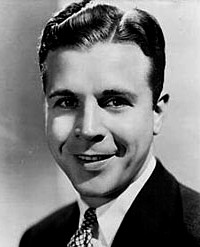
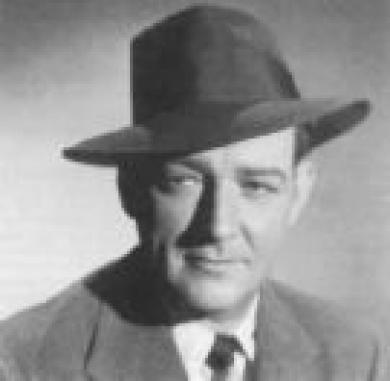
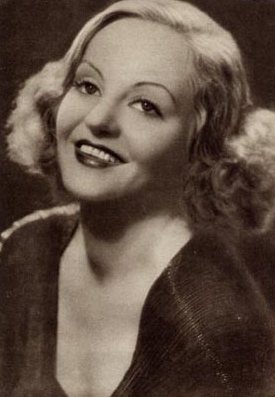 “The glamorous unpredictable Tallulah Bankhead” was the show’s host. Her voice was one of the most recognizable in radio. It was deep and distinct. She called her guests “darling.” Bankhead was best known as a stage actress on Broadway and in London. The highlight of her film career had been Alfred Hitchcock’s Lifeboat. Finding other movie roles that suited Bankhead’s unique personality was a challenge.
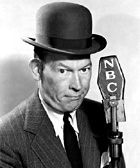 Portland Hoffa. Allen had had his own show for many years, but a combination of declining ratings, declining health, and the rise of television led to the end of his program.
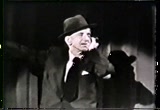 Jimmy Durante was also a frequent guest on the program. His mangling of the English language, self-depreciating manner, and jolly singing made him a delightful addition to the show.
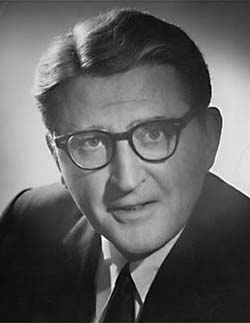 However, the musical delight of the show remained Meredith Wilson, the music director who was charged with a 40-piece orchestra. Wilson not only came up with great arrangements, the first season of the Big Show was punctuated with several original Wilson songs. Wilson’s creativity was not limited to music. In the only full Season 2 episode in existence, the cast performs scenes from Wilson’s novel, “Who Did What to Fedalia?”