9 search results for "The Bottle Imp"

Molle Mystery Theatre: The Bottle Imp (AWR0275)

Amazing World of Radio

Today’s story:

A man buys a lamp that grants his every wish for three cents … but with a catch.

Original Radio Broadcast Date: December 12, 1944

Originating in New York

Go to http://amazing.greatdetectives.net to subscribe to the podcast.

Brought to you by the support of our Patreon listeners…http://patreon.greatdetectives.net

Support the show monthly at patreon.greatdetectives.net

Patreon Supporter of the Day: Bruce, Patreon supporter supporter since March 2024.

Support the show on a one-time basis at http://support.greatdetectives.net.

Fun Facts to Help Understand the World of Old Time Radio

I remember reading a few years back in a book that there’s such a thing as “the curse of knowledge.” The curse of knowledge is that when you know something, it’s very hard to imagine what it’s like not to know it.

And that can be a challenge with Old Time Radio programs. There are a lot of references, inferences, etc. that people who weren’t around at the time and haven’t immersed themselves in the culture of the era just don’t get. Having listened to some old-time radio and read a lot about the era, I catch a lot of references that might go by the casual listener. While I explain these in podcasts, I thought it would be interesting to list a few things that come up in old time radio quite a bit:

Economic/World Events/Phenomena

War Rationing: During World War II, many materials were rationed, leading to shortages. Sometimes, this leads to a big deal being made out of things that can seem odd to the modern listener. For example, some comedians joked about winning a woman’s favor with a pair of nylon stocking, A spare intertube might be discussed as some high end valuable. There might be episodes that focus on things like black markets in meat. Conversely, some radio programs might have their protagonists engage in support of rationing and the war effort by declaring that they’re observing “meatless Tuesday.”

Victory Gardens:  Another part of the homefront war response were “victory gardens.” During the War, gardening became more than the occupation of those with green thumbs or hobbyists. Gardens were pushed as patriotic. The more people could grow their own fruits and vegetables, the more America’s farmers could supply to our troops and allies. The Victory Gardens would become important after the war, as the starving people in formerly occupied and Axis countries became a humanitarian challenge.

Travel During the War: Travelling during the War was discouraged and far more rare than before the War. There was a constant stream of troops moving throughout the country on the nation’s railways and also many areas faced a bottleneck in the availability of hotel rooms.

Housing Shortage:  As the War wound down, America faced a housing shortage due to returning service members. This would lead to many new developments and the construction of new housing. But in the immediate aftermath of the war, people struggled to find a place to stay, even if they had a job. This led to all sorts of predicaments that would be be exploited by radio writers. The difficulty of being able to move easily is often a backdrop for many stories both comedic and dramatic.

The Gallup Poll and the 1948 Elections: The final Gallup Poll predicted that Thomas Dewey would defeat Harry Truman. Truman won, leading to the famous picture of Truman holding up a “Dewey Beats Truman” headline. The Gallup poll took years of ribbing from comedians as a result.

Republicans and Democrats: Republicans were the out-of-power party for much of the Golden Age of radio. They suffered landslide defeats at the hands of FDR for a total of five presidential election losses, including the 1936 landslide defeat of Governor Alf Landon, the biggest landslide in US presidential history. Democrats also captured lopsided majorities in Congress during the 1930s. In 1946, Republicans took Congress and hoped to run Washington after 1948, but were disappointed by Truman’s victory. Finally, in 1952, Eisenhower was elected, and brought Republican majorities in the House and the Senate. Most political humor focused on ribbing the guys who lost the elections, so Republicans were the butt of jokes for years for being out of power, particularly after the 1948 disappointment. This reversed after 1952, when Democrats found themselves the outparty for the first time in two decades. Jokes did reference certain areas being party strongholds. For example, some lines will reference Maine and Vermont as Republican strongholds, while certain Southern states were seen as strong Democratic states.

Memes and Running Gags

We have our memes of various levels of grounding in truth in the twenty-first century. The 1940s and 50s was no different.

Harry Truman played the piano, and got ticked when people made fun of his daughter: Yes, during his brief Vice-Presidency, Harry Truman played the piano at the National Press Club with a then-unknown actress named Lauren Bacall sitting atop it. Thereafter, Truman’s very proper wife forbid him from playing the piano in public.

Musical talent ran in the family, as his daughter Margaret was a singer. One Washington Post writer gave her a negative review. Truman, the leader of the Free World, but still a father, wrote to the columnist, “Some day I hope to meet you. When that happens you’ll need a new nose, a lot of beefsteak for black eyes, and perhaps a supporter below!”  Truman’s defensiveness of his daughter would occasionally be cautiously referenced thereafter.

Celebrity Memes

There were so many memes and running gags around Hollywood entertainers. Here’s a sampling:

Jimmy Durante and Bob Hope had big noses.

Frank Sinatra was very thin. Comedians would play this up to the level that you imagine Sinatra wasting away, walking around with an IV. Hope had a bandleader named Skinny Ennis who he could similar jokes about.

Conversely, the girth of figures such as band leaders Paul Whiteman and John Scott Trotter were the subject of constant ribbing.  Elder entertainment industry statesmen like Victor Moore and Al Jolson were old, while young up and comers like singer Kenny Baker were portrayed as childlike.

C.W. Fields was not only a drunk, but jokes focused on him as a having a perpetual red nose. Band leaders Phil Harris and Artie Shaw were also said to be hard drinkers.

Bing Crosby was known as a flashy dresser with questionable taste in colors. He was also known for having a lot of children, all of them boys. (Crosby’s daughter wasn’t born until 1959.)

Conversely, comedian Eddie Cantor was known for having high energy, big eyes, and for having five daughters.

Jack Benny was cheap, a joke that he originated on his own program. Other shows would go further and play his cheapness up to an eleven. Benny was also known for his violin playing for comedic effect, and also for insisting he was thirty-nine.

George Burns couldn’t sing and lived off the talent of Gracie.

Now, much of this was all part of the act. For example, George Burns definitely could sing, and while it broke his heart, he had a nearly four-decade-long career after the passing of his beloved wife. However, these ideas were referenced throughout the wider culture.

Obviously, you can’t make an exhaustive list of everything to understand life seventy or eighty years ago, but I thought it’d be worthwhile to cover a few basics. If there are any facts about American culture or radio that you think it’s helpful for new listeners to old-time radio to know, I’d love to hear from you in the comments.

TV Series Review: Nero Wolfe (1981), Part One

The 1981 Nero Wolfe TV series is a controversial topic. For many fans, this fourteen-episode series is bad, with the critically acclaimed A Nero Wolfe Mystery making the series look even shabbier. Others have fond memories of the series, and it may even have been their introduction to Nero Wolfe.

I’ve wanted to watch the series for some time. After many years of waiting, we finally have an official DVD release. I have finally seen the whole series, and I’m ready to wade in with my opinion. This will be a long review as we take a look at many aspects of the series.

Key Adaptation Decision

Probably the most critical decision made with Nero Wolfe was to make it a contemporary program. This sets it apart from the period setting of A Nero Wolfe Mystery. It’s a perfectly defensible creative decision because Rex Stout had been writing Nero Wolfe up until six years previously and he’d always set the books in contemporary times.

This helped the series in some ways but hurt it in the look of the show, the way characters were portrayed, and the challenges of adapting stories that happened decades previously as if they occurred in 1981.

Casting

While the cast is not as good as the 1979 TV Novie’s, it’s solid. William Conrad has some good moments as Wolfe. Critics point out Conrad was shorter than Wolfe and  wore a beard plus Conrad’s usual mustache. Wolfe only wore facial hair in one book. Personally, the height’s not a big deal, and I like the beard. It distinguishes Wolfe from Frank Cannon and it makes him look distinguished which actually helps me buy him as Wolfe.

To be sure, I have problems with the way Wolfe’s portrayed, but it comes down more to writing than to acting. There was not a scene in all fourteen episodes where I thought, “This would’ve been better with another actor.”

Lee Horsey as Archie Goodwin is the best asset the series has. He makes a good 1980s take on Archie Goodwin. Because of the era, his performance is different from the book, but Horsey maintains the character’s charm and humor while still being a solid legman.

The one casting choice which doesn’t work is Allan Miller as Inspector Cramer. In the books, Inspector Cramer has this working-class, almost rumpled feel to him. He walks around chewing a cigar. Allan Miller is too smooth, polished and dapper to be Inspector Cramer regardless of the era. If they wanted the characterization Miller brought to the role, they would have done better to give Wolfe an original-to-TV police foil.

Adaptation Positives

There are some good touches for the series. Good effort went into building the set.  An April 3, 1981 story in TV Guide details how Art Director John Beckman flew out to New York, studied how Browstones were built, and paintstakingly created the facade on the Paramount lot. They built a four-story oak spiral staircase as well as a four-story working elevator that cost $175,000 (or half a million dollars today.)

On top of that, you have the crown jewel of the series, the Orchid Room. This is the one area where Nero Wolfe outdoes a Nero Wolfe Mystery, a lot of thought and effort went into creating a beautiful orchid room with 2,655 plants brought in. It’s a beautiful set and seeing it is a highlight of the series.

I also have to give the series credit for taking one of my favorite Nero Wolfe moments from The Rubber Band where Wolfe hides a client from the police in the orchid room under plants and working it into an original story even when that novel wasn’t adapted.

The series does have some good scenes with Wolfe arguing with people over cooking and orchids. Those scenes are true to the spirit of the character.

I also have to give them credit for keeping Wolfe house-bound for all but two of the fourteen episodes. It’s a far better ratio of housebound to not than the New Adventures of Nero Wolfe or even the original stories.

In researching the series, I learned from Charles Transberg’s book William Conrad: A Life and Career that Conrad had strict working hours in his contract and if the filming went past his time for departure, they’d have to finish filming without him. That’s the sort of thing Nero Wolfe would have in his contract if he ever became an actor.

Adaptation Negatives

There are a lot of issues I could take with this series, ranging from the trivial to the really serious flaws. I’ll start with the lesser ones and work to the big ones. I’ll save a look at issues with specific episodes for Part Two.

First of all is the office set. My first big annoyance is the set lacks a “red leather chair,” the most important piece of furniture (aside from Wolfe’s own chair) in the novels.  However, a bigger issue with the office furniture is just how cluttered the office looks.

The TV Guide article revealed that $250,000 was spent in to fill the Brownstone set with antiques. There’s some nice pieces, but it doesn’t look particularly well-put together and seems a bit busy. It looks a lot like my desk, with various and sundry things seemingly where they are at random and it shouldn’t. Based on the amount of order and rigor Wolfe puts into the house, you imagine its very orderly,  and not like the great detective needs a decluttering consultation with Marie Kondo.

A more serious blunder was choosing to adapt whole novels into one-hour episodes. A Nero Wolfe Mystery had the right idea when they did novel adaptations in two episodes and short stories in one. Doing it in the way Nero Wolfe does it ends up with many plots feeling rushed and important moments are missing.

The series also tended to have a clumsy approach to introducing aspects of the Wolfe world and/or Wolfe’s eccentricities. The story pauses briefly to show us the set designer bought a big globe like the one in the novels. Another story has an entire brief scene where Wolfe guzzles down a glass of beer and tosses the bottle cap in the drawer with no one else around.

The worst introduction of a part of Wolfe lore came in the thirteenth episode, “The Blue Ribbon Hostage.” In the novels, Wolfe insisted others be seated so that their eyes would be on the same level as his. Throughout the first twelve episodes of the series, this was not an issue at all as others stood while Wolfe sat or Wolfe stood while others sat with no mentions of “eyes at level,” until thirteen episodes in they decided to have him do it.

You simply can’t have Wolfe inconsistent on his eccentricities. To quote Wolfe in his first novel, “I understand the technique of eccentricity; it would be futile for a man to labor at establishing a reputation for oddity if he were ready at the slightest provocation to revert to normal action.”

However, the biggest issues with the series come down to the character of Wolfe himself.  Nero Wolfe eliminates most of the character’s less likable habits.  Wolfe is never lazy and never has any hesitation about taking on work. He doesn’t have the mercenary sense of Wolfe in the book.  The one negative trait he’s left with is his opinionated nature on orchids and cooking. Other than that, if he’s not dealing with a murderer, he’s a large teddy bear of a man who is actually called “sweet” in one episode.

The problem with that is it’s not true to the nature of Nero Wolfe. It’s like the opposite of today’s “grim and gritty” reboots  where instead Wolfe is relieved of the burdens of his faults and rough edges. Yet, the decision calls to mind G.K. Chesterton’s warning, “Do not free a camel of the burden of his hump; you may be freeing him from being a camel.”  The way the character is written, there’s a whole lot less Nero Wolfe to him.

Rex Stout wrote Wolfe as a fully developed human being, replete with flaws. In the course of the books, Wolfe does have many great moments where he surprises you and you get see more his sense of honor, his kindness, and his appreciation for different parts of his family. Yet, it’s done in a way that’s understated and true to Wolfe’s approach to life.

Since the series gets Wolfe wrong, it hurts the most important relationship in the books, that between Wolfe and Goodwin. In the books, the two men have gifts and talents that compliment each other and have an almost symbiotic relationship. However, they also tend to clash because of their differing personalities, with Archie providing his unique interpretation of Wolfe’s actions and beliefs.

While Wolfe is technically the employer and the boss, Archie is the one who balances Wolfe’s checkbook and often times has to spur  Wolfe to work when he would rather sit around and read all the day long when he’s not eating or tending his orchids. Several times, Archie has to deal with Wolfe losing interest in a case and his “relapses” into a semi-depressed state.

It’s an interesting state of affairs that provides for lots of interesting plots in the books. In the TV series, the two work together with little friction at all. The only exceptions are a book-accurate scene  in The Golden Spiders and a scene in the final episode where Wolfe orders Archie not to go to a meeting that Wolfe feels is a trap and threatens to fire Archie. Archie chooses to quit instead. It’s not great, but this conflict is as close as the series get to capturing the nature of these two characters.

Next week, we’ll finish up and talk about the individual episodes and my overall thoughts on the series.

If you enjoyed this post, you can have new posts about Detective stories and the golden age of radio and television delivered automatically to your Kindle.

This post contains affiliate links, which means that items purchased from these links may result in a commission being paid to the author of this post at no extra cost to the purchase

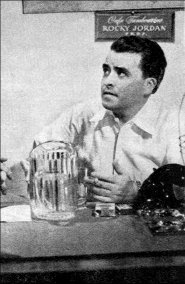
EP2657: Rocky Jordan: Journey to Nashier

Jack Moyles

Rocky takes a sample of his favorite brand of bottled water while visiting a bottling importer. He collapses and wakes up fifty miles away in the desert.

Original Air Date: June 26, 1949

Support the show monthly at patreon.greatdetectives.net

Support the show on a one-time basis at http://support.greatdetectives.net.

Mail a donation to: Adam Graham, PO Box 15913, Boise, Idaho 83715

(more…)

Broadchurch Series 3 Review

Chris Chibnall’s Broadchurch had a fantastic and brilliant first series (see my review here.)  It focused on the effect of the murder of a boy on a small British town and the search for the killer. The cast was superb, led by David Tennant as Detective Inspector Alec Hardy and Olivia Coleman as Detective Sergeant Ellie Miller.

Series 2 was, in my opinion, a bit of a mess. Miller and Hardy are in different positions within the police department. It focused on the ludicrous trial of the killer from series one that ends in his acquittal. Meanwhile Hardy and Miller work unofficially through a tedious mystery that had nothing to do with the small town but had some stakes for Hardy to settle an old case that had haunted him.

Series 3 is set two years after Series 2 and finds Miller and Hardy have both reset their lives. They’re back in their old positions when 49-year-old Trish Winterman (Julie Hesmondhalgh) reports she was raped at a party. Miller and Hardy investigate the case. Meanwhile, Beth Latimer (Jodie Whitaker) is the mother of the boy murdered in the first series. She shows up in series three, working as an advocate for SARA (sexual assault response association) but is estranged from her husband Mark (Andrew Buchan) who remains unable to find closure after their son’s killer was acquitted.

The process of investigating the crime is handled solidly. It’s a good procedural which was almost Dragnetesque at times (particularly in the first episode) as it took us step by step through the unique process of investigating the crime in the United Kingdom and showing what the victim experiences and what forensics they take as they try to preserve any evidence. It’s told with sensitivity and without sensationalism.

Julie Hesmondhalgh gives a believable and relatable performance as Trish. The story handles her in a realistic and sympathetic way. Not all of her actions are sympathetic, but they’re understandable within the context of what she’s going through. Hannah Millward plays Trish’s daughter well, creating a character caught between her mom and her estranged dad, who is one of the suspects in the case. She’s a likable and well-written character.

The stars turn in their usual great performances. The chemistry between Hardy and Miller has matured. Hardy is brilliant and caring, but he’s also no-nonsense and can be abrupt and harsh which Miller tends to soften out. In Series 1, they clashed frequently, but by Series 3, they’re comfortable with each other. Although, at times, it’s obvious he still annoys her.

However, there has been a balancing of the two characters. Hardy has softened a tad over time, while Miller has become a bit harder after the events of Series 1, which can be seen in her interactions with her father and her son.

Both are raising children on their own. Hardy has brought his daughter to Broadchurch so they can have a second chance while Miller is raising her young son and daughter alone.

The series runs headlong into the issue of the state of sexuality in Western Civilization today and the type of men produced by a society over-saturated with pornography. This is illustrated throughout the series and hits home for both detectives. Miller catches her son using and distributing porn, and sexual pictures of Hardy’s daughter are sent throughout the high school. This leads to one of the most memorable scenes where Hardy confronts the perpetrators and gets very Scottish on them.

The series message and the issues it raises are timely after the revelations of late 2017 and raises serious questions that society has to come to grips with.

The development of the Latimers is a realistic tale of contrasts. Beth has not forgotten her son and is dealing with the grief, although her husband’s drama is making that a challenge. She has taken stock of her life and taken that grief and used it to help others. The Latimers’ teenage daughter Chloe (Charlotte Beaumont) has grown. Mark’s inability to deal with it leads to tragic territory but is also very brilliantly performed.

For all that’s praiseworthy about the Third Series of Broadchurch, there are issues. In many ways, the greatest problem with Broadchurch Series 3 is that it isn’t Series 1.

With the exception of Trish and her daughter, the new characters add little depth. They are suspects, witnesses, and the friends and family of them, unlike the vibrant characters of Series 1 with ticks that made the audience care about them. One such character was totally dropped from the series finale, with us not finding out what happened to her and her husband.

This is typical of a detective drama. With few exceptions, outside of the detectives and close supporting characters, we’re concerned about most characters to the extent that they can provide a clue to help us solve the case. Broadchurch Series 1 was unique it won’t be easy to ever recapture that lightning in the bottle. That might be a case for leaving well enough alone and only making one series of Broadchurch, but it’s not an argument against the quality of the subsequent series.

The problem is Chibnall tried to make it feel like series one, particularly in bringing back characters. Reverend Paul Coates (Arthur Darvill) returns to deal with the declining church attendance in town. And newspaper editor Maggie Radcliffe (Carolyn Pickles)faces the Broadchurch Echo’s scummy corporate owners. They plan to close the local office of the Echo. Both Darvill and Pickles are solid performers and did great work in the first series. However, in Series Two, their work is wasted. Both characters are thrown into random scenes throughout the first six episodes, only achieving tangential relevance to the “B” plot of the series in the seventh episode. Only Maggie has a scene that ties into the series’ main plot. It’s good, but I question whether it was worth all the wasted scenes throughout this entire series.

There were also new characters who didn’t make much of an impact. Veteran character actor Roy Hudd played Ellie’s widowed father David, who mainly served as an object for Ellie’s contempt and occasional tirades, as well as managing to kick the already depressed Paul Coates.

While there’s much to the series’ message, it may undermine itself by painting with too broad of strokes. It would be easy to conclude from this series that Alec Hardy is the only decent man left in Broadchurch, if not the UK, or even the entire planet. Every other man we get to know is a fiend, a coward, or otherwise weakly leaving the women in their lives to pick up after them. Even Hardy almost takes a passive approach to a problem that has his daughter wanting to leave Broadchurch and needs Miller to get him to man-up. A bit more balance would have made the series more impactful.

Overall, Broadchurch Series 3 is a good crime drama with two strong leads,  great supporting actors, and a timely message. However, its attempts to live up to the greatness of Series 1 fail to do so and detract from the viewer’s experience.

Rating: 3.5 out of 5


This post contains affiliate links, which means that items purchased from these links may result in a commission being paid to the author of this post at no extra cost to the purchaser.

If you enjoyed this post, you can have new posts about Detective stories and the golden age of radio and television delivered automatically to your kindle. 

Slime Incorporated: Chapter One

Here’s the first chapter of my mystery novel Slime Incorporated. 


Chapter One

“So would you put idiot or moron?”

Jerry Newton looked up at me from behind his gold-colored PC. “Ustick, neither is quite up to our professional standards.”

The boss and I were seated in the office of Newton Investigations. We had eight peeling, artificial wood desks and eight mismatched office chairs in need of yet another reupholstering. My other six colleagues had all either gone home for the weekend or were out on assignment.

The sterile white walls bore only our business license and the first dollar the business ever collected. Both framed items hung behind the boss near the window. It gave a nice view of the traffic headed down River Street toward the library, which was cleverly named “Library!”

I swished around in my mouth my flavorless Juicy Fruit gum. “This has got to be the dumbest guy I’ve run into yet. I go to his house, and he’s got a stack of these stolen computers—with the company lease numbers facing the windows, mind you. He copped out to the whole thing. And I got on to him just because of his shoes.”

“How?” Newton asked as he picked lint off his navy sweater vest. He was chubby, but his afternoon snack was plain celery sticks, in a plastic baggie. They were on his desk beside his Idaho Medal of Honor for Law Enforcement certificate. He straightened it. “They were just a pair of tennis shoes.”

“To the untrained eye, but I saw their label. Those shoes retail for $300 on Amazon. They’re not available locally. Thirty bucks would be pricey for a pair of shoes on his pay.”

Newton typed on his computer’s keyboard. “You have too much faith in your own instincts, Ustick. If they’d been a gift from a rich friend, you would have cost the client two billable hours plus and ninety-six miles of gasoline.”

“He lives in Homedale.” I snorted. “If the people there had friends that gave them $300 shoes, they wouldn’t live in Homedale.”

“That’s where you’re wrong. Some of us don’t want to spend our whole lives like rats trapped on a wheel.”

I smirked. “Did we get transported to New York or Philly? Boise is only what? The 120th largest city in America?”

The boss stopped typing and glared at me. “104th, Ustick.”

“Sorry, I didn’t get the latest circular from the Chamber of Commerce.”

He pointed a celery stick at me. “You can be wrong.”

“Sure, I’m wrong twenty-five percent of the time. That’s built into my salary. Otherwise, I’d be Sherlock Holmes, and you couldn’t afford me. I’d be living the good life in Homedale.”

The boss leaned forward. “You’re playing with people’s money and lives. Sometimes, it’s like you’re living out a boyhood fantasy.”

“Nah. It was simply easier to get on here than to join the Power Rangers, and becoming a cowboy was impractical.”

The boss sighed. “Never mind. Do you have anything else to do other than distract me?”

“I have to hit the save button on my Word document.”

“Do Control S. It’ll give me more time to work without you chattering.”

A bald man in his thirties blustered through our door. The stranger wore a pin-striped suit, a red tie, wingtips, and the ghost of a permanent smirk, from the wrinkles around his mouth.

Time to live up to Newton’s definition of professionalism. I turned my head away from the visitor, spit my used-up gum in a wrapper, and dropped it in the trash can under my desk.

The stranger was swaggering past me, smelling like a fifty-dollar bottle of Gucci cologne. He stopped by Newton’s desk. “Hey, Fig.”

The boss shuddered but shoved the celery in his desk and looked up with a standard issue, professional smile. “Are you talking to me, sir?”

“Sir?” Laughing, our guest slapped his leg. “That’s no way to talk to the best power forward ever in the history of Mount Tacoma High. I certainly remember our respectable point guard.”

Newton scrunched his eyebrows together and stood. “I’m sorry, I don’t remember you. High school was more years ago than I’d like to admit.”

“Fig, I’m surprised. You’re a detective.”

I rolled my eyes. Not another joker who thinks detectives have Jedi powers.

The smirk grew wider. “Okay, the old powers of deduction are allowed to be a little off at the end of a hard week. I’m Bart Bradley.”

Newton eyed Bradley’s chrome dome and inhaled, leaning away from him. “You’ve changed a lot.”

“You haven’t—aside from too many donuts.” The jerk’s smirk stretched into the proportions of a cheeky grin.

Gritting his teeth, Newton shook his hand and waved at the chair across from his desk. “Have a seat. What can I do for you?”

The chair creaked as Bradley lowered himself into it. “Fig, I need you to help with a background check on a job candidate.”

I sighed. Great. I’m the only operative available, so this will delay my weekend.

Newton sat and pulled a yellow notepad from his desk drawer. “Who is the candidate?”

Bradley reached into his jacket’s inside pocket, pulled a photo out, and slid it across Newton’s desk.

The boss glanced at it, snarled, and flicked the photo back at Bradley like he’d wanted to stab him with it. “Go to the devil!”

I gaped at him. What had gotten into him?

Bradley raised a hand. “Fig—”

“And another thing.” Newton jumped up and got in Bradley’s face, his eyes blazing. “I hated that nickname in high school. If you use it again, I’ll lay you out. You lied right off and said this was an employer background check. You want a smear job? Find yourself another boy, pally.”

Bradley stood. “Opposition research is a legit field of investigation.”

“Nice Orwellian euphemism.”

“A lot of men look good until you find out who they really are.”

“You can hire every bottom feeder in Boise, but they won’t find anything on Ignacio Hernandez.” Newton stabbed at finger at Bradley. “Get your rear out of my office before Mr. Ustick and I toss you out on it.”

I stood. And here I’d thought I wouldn’t have any fun at work before I went home.

Bradley shook his head and chuckled. “Too bad, Newton. Just wanted to send an old pal some business.” He glanced around at our office. “Looks like you could use it.”

With that, he strode out the door without closing it.

Party pooper. I flopped at my desk.

Newton strode to the door and slammed it.

The frame rattled.

He kicked over the empty trash can by his desk, straightened the can, and sat. “Ustick, get me that report, now!”

I bit back a comeback and emailed Newton the report. I poked my head out from behind my computer. “That was disappointing. It’s been years since I’ve gotten to toss someone out on their rear.”

Newton sighed. “I’m sorry. That was unprofessional.”

I rolled my chair out into the aisle, so I was facing his desk. “Oh, I found it entertaining. You were so upset, I thought you might say fanny.”

“But I did curse out a potential client.”

In a way I consider worthy of being made fun of. “Two questions, boss.”

Newton glowered. “What?”

“What kind of nickname is Fig?”

“Put the nickname and my last name together.”

“Fig Newt—” I chuckled. “That’s a good one. I’ll have to remember it.”

He grimaced. “Just don’t repeat it.”

“Second question. Why did you go nuts over exposing a politician?”

“Don’t you have work to do?”

“Other than shutting down my computer? Nope. I’m ready to go home. So again, what set you off?”

Newton turned his chair towards me. “When I was in college, I worked part-time at Hernandez’s corporate office. During my sophomore year, my dad died while stopping an armed robbery. I left school and sought a full-time job that could support my family. Hernandez found out. He helped my mom find work and took care of my undergraduate tuition as well as my brother’s.”

“Nice guy.”

“And there’s never been any publicity about it. He really took an interest in me, and I’m not the only one. He and his wife are good people. It boils my blood to think, because he wants to make the state better, they’re going to be put through the ringer by the likes of Bart Bradley.”

I leaned back. “Hernandez sounds like the type of guy I might vote for—if I voted.”

Newton lifted his chin. “I never you took you for an idiot.”

My cheeks grew hot. “What do you mean by that?”

Smiling, the boss leaned in. “In Ancient Greece, the word idiot referred to people who didn’t vote.”

I waved it aside. “In modern America, idiot means the guy who sits on pins and needles for two weeks on call waiting to see if our beloved county will summon him to jury duty. That won’t happen to me.”

“You’d be surprised. The registered voters list doesn’t double as a jurors list in Idaho. You can still be called.”

“I won’t get called. Anyway, are you going to tell your kindly benefactor to watch his back?”

Newton shook his head. “Hernandez has been around long enough to know a gubernatorial campaign isn’t going to be a breezy picnic. Even scum like Bradley deserve what happens in this office to be confidential.”

I looked at my watch. “Now that my curiosity is satisfied, mind if I leave? I’ve already put in forty-four hours this week, and you have no client to bill for my overtime pay.”

The boss waved me away. “Sure, see you on Monday.”

I shut down my computer. I pulled my fine black hair out of its ponytail, retied it, and let it fall just below my shoulder blade to the middle of my back. I put on my scarlet fedora, and walked to the coat rack. I pulled my tan overcoat on over my scarlet suit, worn with a pair of red leather wingtips. Under my jacket, I carried a 9mm Glock in a shoulder holster.

After ambling out of the building, I walked down the stairs and onto the sidewalk. A little uneven pile of slush remained on a shadowed portion of the grass. The rest of the grass was wet with no slush. The sun was shining bright while a cold wind was blowing, as if nature wasn’t quite sure what season it was. Typical for February in Boise.

I hopped into my pink 2005 Jaguar.

Across the parking lot, Newton’s pal Bradley sat at the wheel of a late model silver Impala with rental car plates, hunched over a smartphone.

On second thought, my curiosity hasn’t quite been satisfied. Where would you go to find a bottom-feeding private detective in Boise? I plugged my iPhone into the car’s docking station and turned on my tunes.Beyonce’s voice filled the cabin.

Three songs in, Bradley finished with the phone and started the Impala.

I waited for him to pull out before following him and merged into traffic two car lengths back. We drove down River Street, across 9th, past the library, and turned left onto Capitol.

Near the end of the boulevard, Bradley turned right onto Bannock and pulled into a parking lot of a two-story building. The wooden sign listed only one private investigator firm, Sheryl Thompson and Associates. Bradley parked and stomped to Thompson’s office.

Well, that figured. I drove around the block three times before finding a metered parking space in front of a dentist’s office half a block away, in sight of Bradley’s car.

Time for the most exciting part of my job: waiting.

I fed the meter for half an hour’s worth of parking and popped in a fresh stick of Juicy Fruit. I leaned back in my seat, savored the orange cream pop flavor and hunkered down with the Angry Birds on my iPhone.

After twenty minutes, Bradley came downstairs, got in the car, fiddled with his smartphone a bit, and drove away.

I followed him over to 9th and to Vista Avenue. About two miles down, he hung a left into the lot of the Holiday Inn Express.

Most likely, he was simply returning to his hotel room after having found his bottom feeder. Sheryl Thompson would turn down a paying job the day Donald Trump refused publicity.

Either way, it wasn’t my case. I yawned. Time to head home.

A few minutes later, I parked outside my duplex’s garage, picked up a stack of mail I’d grabbed from my box, and went inside the house.

The kitchen’s gray tile stretched into the entryway. I headed to the left, onto the slate blue living room carpet.

Against one wall was a baby blue leather couch with matching recliner. I laid the mail on the end table by my recliner. To the right of it was my purple keyboard on a music stand with a brown chair borrowed from the dinette set. On the wall across from the couch was a stone shelf. There, I kept three food-flavored candles in jars and one lighter. I lit the butterscotch blondies candle and breathed in the “fresh out of the oven” smell without the fuss.

I slipped my phone into the high-end docking station and turned on the radio app. The Hip Hop station’s tunes poured out of the station’s speakers. I switched it to a reggae station, perfect for chilling on a Friday afternoon.

I settled into my recliner and smiled at my mural of the Vermillion rocks at Pariah Canyon. The ruddy, spiraled formations looked like they were from another world.

After a minute, I yawned and sorted the mail. Junk, circular, junk, junk.

Letter from Ada County.

Huh? What would the county want with me? Assessments shouldn’t be out for a couple months.

I opened the letter and cursed.

A summons for jury duty.


Slime Incorporated’s available as a paperback and for the Kindle. From March 27-April 2nd, it’s available as part of a Kindle Countdown deal for 99 cents for the first half of sale. Amazon Prime members may borrow the book for free through the Kindle Owners Lending Library.

You can enter to win a paperback copy at Goodreads.com 
Mr. Monk’s Top 20 List, Part Three

See 16-20 and honorable mentions.

15) Mr. Monk and the Panic Room (Season 3, Episode 2):  This is a classic locked room mystery. A man is found murdered in his personal panic room and his chimp is found holding the murder gun. In addition, multiple shots were fired foreclosing the possibility of suicide.  Sharona takes a shine to the chimp, and takes it away from Animal Control to avoid it being put to death. It’s up to Monk to find out what really happened. This episode also featured some zaniness as the Captain tries to find out if the Chimp could have fired the gun by trying to provoke the chimp with an empty gun (or at least one the Captain thought was empty.)

14. Mr. Monk v. the Cobra: (Season 3, Episode 11): The martial arts star, “The Cobra” is believed to have been long dead. However, he apparently comes back to murder a man who wrote a tell-all book about him. Monk is on the case, searching for the truth. At the same time, Natalie is upset when she learns that while struggling to pay her, Monk is keeping up Trudy’s office. This episode has a very solid ending and a great denoument as Monk gets very close to death.

13) Mr. Monk and the Big Reward  (Season 4, Episode 13): Once again, Natalie’s pay is an issue and she wants Monk to get more money. This time, Natalie wants Monk to find a missing diamond that has a million dollar reward attached to it. However, to solve the case, Monk has to beat three other archetype detectives who figure out the easiest way to collect is to just follow Monk around. Hilarity ensues, along with a fun mix of guest detectives.

12) Mr. Monk Goes to Mexico (Season 2, Episode 2): A truly bizarre death sends Monk and Sharona South of the border. A young man dies when his parachute fails, but the medical examiner says the cause of death is drowning. To make matters worse, someone is trying to kill Monk. When Monk arrives, he finds life in Mexico difficult without his favorite brand of bottled water available, Monk suffers mightily, and has to solve the case and get out of Mexico quickly.  A very funny episode with a great denoument.

11) Mr. Monk Goes Home Again (Season 4, Episode 2) Monk’s secnd visit home to his brother Ambrose comes on Halloween as their estranged father is supposed to come for a visit. However, a murderer is loose, having shot an armored car guard with his own gun. And someone is attacking Trick-or-Treaters who have gone to Ambrose’s house and stealing their candy.  One of the show’s better mix of comedy, mystery, and some poignant moments between the brothers Monk.

If you enjoyed this post, you can have new posts about Detective stories and the golden age of radio and television delivered automatically to your Kindle.

The Five Best ABC Old Time Radio Detectives

Continuing our series from last week where we began with radio detectives who crossed networks, we turn to radio detective actors whose performance stuck to one network. Examining the four networks that were prominent during the Golden Age, we’ll begin with ABC.

Of course, finding a great detective show on ABC was a challenge. ABC was originally the Blue Network of NBC and was formed as a result of an FCC ruling. It was slow starting out. Many of its programs were really bad including the obnoxious Danger, Dr. Danfield and the low-budget Deadline Mystery with a seemingly non-existent sound-effects budget. In addition, with less stations and less listeners, this also means that even of the good programs, there are less available transcriptions.

Some of the biggest shows to air on ABC were revivals of other networks cast offs such as Richard Diamond, Michael Shayne, Rogue’s Gallery, and The Casebook of Gregory Hood. With the exception of Diamond, all of these shows had zero or one episode in circulation and starred a different actor than the one most commonly associated with the role.

How bad were the available ABC shows and the selection of potential shows? Abbott and Costello regularly did a detective parody for the last half season on the air called, “Sam Shovel.” It almost made the list.

Like last week, we ran a poll on Facebook.  This week, 68 listeners voted for their favorites. One listener Sue commented on the poll, “Never heard of any of them.” Sue’s not alone. While there’s a show or two that wouldn’t be considered if they’d aired on CBS or the Mutual Broadcasting System, there were some unheralded gems on ABC. With that, here are the top 5 Old Time Radio detectives from ABC:

5) William Gargan as Bob Dolan in,  “I Deal in Crime”

Aired: 1946-47

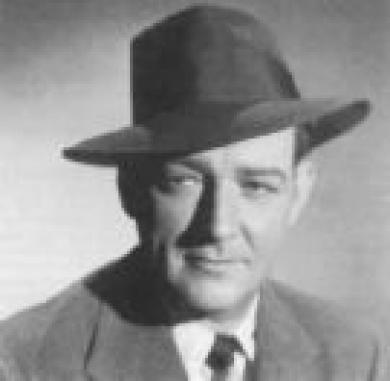
William GarganThis is a show that wouldn’t have made my list had it aired on any other network.  Academy Award Nominated Actor William Gargan on screen had been invited time and time again to play police officers and detectives, even playing Ellery Queen in three movies.There was good reason for that Gargan had been a real life private investigator spending a year of his life as a store investigator, and then as a private detective.  At six foot tall and more than 200 pounds, Gargan also looked the part. He was a natural to become one of radio’s first hard boiled private eyes and give the fledgling ABC network a leg up on the rush to the hard boiled detective shows.
However, the role of hard-boiled private eye was relatively new over the new radio. Dick Powell had just brought Richard Rogue to the  radio in a portrayal that featured a tongue in cheek treatment of the private detective genre. In I Deal in Crime, Gargan went way over the top with his initial portrayal of Bob Dolan.  However, the show did get better. The three transcriptions that survive, one from January, one from April, and one from September showed steady improve.  The September one showed Dolan as a more laid back private detective that had much more in common with Gargan’s Martin Kane and Barrie Craig. In fact,  I Deal in Crime was probably  vital in Gargan’s career in helping him develop the type of detective character that would keep him in demand for years to come.

While the show may not be a great, it was a pretty good for an ABC show.

Fan Vote: 1%

4) Tom Conway as  Sherlock Holmes

Aired: 1946-47

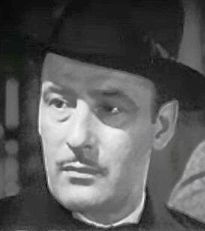
Tom ConwayWith Basil Rathbone’s decision to leave the Sherlock Holmes franchise and strike out with another (ultimately unsuccessful) radio series, “Scotland Yard,” Sherlock Holmes faced change. Both the show’s sponsor and its network opted to continue the Summer Series, The Casebook of Gregory Hood. This led to a coup for ABC picking up the series and retaining Nigel Bruce as Watson, with Tom Conway from the Falcon pictures taking over as Sherlock Holmes.
There are certainly ways that the ABC’s Holmes could be seen to be a downgrade from the Rathbone episodes, including the decline in commercials from Petri Wine to Kremel Hair Tonic, the drop in chemistry from amazing  to only good, and that Rathbone was more charismatic and a better actor.

That said, given that the previous series was one of radio’s finest, being a notch or two below that isn’t too shabby, particularly for ABC.  The show maintained remarkable quality thanks in part to the continuity in writing and Conway did a decent Holmes voice that seemed almost a Rathbone imitation at times. Basil Rathbone left huge shoes to fill and Conway did as well as anyone could in filling them, and the world got 39 more episodes with Nigel Bruce as Dr. Watson, with 38 surviving to this day. Definitely worth a spot on the top 5.

Fan Vote: 44%

Fans who voted for Sherlock Holmes tended to be huge fans of literature’s greatest detective, and think if Holmes is done well, it just can’t be beat.

Tim said, “As much as I love the Pat Novak banter, Sherlock is always top dog in the detective’s pack.”  Walter said, “Like ’em all but Sherlock and Dr. Watson reign supreme.”

3) Mercedes McCambridge as Marsha Ellis Bryant in  Defense Attorney

Aired: 1951-52

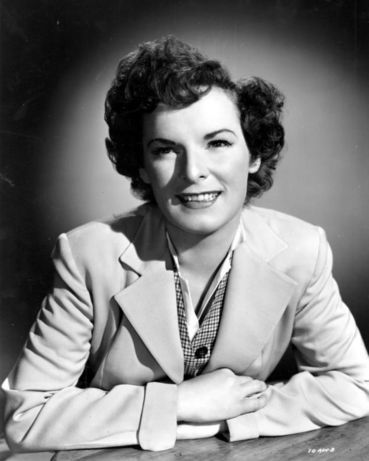
Mercedes McCambridge Orson Welles called Mercedes McCambridge the world’s greatest living radio actress.  High praise indeed. It was no wonder that she was one of the few women to serve as a lead in a detective series.
In 1951, NBC prepared a pilot for The Defense Rests with a plot similar to the Jimmy Stewart movie, Call Northside 777. The show didn’t make the cut at NBC and was not aired.  One advantage of being ABC was that the network had little to risk by giving an unusual show a shot, so in the fall of 1951, Defense Attorney came to ABC. The show featured McCambridge as Marsha Ellis Bryant.  The show shared some similarities with Murder and Mr. Malone in that Bryant was rarely in the courtroom, and solved her cases usually on the street with the aid of her reporter-boyfriend (played by Howard Culver.) The three episodes of Defense Attorney that survive in circulation are well-done mysteries, with McCambridge’s solid acting carrying the show. From the last episode, we know that the show did better than many other ABC shows in that it garnered a sponsor. Not only that, but McCambridge was named best dramatic access by the Radio Television Mirror magazine. Unfortunately, it wasn’t enough to save the show which was canceled after one season. Truly this one show where I’d love to see more episodes come into circulation.

Fan Vote: 1%

2) J. Scott Smart as Brad Runyon in the Fat Man

Aired: 1946-51

J.Scott SmartThe Fat Man was by far ABC’s longest running and most successful series. The character was created by Dashiell Hammett, although Hammett had nothing to do with writing the show.
The Fat Man was unique for the time. Unlike Nero Wolfe, Brad Runyon was active and hard boiled. He was as tough as other any hard boiled eye and as popular with the ladies. He also possessed a great mix of toughness and compassion, mixed with only a little bit of sensitivity to his weight.

“Nobody loves a fat man.” he lamented.

Audiences disagreed as the Fat Man was a hit for five seasons. The show’s signature opening with our hero stepping on a scale, and his pronunciation of “murderrrr” became famous.

The show was so popular that Smart got to bring Brad Runyon to the silver screen. The Fat Man was the first radio detective show to be made into a motion picture with the original star. The movie was well-received and even modern viewers who see it would like to see a sequel. Unfortunately, a combination of radio’s decline and the Communist ties of the show’s absentee creator Hammett brought the show to an end.

It’s influence did not end, however as the idea of a chubby PI kept resurfacing. In the 1970s, William Conrad starred as tough gourmet private detective Frank Cannon.  Cannon and every rough and tumble pudgy action hero owes a debt to the Fat Man for showing how it was done.

In the mid-1950s, Fat Man reached a new audience overseas when Grace Gibson purchased the rights to re-perform 52 scripts with an all-Australian cast. There are more of these Australian episodes in circulation than there are the American canon.

Fan vote: 9%

Speaking of the American Canon,  Tamara comments, “I wish more shows had been made of the Fat Man.”

Tamara raises a good point. There are only 13 U.S. episodes of the Fat Man in circulation, which, while better than Defense Attorney and I Deal In Crime is still very low. Of course, the problem is not so much that not many shows were made, but that most didn’t survive.  One log suggests that 289 episodes of “The Fat Man” aired over radio, which suggests that nearly 96% of them were lost.

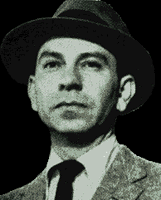
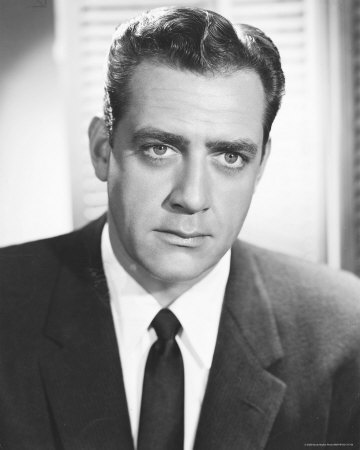
Pat Novak1)  Pat Novak for Hire starring Jack Webb
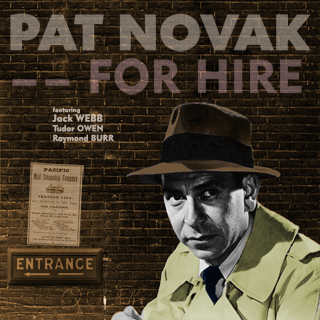
Aired: 1949

Pat Novak for Hire is a show that was all in the execution and delivery of the show’s star, Jack Webb. The plots were very similar and can be boiled down to a simple formula as we do on the Pat Novak for Hire page.

The show followed Pat Novak, the owner of a boat rental store who also took on other’s trouble as a profitable sideline, routinely taking jobs he knew better than to accept that put him on the wrong side of San Francisco Homicide Inspector Hellman. Every episode he’d beat a murder rap with some last second deduction and some help from ex-boozer and doctor Jocko Madigan.

The plots were formulaic, but Pat Novak for Hire wasn’t popular for its highly original plots but for its rich dialogue, and Noirish poetry.  As Novak, Jack Webb spins similies faster than a politicians press secretary during a scandal. These There’s Novak’s descriptions:

The street was as deserted as a warm bottle of beer.

There were his encounters with John Law (in the form of radio’s worst cop not on the take, Inspector Hellman):

Your men couldn’t follow a moose through a revolving door.

And then there were his descriptions of San Francisco (definitely not approved by the Chamber of Commerce) that made it one of radio noir’s darkest settings:

You can dress it up to look honest, but that doesn’t do any good; because down on the waterfront in San Francisco, if you had to eat morals, you’d have bone rattle in three days.

In voting for Novak, Tim shared two of his favorite quotes, “She was at least 50, because you can’t get that ugly without years of practice.” and “She sauntered in, moving slowly from side to side like 118 pounds of warm smoke.”

In addition to this, there’s the wonderful monologues of Jocko Madigan. More Pat Novak quotes are here.

While the show ran for two years down in San Francisco (with Actor Ben Morris playing Novak after Webb left in 1947 for Hollywood), it’s national run over ABC lasted only 20 weeks, ended not by lack of popularity but by ABC’s decision to put the show on Summer hiatus and Webb beginning a Summer replacement for NBC radio called, Dragnet.

The 18 episodes of Pat Novak that have survived are dynamite. (Indeed, given all the problems that all the shows on our listen other than Conway’s Holmes had with having episodes in circulation. That 90% of the Novak episodes survive says something about the show.

I have to admit I debated myself on this one. The Fat Man had huge influence with the power of Cannon all the way to Paul Blart, Mall Cop. They all owe something to the original Fat Man.

However, I give the nod to Novak as it really continues to fascinate equally new listeners and OTR superfans, and has inspired both a Graphic Novel and a recent stage production in Seattle, which is a sign of a show that’s got staying power.

Fan vote: 46%

Next week…Mutual Detective shows

Become a friend on Facebook to participate in this week’s poll at http://www.facebook.com/radiodetectives

If you enjoyed this post, you can have new posts about Detective stories and the golden age of radio and television delivered automatically delivered to your Kindle.

Pat Novak for Hire

(Title Photo Courtesy of Digital Deli.)
Listen to “The Great Detectives Present Pat Novak for Hire” on Spreaker.

Pat Novak for Hire aired from 1946-48 on KGO Radio, and1949 on ABC  Radio.

Jack Webb (1946 and 1949) and Ben Morris (1947-48) played Pat Novak, a wisecracking freelancer who rents boats “and anything else that sounds like money.”

The plot of most Pat Novak episodes could be summarized as follows:

The show begins with Novak talking about the sign he put out, “Pat Novak for Hire,” and then the soliloquy turns into a discussion of what a forsaken hole the San Francisco Waterfront is, and how lowdown corrupt and awful everyone and everything around Pat Novak is.

Novak is then approached by someone who offers him an unseemly sum of money to perform an apparently mundane task. Novak is suspicious of the offer but when pressed agrees to take it against his better judgment because there’s money involved. Novak heads out to a location where he meets up with and mouths off to the wrong person landing him flat on his back unconcious. When he awakes, there’s a dead body beside him.

Within a minute, he’s nose to nose with Inspector Hellman, who promptly threatens to prosecute Novak for murder. Novak and Hellman then trade insults, and then fearing for his life (back in the 1940s, you didn’t have seventeen years worth of appeals on death row) Novak looks up the “only honest guy I know, an ex-Doctor and a boozer by the name of Jocko Madigan. A good guy… ” at which point Novak makes a witty remark about Jocko being a drunk.

Jocko waxes philisophical about how Novak got himself into the mess, declaring Novak hopeless, but still agreeing to help, Novak cajoling him all the way. Jocko is off to question witnesses and research public records.

At some point along the way, Novak runs into a woman who says Hello in a seductive voice. Odds are that she’s a manipulative sociopath.

In the middle of the case, Hellman will either call Novak on the telephone or taunt him in person and reveal some aspect of the police’s investigation. Jocko will gather some information. And either Novak or Jocko will put it all together, and once the dead bodies are all in the morgue and the surviving suspects are locked up, Inspector Hellman will have only one question and Novak will provide his sarcastic answer to end the episode.

The big difference between Novak and  in Webb and Novak writer Richard Breen’s 1947 rip-off of Pat Novak, Johnny Madero is that Madero looks up “the only good guy I know,” Father Leahy. Johnny Madero hailed from Pier 23, while Pat Novak was on Pier 19. As a later Jack Webb show would say, “The names were changed to protect the innocent.”

That said, Radio Fans of the era loved Webb as Pat Novak. Breen left KGO and Webb with him.  In 1947, KGO and ABC believed it could carry on Pat Novak without Novak and without writer Richard Breen. Letters poured in demanding that Webb be brought back, and in 1949 that’s just what happened.

What makes the series memorable?  Two things. First, the dialogue was rich. As Novak (and Madero) Webb delivered hilarious and rich similes, and transformed the put down into an art form. Jocko Madigan’s soliloquies ranged from the sublimely wise to the hilarious. The show carried a sense of free verse poetry rarely match in old time radio.

Secondly, the show had flashes of brillance. When Webb and Breen began their work on KGO, Webb was 26, Breen was 28.  They were on the verge of success. Webb was three years away from creating the police procedural drama that would redefine the genre.  Breen was three years away from his first Writers Guild Award Nomination and seven years from an academy award.  In Pat Novak, the potential and promise of two young men on the verge of greatness shown through, particularly with the occasional departure from the show’s formula.

And while Pat Novak was hardly Dragnet for Private Investigators (i.e. a portrayal of what real life is like,) Novak was far more real than many of his hard boiled counterparts like the unflappable Sam Spade.

Pat Novak and Johnny Madero Quotes

Novak is one of the most quotable radio shows out there. A couple websites have created a compendium of quotes. Here is a great index of Pat Novak Quotes. Also Digital Deli has several quotes on its Pat Novak and Johnny Madero pages.

About the Characters:

Pat Novak: Novak rents boats and takes private investigation jobs on the side, serving as a body guard, hunting down missing persons, deliverying packages while dishing out sarcasm and colorful metaphors. Novak spends a portion of most episodes unconscious. Early episodes portray Novak as a complete anti-hero. In the only surving episode from the 1946 season, Novak declares his aversion to paid murder only because of the consequences. However,  later episodes often a portray slightly more noble impulses, such as when he gets himself in a jam helping a friend out with no hope of being paid for his trouble.

Jocko Madigan: Other than an occassional bout of induced unconciousness, Jocko’s drinking seemed to provide little impairment. Indeed, in early episodes, Jocko had more to do with solving the case than Novak himself which led me to hypothesize that Hellman only accused Novak of murder to get him to bring Jocko in.

Jocko is not without precedent in the fiction of the era. In a 1942 edition of Ellery Queen magazine, Anthony Boucher (who would later write Sherlock Holmes Radio plays) created a wino detective named Nick Noble, a police detective who responded to tragedy by crawling into a bottle. However, his alcoholism didn’t dimnish him as a detective. The police would make their way to the bar and bring their hardest cases to them.

For his part, Boucher couldn’t remember in later years where he came up with the idea of a “wino detective.” However, Mystery Award Theater did a presentation of “The Screwball Division” and the host suggested an exotic origin: Ancient Greece and the Oracle of Delphi. In the ancient world, particularly complex problems were brought to the Pythia who was basically believed to be intoxicated by the fumes coming up from the ground where she sat.  In the same way, Jocko Madigan provides insight and clearheadedness despite his state of intoxication.

Inspector Hellman: Hellman was on the receiving end of some of Novak’s greatest verbal attacks. Hellman made up for it, as several times he put the beat down on Pat Novak. He constantly fingers Pat Novak as the killer and is constantly proven wrong. Beyond his tendancy towards physical violence, Hellman is a hard figure to peg, because the descriptions are left up to the president of the Cynic Society, Pat Novak. While we never see it, Novak alleges several times that Hellman pockets cash by robbing murder victims. Novak suggests that several times Hellman is an incompetent idiot, but others declares that Hellman is “too smart of a cop” to fall for this scheme or that. Was Breen clever enough to give us a cynical protagonist who projected his cynicism on to others? Was Hellman really a cop in a hurry who’d pin a murder rap on anyone or was Hellman really just giving the wayward detective motivation to solve the case for him.

Johnny Madero: The Movies

A series of three low budget films starring Hugh Beaumont (best known as Ward Cleaver) as hard-boiled San Francisco PI Dennis O’Brien. O’Brien works at a boat shop and troubleshoots for hire. He’s got a drunk sidekick…Is this starting to sound familiar? Many reviewers list the movie as a take-off on Pat Novak for Hire. In reality, the films were based on Johnny Madero, however with the Dipso character re-inserted.

The scripts were adapted by Herbert H. Margolis who wrote for Johnny Madero, not Pat Novak. Each movie was two stories in one movie of less than an hour in length. So in reality, they were early TV shows shown in a movie theater.  The titles of the films were Danger Zone, Roaring City, and Pier 23 (the strongest tie to Johnny Madero.) This IMDB plot summary from the first episode of Danger Zone is the plot for the Johnny Madero episode known as, “The Fatal Auction.”

Claire Underwood hires San Francisco private-detective Dennis O’Brien to purchase a saxophone case at an auction, and O’Brien is promptly slugged and the case is stolen by Larry Dunlap.

The other plots from these three films don’t match up with the other circulating episode, Pete Sutro so those three films may provide a clue to what was in some of the lost episodes of Johnny Madero.

About the Stars:

Speaking of up and coming stars, at 32, Raymond Burr was one of several actors who played Hellman. . Burr not only did duty as Hellman, but also played a sea Captain and filled in for the announcer on one occassion. In late 1949, Burr would join Webb on Dragnet as Ed Backstand, Chief of Detectives. The quality of his voice was such that he could play a police officer who’d been on the force for 25 years even though Burr himself was only 32. As Backstrand, Webb stole the show on Dragnet. He was just a few years away from TV Superstardom. While he appeared in the Dragnet pilot, Burr’s biggest role was as Perry Mason. He won Emmys for the role in 1959 and 1961.  In addition those Emmys, Burr was nominated for six other Emmys and two Golden Globes for his roles as Mason and Wheel Chair Bound San Francisco Detective Robert Ironside. Other famous roles for Burr included Lars Thorsen in Rear Window and American Reporter Steve Martin in the several Godzilla movies.  After taking a 19-year break from playing Perry Mason, Burr brought the character back for a series of 26 popular mystery movies from 1985-93. Eightteen years after Ironside it, Burr filmed  a revival of that series as well, which aired in 1993, the year Burr died at the age of 76.
Tudor OwenTudor Owen was a Welsh Born character actor who played in more than eighty movies and television pieces. Owens teamed up with Webb, not only in Novak, but also the radio version of Pete Kelly’s  blues. Owen’s most memorable role was the voice of Towser in 101 Dalmatians. He died in Los Angels in 1979 at the age of 81.  (Picture Courtesy of Digital Deli.)

Jack Webb: After leaving KGO in 1947 along with Breen, after Breen had a falling out with KGO management, Webb went to Hollywood.  Along with playing Johnny Modero on the Mutual Broadcasting System in the Summer of 1947, and Jeff Regan Investigator on CBS in 1948, between his two stints on Pat Novak, Webb played bit parts in several radio dramas including Suspense, The Whistler, and Escape.  In many of these appearances, he played underworld figures or bit parts.

Webb also began to take on a few movie roles and it was on the set of  He Walked by Night that a police officer acting as technical advisor to the film let Webb have it over the lack of realism in Detective Shows, including Novak and suggesting a show that portrayed was policework was really like. This eventually led to the creation of Dragnet on radio and later on television.

Both on radio and television, Webb’s realism drove the success of the program. On radio, Dragnet provided not only a realism about the way police operate that had been missing, but Webb enhanced the radio experience with a five-person sound effects staff that made listeners feel as if they were riding along with Joe Friday and his partner.

Dragnet became a top-rated show on television, making the jump to TV in December, 1951.  Dragnet spawned a Movie, a Comic Strip, and even a board game.

Dragnet ran out of gas in 1959 after more than 300 episodes and other Webb efforts met with mediocre success at best. After a failed tenure at Warner Brothers Television in the early 1960s, many thought was done for, but in 1967, Dragnet came back with gusto for a four year run that has often been described as campy. The show dealth frequently with the risks of drugs, with Friday pushing back against hard against the counter culture.

While he was making Dragnet, Webb launched two other series that would be remembered as TV Classics: Adam 12, which realistically portrayed patrol officers in the same Dragnet had detectives and Emergency, which focused on the work of paramedics.

When Webb died in 1982, the police badge number 714 of Joe Friday was retired.  The Los Angeles Police Historical Society created the Jack Webb Awards in 1994 to honor lifelong committment to law enforcement.

Resources:

Tudor Owen IMDB Profile

Raymond Burr IMDB Profile

Jack Webb IMDB Profile

Book: My Name’s Friday: The Unauthorized but True Story of Dragnet and the Films of Jack Webb

Pat Novak for Hire Episodes

Johnny Madero Episodes:

End of Log

Additional Shows

I didn’t use the Ben Morris episodes of Pat Novak because neither I nor the fans of the day cared much for them. However, I provide them for those who’d like to listen to them:

Log information provided by Digital Deli.

*Played Out of Order