106 search results for "Kidnapped"

Book Review: Enter the Saint

Enter the Saint is the first short story collection featuring Simon Templar after he appeared in the novel Meet the Tiger.

The book collects three stories:

“The Man Who Was Clever” sees the Saint trying to take down a drug smuggler and blackmailer. It’s a good crime-busting yarn that allows the Saint to show his pure unadulterated nerve and ability to bait a trap.

“The Policeman with Wings” has the Saint investigating the curious case of a wealthy man who disappeared from his house after being escorted away by a mysterious policeman. This leads an elaborate and somewhat high-handed set up to uncover the true motives of the kidnappers and prevent them from harming the kidnapped man’s niece and heir.

Finally, there’s “The Lawless Lady” which finds the Saint in the background as one of his men. Dicky Tremaine goes undercover with a gang planning a big jewel heist at sea, and finds himself falling for female leader of the gang. Meanwhile, another member appears to be playing to eliminate him. The Saint does make his presence known at the end, but this is an unusual story to say the least.

The stories this book are enjoyable crime tales for the most part. It’s clear that Leslie Charteris is still developing the nature of the Saint. However, this book features most of what makes the Saint work.  You have dashing escapes, the Saint’s absolute audacity and laughing in the face of danger, and you have three good rogues who are worthy adversaries. The third story is a little strange, but it’s still entertaining.

Probably, the book’s biggest shortcoming is giving the Saint an entire organization of agents in support of him. I can see why this was done. Other popular literary figures of the era such as Doc Savage, the Shadow, and Nick Carter had their men to support him. Besides that it supported Charteris’s attempt to brand the Saint the Robin Hood of Modern Crime. After all, what’s Robin Hood without his merry men?

Yet, the Saint is really best when working with one assistant or two at most. In effect, in most of these stories, that’s what he’s doing. We really don’t get to focus on the Saint’s band, and eventually, they’d be discarded as surplus.

If you enjoy some good crime stories from the Golden Age of fiction, you could do far worse than this book. Despite its flaws, the book showcases the talent and style that would make Leslie Charteris a literary fixture for decades to come.

Rating: 3.75 out of 5

This post contains affiliate links, which means that items purchased from these links may result in a commission being paid to the author of this post at no extra cost to the purchaser.

If you enjoyed this post, you can have new posts about Detective stories and the golden age of radio and television delivered automatically to your kindle. 
Telefilm Review: The Saint (2017)

The latest adaptation of the Saint is a direct-to-digital film originally shot as a pilot for a TV series back in 2013. It was released with the recent death of 1960s star Sir Roger Moore, who appears in it.

The production has some good touches. It is certainly not the 1996 Saint film. Saint (2017) felt like the people who had made it had watched Saint films and TV shows and read Saint books, which isn’t something I could have said about the 1996 film or the telefilm

In the 2017 film, the Saint, the Robin Hood of crime, is called by a wealthy thief. The wealthy thief is involved in a scam to electronically move billions of dollars in humanitarian aid money belonging a third world country into an offshore account. After he grows a conscience and doesn’t follow through, his daughter is kidnapped. The Saint has to rescue the girl and make sure the aid money gets to its intended recipient.

This film has got a lot of nice touches that make it feel a little bit more like the Saint. It features two former “Saint actors,” Moore and Ian Ogilvy, who played the Saint in the late 1970s. The film also features Patricia Holm, a character from the novels, and gives the Saint a dopey sidekick who calls him “boss.” That’s vintage Saint of both literature and film right there.

Adam Rayner brings far more charm and charisma to the role than more recent portrayals. He’s not on the level of George Sanders in the 1940s or Moore in the 1960s, but there’s an infectious swashbuckling fun to the way Rayner plays the character and he’s a joy to watch.

Also unlike the 1996 film, the 2017 film gets the idea that the Robin Hood of Modern crime should, you know, be giving to the poor if he robs some crooks. The movie sets the Saint in the same vein as many of the pre-World War II books did.

So where does the telefilm film go wrong?

There are three big problems as I see it. First, there’s too much technobabble. I get that this is the twenty-first century and everything is computerized, but I’ve seen Star Trek episodes with less implausible babbling to support whatever scene is coming up next.

Second is the way Patricia Holm was written. In an updated story like this, it’d be smart to make Patricia Holm balance the Saint in skills, personality, with confidence in herself and who she is that would exceed what was written in novels in the 1920s-1940s.

What they decided to do is to make Patricia into the Maryest of Mary Sues. Yes, the 21st Century Patricia Holm is a computer genius and a self-defense expert who can handle everything herself. In a flashback, she is handcuffed to a jeep in the middle of the dessert. She manages to kill all three of the men holding her while still handcuffed.

Further, she works in as many opportunities to belittle our hero as possible because…Mary Sue. She even tells the Saint that she’s the brains of the operation and he’s just the muscle. Really?

The other big problem can summed up in a simple paragraph:

The Saint is great. Batman is great. Val Kilmer played Batman and he also played the Saint. However, the Saint is not Batman.

We learn at the start of the story that Simon’s family is tied to the Knights Templar (which is  a very good idea), but we also learn the Saint was the son of a wealthy family, both of his parents were murdered before his eyes, someone who mentored him was evil, and he has a gift for disappearing when people turn their head.

And there are a few other things that make this movie reminiscent of Batman Begins. The pilot also hinted that an evil generic brotherhood would be Bat-Saint’s chief opponent rather than the traditional Saint approach of taking on whatever new and interesting villainy offers itself up to be defeated each week.

Finally, the ending feels tacked on and awkward, particularly a line that draws attention to the fact the actor who played Agent Fernak wasn’t available for this scene.

Some minor characters are so horrifically performed, it takes you out of the story, including in that final scene.

Overall, this isn’t a horrible film, but it could have been better and I felt Adam Rayner’s Saint really deserved a better film. Still, as it is, it manages to get enough right about the Saint to make this an enjoyable bit of action schlock. However, its attempts to update the Saint more often than not go awry and this holds it back.

Rating: 3.0 out of 5.0

This post contains affiliate links, which means that items purchased from these links may result in a commission being paid to the author of this post at no extra cost to the purchaser.

If you enjoyed this post, you can have new posts about Detective stories and the golden age of radio and television delivered automatically to your kindle. 
EP2201: Richard Diamond: The Martha Campbell Ransom Case

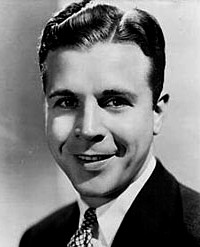
Dick Powell

Diamond is hired to deliver ransom for a woman’s beloved kidnapped aunt.

Original Air Date: July 26, 1950
\
Support the show monthly at patreon.greatdetectives.net

Support the show on a one-time basis at http://support.greatdetectives.net.(more…)

Book Review: The Sinister Shadow


Doc Savage and the Shadow are two of the greatest pulp heroes of all time. Yet, they’ve never met in their original book medium. There have been attempts to do this in comic book form, but the ones I’ve read have been somewhat underwhelming.

The Sinister Shadow by Will Murray takes an original idea by Lester Dent in order to bring these two legends of the 1930s together in one book.

In the books, “Lamont Cranston” was not the true identity of the Shadow. Rather, the Shadow forced Cranston to let him impersonate him when Cranston was away from the city (which was most of the time) on the threat that, if he didn’t, the Shadow would completely steal Cranston’s identity, leaving Cranston without a place in the world because somebody’s got to fight evil, right? In the pulps, Cranston’s amused by this and agrees. In this book, Cranston isn’t as much amused as resigned.

However, Cranston receives a blackmail notice from a villain identifying himself as the Funeral Director who threatens to kill Cranston unless he gives him $50,000. Cranston thinks the villain is the Shadow and turns to Doc Savage’s aide Ham Brooks for help. Before they can get to Doc, both are kidnapped. This leads to both the Shadow and Doc Savage being on the trail of the Funeral Director.

The book has a lot to offer. Much of it is spent with Doc and friends suspecting the Shadow as the creepy methods of the Funeral Director seem his style and the Shadow works outside the law while Doc is an honorary Inspector for the NYPD. In addition, Doc and his men have a no killing rule, while the Shadow has no qualms about dealing out rough justice to the criminal world. Thus our two protagonists spend time hunting and battling each other before turning to the real bad guy. These parts of the book are fun and Murray does a good job writing both characters. Doc’s men are their usual selves while Doc remains ever the unflappable and brilliant man of bronze. The Shadow is mysterious and baffles the great Doc Savage with his strange methods. Doc’s assistants also are great though they’re pushed more to the background than usual. The Shadow’s henchmen are generic and lack a lot of personality.

As for the villain, the Funeral Director is a perfect foil for our protagonists. He’s a creepy, evil villain whose theme is centered around death and dying complete with coffins. It seems like an obvious idea for a supervillain but I’ve never read it done before. Why the Funeral Director came after Cranston is never satisfactorily explained and it comes off as a plot convenience.

This book is enjoyable, though it’s not Shakespeare or even Raymond Chandler. It’s a new pulp adventure team up from the man who is better at recapturing the spirit of the original pulps than any other writer today. While I won’t say it exceeded my expectations, it certainly met them. After nearly eighty years, Will Murray finally created a story worthy of these two great characters and if you’re a fan of either one, it’s a worthwhile read.

Rating: 4.0 out of 5.0

This post contains affiliate links, which means that items purchased from these links may result in a commission being paid to the author of this post at no extra cost to the purchaser.

If you enjoyed this post, you can have new posts about Detective stories and the golden age of radio and television delivered automatically to your Kindle.

EP2106: Boston Blackie: The Condon Ransom

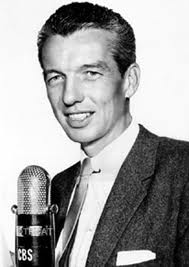
Bob Bailey
The father of a kidnapped woman asks Blackie to deliver his daughter’s ransom.

Original Air Date: February 12, 1946

When making your travel plans, remember http://johnnydollarair.com

(more…)

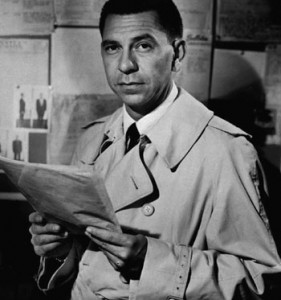
EP2066: Dragnet: The Big Overtime

Jack Webb

Friday and Romero try to find a young woman who has been kidnapped.

Original Air Date: December 13, 1951

Support the show monthly at patreon.greatdetectives.net

Support the show on a one-time basis at http://support.greatdetectives.net.

Mail a donation to: Adam Graham, PO Box 15913, Boise, Idaho 83715
(more…)

Review: Avengers: The Lost Episodes, Volume 4


The fourth volume of Avengers, The Lost Episodes offers listeners four more recreations of the lost first season of the Avengers.

The set kicks off with, “Kill the King,” in which Steed has to protect a visiting king who is key to the British gaining access to his country’s oil. The story becomes a pretty interesting thriller as we encounter three separate individuals who all appear to be setting out with the same assassin’s mission. The story has a very clever twist at the end that hits Steed like a punch in the stomach. It’s the best episode of a very good set and probably one of the most innovative stories in the Lost Episodes range.

Next up is, “A Change in Bait.” Originally, aired at Christmastime, this episode has a lighter tone than, “Kill the King,” as Steed tries to break up a complex insurance racket involving arson at warehouses. The story isn’t laugh-out-loud hilarious,or so over the top in its humor that it would feel like it didn’t belong in this season, rather the humor is mixed in in a way that feels quite natural. The arsonist is probably the most amusing guest character. His stance that they couldn’t steal money from a building they were burning because that would be unethical is priceless. Overall, a fun story.

In, “Hunt the Man Down,” a convicted robber is released from prison and immediately waylaid by two thugs who want to know where his loot is. Steed intervenes and Keel treats the ex-convict. Carol is kidnapped by the gang who believe she knows where the loot is. Overall, this is an exciting case with good twists, particularly as to who the boss of the gang is. A very solid outing.

Finally in, “Dead of Winter,” Steed investigates a body found in a shipment of beef and sends Keel undercover to a man he suspects is behind it after a a pathologist is murdered and the body disappears. This one of the more fantastic plots in the Lost Episodes and very reminiscent of the sci-fi like stories that would come during the show’s most well-known run with Mrs. Peal.

Overall, this is a strong set. It’s not as great as Volume 3, but there’s not a poor episode in this bunch.

Rating: 4.0 out of 5.0

This post contains affiliate links, which means that items purchased from these links may result in a commission being paid to the author of this post at no extra cost to the purchaser.

If you enjoyed this post, you can have new posts about Detective stories and the golden age of radio and television delivered automatically to your Kindle.

Audiobook Review: Nightbeat: Night Stories

Nightbeat: Night Stories presents readers and listeners with six new stories based on the 1950s Radio series that starred Frank Lovejoy by Radio Archives.

Radio Archives offers an ebook of the stories for $3.99. There’s one reason to choose the audiobook version instead and that’s Michael C. Gwynne who does one of the flat out best readings that I’ve ever heard. He should read all the best hard-boiled detective novels. His voice carries the production and brings each tale to life. Gwynne doesn’t try to imitate Frank Lovejoy’s take on Stone, but his interpretation of the character captures Stone as the street wise yet warm hearted reporter.

The stories themselves have a very strong love for the series that comes through loud and clear. While the tone varies a bit from story to story, they all carry the idea that Stone is a hero and friend to the ordinary people of Chicago that are so frequently the subject of the Night Beat column.

The book leads off with, “The Strangler” which finds Randy going to an ex-girlfriend who returned to town and began working as a stripper. She’d promised a clue in a series of serial killings. Instead she’s the next victim. It’s probably the most hard-boiled story in the collection and it’s brilliantly written with a decent mystery that I didn’t figure out until 2/3 in. The atmosphere is perfect. It’s a little darker story than would have been played on the radio but I don’t think it went over the top.

In, “The Chicago Punch,” Randy is called in to help a boxer who is at risk of being drawn into an illegal fight scene that could ruin his career and maybe cost him his life. It’s a terrific story with the mix of knowing skepticism about the manager’s proclamation that the kid has what is to be champ, along with an interesting concept that seems plausible for the time.

“The Puzzle in Purple,” finds Randy walking into the police department only to find a lieutenant sweating over a puzzle that’s a potential clue to the location of a kidnapped woman. It’s a two act story with the first being Randy helping the lieutenant and how the two relate to each other as they try to solve the puzzle, and the second finds Randy trying to save the woman on his own when he solves the puzzle. The first half was superb as the interactions between the lieutenant and Randy are brilliantly written. The second half was okay but is probably one of the stupider things Randy Stone ever did, though not unbelievably stupid.

“Down Addison Road,” has a mother with an absent husband asking Randy’s help to get her teenage son out of a racket he’s become involved in. This story works well because it features some well-written action and also the type of quirky characters that made the best Night Beat episodes so interesting to listen to.

“Lucky” is inspired by a couple quirks in the show’s history. In the pilot episode of Night Beat starring Frank Lovejoy, the character was known as Lucky Stone rather than Randy.

In addition, there’s a division among fans as to whether the series is Night Beat or Nightbeat*. So it happens Randy Stone had a competitor, a guy nicknamed Lucky with a first name that starts with an “R.” And he started at a rival paper around the same time Randy started at his and he had a column on Chicago after dark and it was called Night Beat while Randy’s was called  Nightbeat. However, he was fired for plagiarizing one of Randy’s stories. When Randy gets word that Randy Stone’s dead, it’s actually Lucky who’s been killed and Randy has to figure out who wants him dead before the murderers find out they killed the wrong Stone. This story manages to take radio show production issues and add some tense action and make a very enjoyable yarn.

Finally, “The One that Got Away” finds Randy meeting another old flame, this one a famous singer who stopped writing him quite a while ago. She’s back in town and she’s in trouble. This one has good atmosphere, but the characters aren’t as strong as in other stories.. Though, it’s probably my least favorite of the six, it’s still a solid well paced tale.

I was blown away by this collection. There are so many mistakes that you can make with a book like this. It can easily become weak fan fiction or modern ideas and concepts can be inserted and take readers and listeners out of the story. However, the authors avoided these pitfalls and they produced stories that feel genuine to the era and also the type of adventures that Randy Stone might actually have. If you love Night Beat  or even good, 1950s, hard-boiled mysteries, this audiobook is definitely a must-buy.

Rating: 4.5 out of 5

*As best I can tell, the spelling of the show is Night Beat  based on promotional materials from the time. However, Radio Archives uses the spelling, “Nightbeat.”

If you enjoyed this post, you can have new posts about Detective stories and the golden age of radio and television delivered automatically to your Kindle.

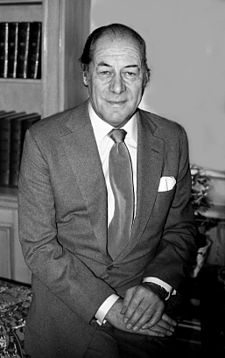
EP2032: The Private Files of Rex Saunders: High Dividends…Or Shallow Graves

Rex Harrison
A wealthy man calls in Rex Saunders when his nephew is kidnapped.

Original Air Date: May 30, 1951

Support the show monthly at patreon.greatdetectives.net

Support the show on a one-time basis at http://support.greatdetectives.net.

Mail a donation to: Adam Graham, PO Box 15913, Boise, Idaho 83715
(more…)

EP1952: Dragnet: The Big Late Script

Jack Webb
Friday and Romero search for a kidnapped businessman.

Original Air Date: July 26, 1951

Support the show monthly at patreon.greatdetectives.net

Support the show on a one-time basis at http://support.greatdetectives.net.

Mail a donation to: Adam Graham, PO Box 15913, Boise, Idaho 83705
(more…)

Audio Drama Review: The Avengers: The Lost Episodes, Volume 3


Volume 3 of Big Finish’s Avengers: The Lost Episodes recreates four more lost episodes of Season 1 of the Avengers which featured John Steed (Julian Wadham) and Doctor David Keel (Anthony Howell).

The Springers: This story finds Keel undercover in prison as a notorious convict he hopes to impersonate. The story is a somewhat typical crime story but feels a bit more playful in places than some of the stories in the first box set. It’s a solid if unremarkable tale.

The Yellow Needle: An old friend of Keel’s is Prime Minister of an African nation about to declare its Independence from Great Britain. After an attempt on the Prime Minister’s life, Steed and Keel become involved in the case from several thousand miles away. The story reflects the process of breaking up the British Empire as former Colonies became Independent and the politics that often went into that. This gives it a definite historic value. Beyond that, it’s a taut and well-written political thriller.

Double Danger: Dr. Keel is kidnapped by desperate men who want him to treat a man they kidnapped so they can extract the secret of the location of stolen diamonds. This is set up like a traditional crime story but has a bit more going for it than many earlier stories. First of all, Keel’s adventures apparently have given him a bit of an edge of toughness as he’s far more calm than one would normally expect. There’s almost a hard-boiled aspect to some of the dialogue, and there’s more menace in the villains in this story than in many “thugs of the week” who have appeared before . The story moves at a fairly quick pace, and there’s a very effective use of humor with the old landlord.

The Toy Trap: This story takes a look at the seamier side of London life with a bit of a personal touch for Keel. Keel is to play chaperone to the wide-eyed innocent daughter of a friend, who has taken a job in London at a shop. They find one of her friends missing and that she’s been drawn off into a pornography racket exploiting naive young women. It’s a very well done crime story and it also introduces some genuine conflict between Steed and Keel. In the early going, Keel sharply disapproves when Steed starts doing his typical ladies man routine around his young charge, and then when Steed’s method for breaking the ring puts her jeopardy, Keel really lets Steed have it. Overall, this is probably my favorite episode in this series so far.

This collection contains some of the greatest Avengers Best Episodes Big Finish has produced and is my favorite of the four I’ve listened to.

Rating: 4.25 out of 5.0

This post contains affiliate links, which means that items purchased from these links may result in a commission being paid to the author of this post at no extra cost to the purchaser..

If you enjoyed this post, you can have new posts about Detective stories and the golden age of radio and television delivered automatically to your Kindle.

Richard Diamond

Listen to “The Great Detectives Present Richard Diamond” on Spreaker.

During Dick Powell’s lengthy career, he had many stages. From the 1930s to 1944, he was known as a skilled singer and comic actor. He landed the film role Philip Marlowe in Murder, My Sweet, he starred in the first true hard-boiled Private Eye show Rogue’s Gallery, and then he spent many years playing a variety of hard-boiled characters in Noir films. In many ways, Richard Diamond was a perfect marriage of the two halves of Powell’s performing career before the next stage of Powell’s career which saw him as a creative force behind programs such as the Zane Grey Theater.

The series was unusual in that there are many episodes which featured hard-boiled fisticuffs and gunfights. Then the series shifts to Richard Diamond showing up at his girlfriend Helen Asher’s (Virginia Gregg) to serenade her as he softly sings and plays the piano and the two banter back and forth. It’s an unusual series that only Powell could make work.

Diamond was a former NYPD detective who served in the O.S.S. during the war before returning home to start his own private agency. His rates are quite exorbitant at $100 a day plus expenses. Compare this to Philip Marlowe’s $25 a day. He enjoys a good relationship with Lt. Levinson of the Homicide Squad while being a bane to the existence of the slow-witted Sergeant Otis.

The series aired for eighty episodes over NBC, fifty-one were sustaining (without a sponsor) and twenty-nine were sponsored to Rexall. The series jumped to ABC and was sponsored by Camel Cigarettes for sixty-five weeks. The series returned to radio in an unusual way as CBS aired reruns of the show as a summer replacement in 1953, which was very unprecedented for the time.

The character of Richard Diamond returned in 1957 with less of the comedy as a half hour detective program starring David Janssen (The Fugitive). The new series lasted four seasons and also featured appearances by a young Mary Tyler Moore.

Star Biography:
Dick PowellDick Powell (1904-63): Dick Powell is one of the most distinct leading men in the world of Old Time Radio Detectives.  Powell began his career as a song and dance man and then shifted to serious drama with his lead role as Philip Marlowe in Murder, My Sweet. 

Powell would also come to radio as a sleuth on three other occasions in stand-alone shows. He played the lead in Rogue’s Gallery as a detective that was knocked silly and encountered Eugor, a character in his subconscious that would help him solve whatever case he was on.

He parlayed that into the role of Richard Diamond, a laid-back, singing detective. He also played the police officer foil for his then-wife Joan Blondell’s private investigator in Miss Pinkerton, Incorporated.

In television, Powell was a pioneer, his Four Star Productions turned out memorable programs such as The Four Star Playhouse, Richard Diamond Private Detective (with David Janssen in the lead), The Zane Grey Theater, Burke’s Law, and the Dick Powell Theater.

Powell died far too young as a result of making The Conqueror, a classically bad film that featured John Wayne as Genghis Khan. The film was shot downwind from a nuclear testing site. He developed cancer along with nearly half the cast and crew and half the population of nearby St. George, Utah.  Powell succumbed to cancer in 1963.

Episode Log:

Christmas Episodes Played Out of Order:

Log complete:

Log source: The Digital Deli FTP

EP1900: The Avenger: Death Meets the Boat

An Australian heiress is kidnapped and a newspaper photographer is murdered.

Original Air Date: March 14, 1946

Vote for the Great Detectives of Old Time Radio every day in the Entertainment Category at http://www.podcastawards.com

Support the show monthly at patreon.greatdetectives.net

Support the show on a one-time basis at http://support.greatdetectives.net.

Mail a donation to: Adam Graham, PO Box 15913, Boise, Idaho 83715
(more…)

Boston Blackie

Listen to “The Great Detectives Present Boston Blackie” on Spreaker.

Boston Blackie was created by writer Jack Boyle as a jewel thief and safecracker with a heart of gold. The character was featured in nine silent films. In 1941, Blackie returned to film in the era of talkies. Much like the Saint, the character reformed from a thief into a detective. Blackie was always Inspector Farraday’s prime suspect in any major crime. The films were very popular with fourteen films made starring Chester Morris.

Morris brought Blackie to the radio in a summer replacement radio series for NBC in 1944. Then in 1945, first-run syndication king Frederick Ziv created a new series starring Broadway Actor Richard Kollmar as Blackie and featuring the best talent in New York radio. The series was the most successful first-run syndication program of its era, producing 288 episodes of which at least 190 are in circulation.

Ziv took the series to television in 1951 for two syndicated series featuring Kent Taylor as Blackie.

Throughout his many iterations in the 1940s, Blackie remained a smart and clever crime-solver whose past gave him a slight edge and made him a bit of a lovable rogue who fought on the side of the angels. He was the type of guy you wanted in your corner when the chips were down. “Enemy to those who make him an enemy. Friend to those who have no friend.”

Star Bios:

Chester MorrisChester Morris (1901-70): Chester Morris began his career on Broadway playing alongside the great Lionel Barrymore at age 15, and made his film debut in 1929 in Alibi and was nominated for an Oscar. His career faltered in the late 1930s, but he enjoyed renewed popularity as the Boston Blackie film series. After the Boston Blackie film series ended 1948, the remaining two decades of Morris’ life and career were spent on Television and stage productions.
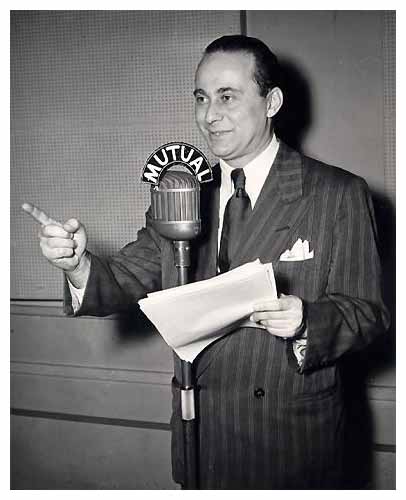
Richard KollmarRichard Kollmar (1910-71): A Broadway actor and producer, Kollmar was the long-time husband of newspaper columnist Dorothy Kilgallen, with whom he hosted a daily talk show for eighteen years, “Breakfast with Dorothy and Dick.” Kollmar was also the host of the game show, “Guest What.” Kollmar also operated a supper club in New York called, “The Left Bank,” until 1965.

Episode Log:

Chester Morris Episodes:

Richard Kollmar Episodes:

Log Complete

Log source: Digital Deli

Audio Drama Review: The Ordeals of Sherlock Holmes

To call The Ordeals of Sherlock Holmes ambitious would be an understatement. It’s a collection of four-hour-long, original audio dramas from the life of Sherlock Holmes that spans nearly forty years, has an underlying plot that ties together through the set, yet each story holds up fairly well on its own.

The stories are an interesting mix. The lead off tale is set before Holmes and Watson met and has Holmes having his first meeting with Lestrade in England, while Watson is kidnapped from his unit to care for a dying Englishman in Afghanistan.

The second story is set shortly after Holmes’ return from being presumed dead and after the Adventure of Empty House and a series of great successes which leads to arrogance and a failure that leads to a well-deserved dressing down. The third part tells the reason why Holmes retired so young from Detective work. The final story is set after World War I and finds Holmes and Watson on their way to Europe to apprehend an old enemy only to discover the mastermind behind the entire affair.

The stories are well-written both individually and as a collection. It really hangs together quite well. The acting by the leads is superb as Briggs and Earl really inhabit the roles. The set manages to highlight the warmth and strength of the Holmes-Watson friendship that has survived so much. This combination is a really a pleasure to listen, particularly with stories as strong as these. The music and sound design are also up to the high standards Big Finish has established on all its releases.

Overall, The Ordeals of Sherlock Holmes is a great box set that offers fans of Sherlock Holmes fresh stories that feel true to the spirit of Sherlock Holmes.

Rating: 4.0 out of 5.0