Nero Wolfe was an
adaptation of Rex Stout’s novel, The
Doorbell Rang starring Thayer David as Nero Wolfe. It was supposed to be a
pilot for a Nero Wolfe TV Series. However, David’s untimely death meant the
series didn’t go forward and though the telefilm was filmed in 1977, it wasn’t
broadcast until 1979 and has rarely been replayed since then. It was released
on DVD along with the 1981 Nero Wolfe TV series starring William Conrad (which
we’ll be discussing next week.)
Following the plot of The
Doorbell Rang, a wealthy realtor named Me. Bruner (Anne Baxter) turns to
Wolfe to get the FBI to stop harassing her after she bought hundreds of copies
of a book critical of the FBI and sent it to many important people. Wolfe is
reluctant to take the case but Mrs. Bruner offers way too much money for him to
turn down. In short order, Wolfe and Archie (Tom Mason) are targeted by the FBI
who begin spying on them and try to get their licenses pulled.
David was just magnificent as Wolfe. I actually might prefer his take over Maury Chaykin’s in 2001’s  A Nero Wolfe Mystery. He manages to capture all of Wolfe’s ego and eccentricity. The adaptor gave him  Wolfean dialogue and he absolutely nails every line. His take on Wolfe is quite a bit less shouty than Chaykin’s and it feels closer to the book. The one thing that David is knocked for is not being big enough to play Wolfe, but that I’m willing to cut him some slack on. I don’t think the main goal of a casting director should be to get an exact lookalike. In addition, David had actually been bigger earlier in his career with health problems including cancer that would ultimately contribute to his fatal heart attack.
Tom Mason was very good as Archie. He had the banter and the
overall mischievous nature of the character down perfectly. He plays off David
well, and I really like the way they portray the nature of the relationship
between Archie and Wolfe. The films open with Archie trying to badger Wolfe
into taking a case as they’re running out of money and then back-pedals and
doesn’t want Wolfe to take a case involving the FBI.
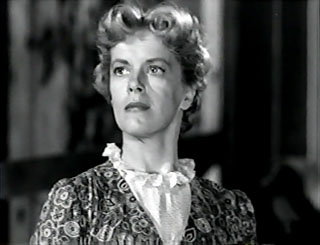
The rest of the cast is pretty solid. Anne Baxter brings a
big dose of charm and starpower to the role of Mrs. Bruner.
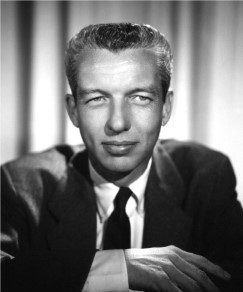
Biff McGuire has one big scene as Inspector Cramer and a couple smaller
scenes he appears in, but he absolutely nails the role, particularly in his big
scene.
The only casting decision that was really odd was Charles
Horvath as Orrie Cather. Cather was the youngest of three detectives Wolfe
hired frequently in the novels. Horvath was older than Thayer David, and like
David passed away before the film aired. However, Orrie’s part in the novel is
so minor that it’s not a huge deal. In fact, IMDB didn’t even catch that
Horvath was playing Cather.
The film is ostensibly set in 1965, rather than the present day 1977 because Fritz does reference J. Edgar Hoover and the film maintains the book’s ending scene, which would be quite impossible in 1977 as Hoover was dead in 1977. However, there’s little obvious evidence of an effort to make the film look like it’s set in 1965. The cars, for example, appear to be more modern models. However, for the most part, the men and women in the movie wear professional outfits and stay away from anything that screamed 1970s, so the era remained ambiguous.
Beyond that, the film stays true to the spirit of the book
with most key events occurring just as Stout wrote them in terms of who
committed the murder, Wolfe’s plan for dealing with the FBI, and the iconic
ending. There are quite a few details changed such as the location of the murder,
what Wolfe does while he’s out of the Brownstone, a couple of scenes in Wolfe’s
office at the end are condensed into one, etc, but the essentials of the story
are still the same.
Slightly more significantly, the film makes subtle changes
that have Wolfe and Cramer working closer together than in the book. In addition,
Wolfe is very friendly with Mrs. Bruner and has dinner with her in the kitchen
of the brownstone after the case is solved, maintaining a charming , and almost
flirtatious line of conversation. That’s a bit out of character for Wolfe, who’s
notoriously cool towards women. Though, that may also be a by-product of the
character being played by Anne Baxter.
Most all the changes made for the TV movie either were
harmless or served to make for a better viewing experience.
The only moments I thought were bad was a time or two when
someone prompted to Wolfe to quote back a piece of his own dialogue that he’d
once said. It was a tad indulgent, but ultimately forgivable in the grand scheme
of the film.
Overall, this was a fine movie and I think it would have made
a very good television series had it been picked up. It’s a fair debate whether
this film was as good or better than A Nero Wolfe Mystery’s adapation of the
same story and I may write an article comparing the two some time in the future.
For now, it’s fair to say Nero Wolfe stands on it own merit as a well-directed, well-acted
film that’s a must-watch for any Nero
Wolfe fan.
Ratings: Very Satisfactory/4.5