Author: Yours Truly Johnny Blogger

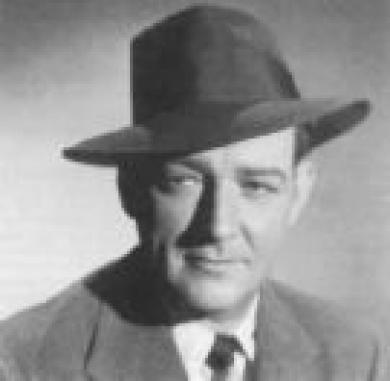
EP0490: Yours Truly Johnny Dollar: The Youngstown Credit Group Matter

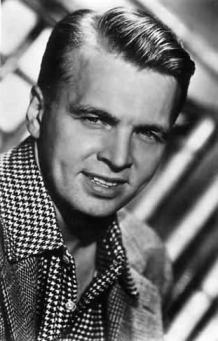
Edmond O'Brien

A vehicle containing two men carrying cash for payroll checks is robbed and one of the owners killed. Johnny goes to Ohio to find the truth.

Original Air Date: December 8. 1951

Support the Great Detectives of Old Time Radio… http://support.greatdetectives.net

Become one of our friends on Facebook…http://www.facebook.com/radiodetectives

Take the listener survey at http://survey.greatdetectives.net

Click here to download, click here to add this podcast to your Itunes, click here to subscribe to this podcast on Zune, click here to subscribe to this feed using any other feed reader.

Coming Attraction

The Lux Radio Theatre version of, “To the Ends of the Earth” will be our 500th Episode Special. I listened to the program today and it’s fantastic. I look forward to bring it to you on September 24th. Below is a video clip from the movie the radio show is based upon:

EP0489: Sherlock Holmes: The Adventure of the Iron Maiden

Tom Conway

While visiting Nuremburg, the curator of a black museum asks Holmes to investigate anonymous letters attacking him. While touring the museum, a body is found in the iron maiden.

Original Air Date: July 7, 1947

Support the Great Detectives of Old Time Radio… http://support.greatdetectives.net

Cast your vote at http://podcastalley.greatdetectives.net

Become of our friends on Facebook…http://facebook.com/radiodetectives

Take our listener survey at http://survey.greatdetectives.net

Click here to download, click here to add this podcast to your Itunes, click here to subscribe to this podcast on Zune, click here to subscribe to this feed using any other feed reader.

EP0488: Let George Do It: Portuguese Cove

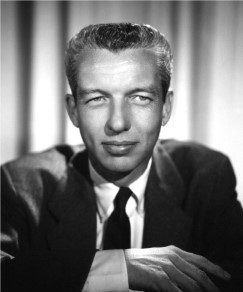
Bob Bailey

A sea captain punching a mailman leads George to look into a family tuna fishing business and the death of a mutineer.

Original Air Date: May 22, 1950

Support the Great Detectives of Old Time Radio…http://support.greatdetectives.net

Become one of our friends on Facebook… http://www.facebook.com/radiodetectives

Call 208-991-4783 to leave a voicemail.

Take the listener survey at http://survey.greatdetectives.net

Click here to download, click here to add this podcast to your Itunes, click here to subscribe to this podcast on Zune, click here to subscribe to this feed using any other feed reader.

EP0487: Rogue’s Gallery: The Latin Type

Dick Powell

A woman enters Rogue’s compartment and leaves her briefcase with him. A man comes to collect the briefcase.

Original Air Date: May 23, 1946

Quote of the Show: “I was in more trouble than a jitterbug at a square dance.”

Support the Great Detectives of Old Time Radio…http://support.greatdetectives.net

Become one of our friends on Facebook… http://www.facebook.com/radiodetectives

Call 208-991-4783 to leave a voicemail.

Take the listener survey at http://survey.greatdetectives.net

Click here to download, click here to add this podcast to your Itunes, click here to subscribe to this podcast on Zune, click here to subscribe to this feed using any other feed reader.

EP0486: Barrie Craig: Fatal Appointment

William Gargan

Barrie Craig is hired by a jealous wife to verify that her husband went to a meeting with his mistress. When Barrie arrives, he finds the mistress shot and his client confesses, but neither Barrie or the DA buy the confession.

Original Air Date: January 16, 1952

Support the Great Detectives of Old Time Radio… http://support.greatdetectives.net

Become one of our friends on Facebook… http://www.facebook.com/radiodetectives

Take the listener survey at http://survey.greatdetectives.net

Click here to download, click here to add this podcast to your Itunes, click here to subscribe to this podcast on Zune, click here to subscribe to this feed using any other feed reader.

Book Review: Too Many Cooks

In the first three Nero Wolfe books, Rex Stout firmly established that Wolfe rarely leaves the house. From 1937-46, Wolfe was routinely pushed out of the Brownstone by Stout with only two stories in this period allowing him to stay homebound:

  • The Red Box (1937) sent Wolfe to a clothing store to question witnesses at the behest of a client and peers in the orchid community.
  • Some Buried Caesar (1939) had Wolfe head upstate to put his orchids on display at an exposition.
  • Where There’s a Will (1940): had Wolfe visit a client’s house.
  • Black Orchids (1942) was the first novella collection and  saw Wolfe heading out to another flower show where a murder occurred in the first of two stories.
  • Not Quite Dead Enough (1944) featured Wolfe leaving the Brownstone in both novellas.
  • The Silent Speaker (1946): Wolfe goes to police headquarters to report to an inspector who replaced Cramer on a case.

However, it wouldn’t be until the 1950s that  Wolfe was pulled as far from his home as in Too Many Cooks which sees Wolfe boarding a train to attend a convention of famous cooks in a West Virginia resort town where Wolfe had been invited as a guest of honor to speak about American contributions to fine dining. One of the great cooks, Philip Laszio is despised by his fellows for stealing recipes and for a Machivellian rise through the culinary world, and is killed with suspicion falling on the other cooks.

A wet behind the ears prosecutor asks for Wolfe’s help in the case. When one of Wolfe’s suggestions leads to the imprisonment of  a prestigious chef , Wolfe has to set to work to find out what happened.

This book introduced Wolfe’s lifelong friend, Marco Vukcic, the owner of Rosterman’s as a character. Vukcic served as a humanizing force on the Wolfe character. Vukcic was one of the few people to call Wolfe by his first name. Wolfe’s sentiment for Vukcic is in full force when he’s confronted by the widow of the murdered man (who was Vukcic’s ex-wife) and Wolfe delivers a classic smackdown for  her ruthlessness.

Even involved in the stereotypically genteel world of cooks, there are risks. At one point in the course of his investigation, Wolfe ends up getting shot.

One controversey that surrounds the book is the use of racial epithets. This  is, after all, the South in the 1930s, and it sounds it. There are about a dozen or so uses of the “N-word” and Archie uses a only slightly less offensive term a couple of times. So, it’s hardly at the Huckleberry Finn level of racial language, but like Mark Twain, Stout had a point.

Of course, this is a detective book, so the points couldn’t be too fine or too preachy, and whatever point he’d have to make would have to tie in to the story. On these points, Stout succeeded. Wolfe has reason to believe that the staff know who committed the crime after hearing from a relucant witness that the killer was black.

Wolfe decides to bring the staff up into his suite for questioning. Archie thinks the entire excercise will be a waste of time, as they cops hadn’t gotten anything out of them and that Wolfe wouldn’t know how to communicate with blacks.

Wolfe begins his session by humbly expressing his gratitude to the men for the privilege of being able to come to America. He then learns the men’s names and refers to them by their proper names unless otherwise requested. In other words, Wolfe treated them with the same courtesy and respect that he initially gives to everyone he questions. And through that, Wolfe is eventually able to get their help.

What Stout communicates to a segregated America is that the way to live together in harmony is to treat every person with equal dignity, and judge them on their character.  As Wolfe says, ” … the ideal human agreement is one in which distinctions of race and color and religion are totally disregarded.” It’s very powerfully done and not disruptive to the story.

Too Many Cooks is not without its flaws. The first few chapters drag a bit. However, the biggest weakness of the story is that Wolfe dominates the story line to such an extent that there’s really not a whole lot for Archie to do.

Outside of a couple scenes on the train to and from New York, the action is confined to the resort, probably within a couple hundred yards of Wolfe’s room. Archie is usually the focal point of the investigation with a lot of action and runing errand. Here Archie is more reactive and doesn’t even get off many good lines of dialogue. Archie is about as useful and important to the plot as Captain Hastings in a Poirot book. Wolfe’s next novel also took Wolfe away from the Brownstone in, Some Buried Caesar, but in that one, Stout wisely gave Archie a lot more play.

While I can’t say it’s a criticism, the story points to an inconsistency in the Wolfe universe. In Too Many Cooks, Wolfe prepares and delivers a lengthy speech (not fully included) on American contributions to fine dining, and at the final banquet, an all American gourmet dinner is served. Twenty years later in The Next Wintess, Wolfe commends chili as  “One of the few contributions America has to world cuisine.”   One wonders why Stout changed Wolfe’s mind on this point, or if Stout simply forgot Wolfe had delivered a stirring defense of American contributions to cooking.

The book also includes the recipes for the All-American gourmet meal, the preparation  of which is beyond my simple talents. (If you have cookied the recipes in this book, please share your experience in the comments.)

Overall, Stout prepared a very good recipe in Too Many Cooks, although it could have used a dash or two more of Archie Goodwin action.

Overall, I’ll give it a:

Rating: Satisfactory

You can find all the Nero Wolfe books in Kindle, Audiobook, and book form on our Nero Wolfe page.

If you enjoyed this post, you can have new posts about Detective stories and the golden age of radio and television delivered automatically to your Kindle

The Endurance of Johnny Dollar and Sherlock Holmes

This is the first article that’s based on a listener/reader question. Wben I was soliciting questions for starting this column on Facebook, Matthew wrote:

How about a study on why Johnny dollar and Sherlock Holmes lasted as long as they did while others shows didn’t.

There were other shows that lasted as long or longer than these two programs such as Mr. Keen, Tracer of Lost Persons (1937-55), Nick Carter (1943-55), and Mr. and Mrs. North (1942-54), but there’s no question that  Johnny Dollar (1949-54, 1955-62) and Sherlock Holmes (1930-36, 1939-42, 1943-50) carved out a spot for themselves in America’s golden age of radio that was unique and worth examining.

The glut  of radio detective shows came to air from about 1947-51. The success of Rogue’s Gallery and Sam Spade had convinced network executives that there was a market for more detectives, particularly of the hard boiled sort. While some shows were poorly made (ABC’s Danger, Dr. Granger and The Deadline Mysteries) stand out, there were many well-produced shows that got lost in a flood of similar shows. And after the early 50s, the growth of television made it impossible to launch an even well-produced shows like the Adventures of the Abbotts for more than a season.

Sherlock Holmes and Johnny Dollar are separate cases of shows that survived the glut of radio detectives and decline of radio respectively. So, let us begin with what kept Sherlock Holmes on the radio:

1) There’s Only One Sherlock Holmes

The pure number of radio shows hitting the airwaves could not compete for Sherlock Holmes’ audience. Americans had already developed a fond admiration for Holmes.  There have been countless adaptations in every imaginable media. The demand for Sherlock Holmes is and was inexhaustable. Therefore, if one network or one sponsor decided they were no longer interested, someone else would step up as they knew there was an audience.

2) Rathbone and Bruce

 While Nigel Bruce was only connected with Sherlock Holmes for seven seasons and Basil Rathbone for six, their role in securing the current and future popularity of Holmes  cannot be overstated. They were popular and well-beloved with the American people to make listening to Sherlock Holmes a radio tradition than anyone else.

3) A More Leisurely Pace

One reason that radio detective shows burned out is that the vast majority of them were year-round operations. While comedians such as Bob Hope and Jack Benny always took Summer break, radio private eyes had 52 scripts a year to perform and writers had to come up with 52 different mysteries. It was easy for actors and writers alike to run out of creative juice.  Even when a detective show did take a Summer break, it was often abbreviated, such as the 4 week Summer Break Edmond O’Brien took from Yours Truly Johnny Dollar in 1950.

With the exception of the torrid 106-week period of 1943-45 that had Rathbone and Bruce appearing every week, the show had shorter seasons. Those prior to the Rathbone-Bruce pairing ran for less than 40 weeks each, the first three Rathbone-Bruce seasons were between 23-26 episodes each, and after the marathon 1943-44 and 1944-45 seasons, all subsequent Holmes seasons were 39 episodes each, giving the writers and Holmes-Watson pair 13 weeks of vacation.

Johnny Dollar:

1) Standing Out From the Crowd:

Like Holmes, the Johnny Dollar productions had something unique going for them. First, was the unique concept of focusing on an insurance investigator. While countless detectives would occasionally be hired by an insurance company, Johnny Dollar was the only network-based detective show which featured a character who specialized in insurance investigations (the syndicated Adventures of Frank Race did as well.)

Dollar was not a typical private detective with a typical relationship with the local homicide squad who was often politely (or not so politely) asked to keep his nose out of police business. Rather,  nine times out of ten, Dollar was treated with respect as someone with an official status and a right to be in on the case.

In the second half of the show’s life under producer Jack Johnstone, there was far less competition in the detective area. While a few shows (NBC’s The Big Guy and Mutual’s It’s a Crime, Mr. Collins come to mind) ran for one season each, for the most part Johnny Dollar was the only place in town for a radio detective story from 1955 on.

2) Have Expense Account, Will Travel

While most detectives were more or less stuck in one location. Dollar could easily end up jetting anywhere in the world on his cases, which gave his adventures an exotic feel. You never knew where he’d end up. His investigations could take Johnny Dollar to steel plant, down to Mexico, over near Palestine, over to England, or just down the street from his apartment in Hartford.

3) Adaptability

Johnny Dollar survived because the show adapted and changed. The original run of Johnny Dollar had Dollar as a poor man’s Sam Spade. The change to Edmond O’Brien brought a more Malowesque pathos and world-weariness.  The popularity of Dragnet spurred the show to have many episodes that were practically police procedurals. The ability to roll with the punches kept the show going while other programs went down for the count.

4) Bob Bailey and Jack Johnstone

Bob Bailey had put in at least six seasons playing a private eye in Let George Do It and was the perfect choice to revive the series after its one year hiatus. Bailey’s performance was the perfect mix of compassion, tenderness, and toughness that allowed Johnny Dollar to gain a new lease on life, while other detectives faltered.

Jack Johnstone, a veteran of Superman and the Man Called X made a show that was just as exciting for adults as Superman had been for kids. Under Johnstone, the character of Johnny Dollar began to take shape. Johnny developed a favorite hobby (fishing), a couple recurring characters including a girlfriend in the 1960 season. Some of the recurring characters Johnny dealt with included the various insurance company executives who would call on Johnny. Previous shows never re-used the same executive twice, but Johnstone not only reused insurance company men, but gave them distinct personalities. The best known of these was Pat McCracken of the Universal Adjustment Bureau. Johnstone made Johnny more realistic and three dimensional than most of his predecessors. This is why his interpretation of Johnny Dollar is still beloved more than 50 years later.

If you have an idea for a future column, email me.

If you enjoyed this post, you can have new posts about Detective stories and the golden age of radio and television delivered automatically to your Kindle.


EP0485: Yours Truly Johnny Dollar: The Merrill Kent Matter

Edmond O'Brien

An anonymous phone call leads Johnny to a small town to investigate whether an insured died accidentally or was murdered.

Original Air Date: November 17, 1951

Support the Great Detectives of Old Time Radio… http://support.greatdetectives.net

Become one of our friends on Facebook…http://www.facebook.com/radiodetectives

Take the listener survey at http://survey.greatdetectives.net

Click here to download, click here to add this podcast to your Itunes, click here to subscribe to this podcast on Zune, click here to subscribe to this feed using any other feed reader.

EP0484: Sherlock Holmes: The Adventure of the Innocent Murderess

Tom Conway

A woman bursts into 221B Baker street and shoots a foreign emissary staying with Holmes. Holmes and Watson testify against the woman, but then have to scramble to find what really happened and save their reputation when the woman is acquitted when it turns out the man was poisoned.

Original Air Date: June 30, 1947

Support the Great Detecitves of Old Time Radio…http://support.greatdetectives.net

Click here to download, click here to add this podcast to your Itunes, click here to subscribe to this podcast on Zune, click here to subscribe to this feed using any other feed reader.

EP0483: Let George Do It: The Ant Hill

Bob Bailey

Lieutenant Riley calls George in to help find the girlfriend of a illegal slot machine repairman in hopes of finding the racket’s kingpin.

Original Air Date: May 15, 1950

Support our Listener Support Campaign…http://support.greatdetectives.net

Become one of our friends on Facebook… http://www.facebook.com/radiodetectives

Call 208-991-4783 to leave a voicemail.

Take the listener survey at http://survey.greatdetectives.net

Click here to download, click here to add this podcast to your Itunes, click here to subscribe to this podcast on Zune, click here to subscribe to this feed using any other feed reader.

EP0482: Rogue’s Gallery: Impossible Murder

Dick Powell

Rogue is hired to protect a lawyer who has been threatened with murder.

Original Air Date: May 16, 1946

Become one of our friends on Facebook…http://facebook.radiodetectives.net

Click here to download, click here to add this podcast to your Itunes, click here to subscribe to this podcast on Zune, click here to subscribe to this feed using any other feed reader.

EP0481: Barrie Craig: Murder Island

William Gargan

Barrie is hired by a wanted fugitive to find out who really committed the murder he was charged with.

Original Air Date: January 9, 1952

Support our Lister Support Campaign http://support.greatdetectives.net

Click here to download, click here to add this podcast to your Itunes, click here to subscribe to this podcast on Zune, click here to subscribe to this feed using any other feed reader.

Zorro Comes to Radio

If you grew up in the 1950s, when you think of Zorro as Guy Williams in the Disney series. Or if you grew up in the late 80s and early 90s, Duncan Regehr may have provided your vision of Zorro. Others may remember Antonio Banderas as Zorro and for many classic film buffs, it is without a doubt Douglas Fairbanks who defines the character in the silent film version.

Zorro did make it to radio in 1957, in a short-lived serial based on the Curse of Capistrano, however only two episodes of this series survive.

Zorro has been interpreted and reinterpreted so many times throughout the years that it’s hard to remember that Zorro originiated in the pulp magazines in stories by Johnston McCulley. may have passed Zorro by for the most part, modern producers of radio drama have picked up the torch.

The Colonial Radio Theatre  brought two of these stories to radio in Zorro and the Pirate Raiders and Zorro Rides Again.

Summaries

In Zorro and the Pirate Raiders, the commandante of the pueblo, Captain Ramon, forms an alliance with cutthroat pirates to  raid the pueblo and split the booty. Ramon also orders the pirates to kill Don Diego de la Vega and kidnap his bride-to-be. Zorro thwarts the attack on Don Diego with the help of other caballeros and then pursues the pirates across the sea.

In Zorro Rides Again, Zorro has retired after The Pirate Raiders but is forced to return when an imposter begins to commit injustices in the name of Zorro. Zorro must clear his name and find the imposter before friends turn against him and the government executes.

Review

These Zorro productions are superb swashbuckling adventures.  Each feature length adventure was filled with action, adventure, and surprise twists throughout the story. The sound effects were amazing, and help to transport you back to Old California.

There were differences between this production and most Zorro adaptations. The biggest was that Zorro had allies: twenty caballeros who fought alongside him. This is a stark difference between modern productions which have Zorro fighting a lone battle against evil, which has become the trend.  However, the CRT’s version of Zorro remains faithful to the original vision of McCulley.

Zorro and his caballeros are courageous and gallant, living by a code of honor.  McCulley’s vision of Zorro was as a North American version of the knights of old and this really shows through in the Colonial Radio Theater production.  The cast from the stars to their supporting players were all excellent. In particular, Sam Donato shined in the role of Sergeant Garcia.  Oftentimes, the role of the Sergeant in Zorro is often played as buffoon or coward, but Donato’s portrayal was more nuanaced, and there was a lot more to Sergeant Garcia than meets these eyes.

There were very few flaws in these productions, and they were  a result of being faithful to the source material, so I can’t complain about them. I will say that when a radio drama features a fight between two guys with knives in their mouths, the theater of the mind has to work overtime to supply the images.

Overall, these are great productions that represent Zorro as he was meant to be and provide hours of fun and excitement.

Note: If you are an Audible Member, the digital download of these programs are only $2.95 each which is a fantastic price for these great productions.

Rating: 5.0 out of 5.0

If you enjoyed this post, you can have new posts about Detective stories and the golden age of radio and television delivered automatically to your Kindle
This post contains affiliate links, which means that items purchased from these links may result in a commission being paid to the author of this post at no extra cost to the purchaser.

Book Review: Three for the Chair

While shopping in the thrift store, I found a 1968 Bantam Paperback copy of, Three for the Chair, a 1957 compilation of three Nero Wolfe novellas. While the book was not my planned next Nero Wolfe read, I decided to grab it cheap and enjoy the book.

There are three stories in this book and each should be reviewed in its own right.

A Window for Death:

A man who left his family under a cloud of suspicion and then made a fortune in mining, apparently dies of natural causes after returning home.  Members of the family aren’t so sure, and are suspicious of the man’s partner who inherited the entire mining interest. Wolfe is hired to determined whether there is enough to call the police in.

This story is very workmanlike. There’s little action. The majority of the story involves Wolfe questioning witnesses in the Brownstone and the rest involves Archie doing so outside. No added deaths occur and there are no real plot twists. Inspector Cramer does not appear in the story, with A Window for Death ending with Wolfe composing a note to him. Still, the actual solution is pretty clever.

Rating: Satisfactory

Immune to Murder

At the request of an Assistant Secretary of State, Wolfe leaves the comfort of the Brownstone for a rustic fishing resort to help with sensitive oil negotiations by cooking fish for the ambassador who had specifically requested Wolfe. Wolfe hates the  locale and plans to leave after lunch. Wolfe’s plans are upset when Archie discovers the Assistant Secretary of State lying dead in stream.

Given the other potential suspects (members of a diplomatic delegation who are immune to prosecution and two rich oil magnates), the District Attorney suggests absurdly that Archie was there as a hired assassin. The truth doesn’t come out until the murderer does something that insult’s Wolfe’s vanity.

This story was adapted for television on a Nero Wolfe Mystery as the last episode and was panned by fans. In my opinion, there was nothing wrong with either the episode or the story. It was, however unfortunate to make this the last episode, as we had none of the familiar supporting characters that fans loved, plus in the context of a final episode, the solution was unsatisfying. However, in the context of a Nero Wolfe reading binge, the story represents a nice change of pace.

Rating: Very Satisfactory

Too Many Detectives

Thanks to Archie’s interest in learning about wiretapping, Wolfe agrees to help a man tap his own phone. Later, Wolfe learns he was duped and the man who hired him didn’t own the phone being tapped.

Wolfe’s embarrassment is deepened when he’s summoned to Albany and forced to endure a long car ride to discuss the matter. Wolfe and Archie to find several other detectives waiting.

When it’s their turn to testify, they learn that the man who fooled them claimed they knew the wiretap was illegal. When it was time for the phony client to testify, he’s found dead, and Wolfe and Archie are arrested as material witnesses.

While Archie and Wolfe are released on bail, they can’t leave  the jurisdiction, a situation Wolfe can’t tolerate. The only way out is for Wolfe to find the killer.

Wolfe compares notes with the other detectives and finds that all but one of them was taken in by the same scheme as Wolfe. Wolfe then gets all six detectives to share every available operative back in New York City to solve the case, leading to a surprising and satisfying solution.

This story in notable for featuring Dol Bonner. Bonner had appeared in her own novel in 1937 and also appeared in a Tecumseh Fox novel. She and Wolfe got along well which had Archie nervous as he figured that Bonner was that rare type of woman Wolfe could actually fall for. Archie even imagines a situation where Archie, Wolfe, Bonner, and Bonner’s assistant Sally Colt all in the Brownstone solving cases together. Thus, even great authors have intriguing ideas occur to themwhich if tried would wreck their franchise.

As an aside, the story makes me curious to read Stout’s Dol Bonner novel.

As for Too Many Detectives, it was truly a good use of an hour and deserving of a:

Rating: Very Satisfactory

Overall rating for the Collection: Very Satisfactory

You can find all the Nero Wolfe books in Kindle, Audiobook, and book form on our Nero Wolfe page.

If you enjoyed this post, you can have new posts about Detective stories and the golden age of radio and television delivered automatically to your Kindle.