Author: Yours Truly Johnny Blogger

Audio Drama Review: The History of Harry Nile, Set 1 (Volumes 1-4)

There have been many attempts to tap into the magic of the Golden Age Detectives since 1962. Most modern radio detectives meet a somewhat quick exit unless they aired over British radio. The Independently produced Matthew Slade series lasted for about 13 weeks in the mid-60s. Canada’s Becker, House Detective survived for 13 weeks as well. In the 21st Century, the Canadian Decoder Ring Theatre has enjoyed great success since 2006, producing 48 episodes of Black Jack Justice.

However, for long lasting detective series, no one can beat Jim French’s Harry Nile. The show began airing in 1976 and ran through 1978 and then return in 1991 and continues air to this day. The show survived the death of original Star Phil Harper and continues with Larry Albert in the lead to this day. The show’s endurance for more than 20 years after its 1990s comeback and 35 years after it first aired is an amazing accomplishment.

In the History of Harry Nile, Box Set 1, we get to go back to the beginning. The History of Harry Nile series are in Chronological order based on story set. However, all but one of the 23 episodes were from the 1970s, and only three 1970s episodes are not included. The stories are set between December 1939 and Winter 1942.

We meet Harry Nile in, “West for My Health” which finds Harry in Chicago working as a private operative after quitting the force because he was tired of being the only honest cop in his department. However, he’s in for gambling debts of $8,000 with a racketeer and he has no way to pay. The racketeer offers Harry a choice: die or go to LA and commit a murder to cancel the debt. Harry opts to go to LA but is  never sure if he’ll go through with it.

This episode was never intended to be the start of a series of Harry Nile stories. It was a double length episode of, Crisis another French series featuring stories that would have fit well on classic radio programs such as “Suspense.” However, the audience demanded more Harry Nile and they got it.

The next episode aired but “Seattle Blues” was one of my least favorite of the series. Harry Nile is a hard luck private investigator, however the way, “Seattle Blues” played out, particularly on the heels of a downbeat beginning, Harry Nile skirted that fine line between “hard luck” and “loser.”

However, after this episode, the series falls into place. Harry relocates to Los Angeles and begins a far more even string of wins and losses. In the vast majority of episodes, Jim French and Phil Harper created a nearl y  perfect pitch recreation of the 1940s detective series with stories that would easily fit in to any number of detective series aired during the era with femme fatales, eccentric actors, horse racing, smugglers, and underworld characters.

Some notable episodes include:

“The Doomsday Book”-The story of a double-dealing daughter-in-law having walked out and the controlling mother-in-law who wants Harry to stop any blackmail attempt. The beginning bares a very strong resemblance to the Philip Marlowe novel, High Window.

“The Case of the Matinee Murder”-A young man from the wrong side of the tracks is accused of causing disturbance at the theater and finally murder. Harry tries to clear him.

“The Case of the Lisping Lover”- Harry is hired by a famous client who is mysterious about his identity and will only talk to Harry on the phone. However, the voice soudns like Humphrey Bogart. He insists a woman is blackmailing him, but what’s really going on?

“Stand-in For Murder”-Harry gets a job on a cruise disguised as a former silent film star who has received numerous death threats. Harry’s job is to be the decoy.

“A Little Out of Town Job”-Harry works off a speeding ticket for a friend by trying to solve the mystery of the disappearance of a beloved local banker.

“Angel’s Flight”-Very little mystery in this one but from a dramatic standpoint, it’s the best of the collection. It is set in December 1941 and leads up to Pearl Harbor. It captures the mood of the time perfectly.

“The Twenty Dollar Track Down”-Introduced Murphy who would become Nile’s equivalent of George Valentine’s Brooksie.

The series did a remarkable job recreating the golden age settings. It achieved an amazing authenticity. Most of the time, it would be hard to tell that episodes were recorded in the 1970s. Language and style were very consistent with few exceptions.

In this early collection, swearing is almost completely eschewed. The only episode to feature even mild expletives was, “Vacation with Bullets.” Harry’s world has more gray than the black and white of some of the golden age detectives. This was most apparent in the 1990s  episode “The Black Widow” which dealt with assisted suicide and artificial insemination (in 1941).   This was a somewhat jarring exception to a series that remained faithful to the times and the way stories were told in them.

In terms of quality, I’d place the series betwen, “Crime and Peter Chambers” and “Rogue’s Gallery.”  The program lacks the big-time stars of radio’s golden era such as Dick Powell and Howard Duff. The biggest star to grace these episodes was the late Kurt Kasznar. However, the series had a repertory Company feel to it with many actors making multiple appearances and Pat French playing a wide variety roles in these early episodes before Murphy became a recurring character.

Overall, these Harry Nile episodes are a great treat that began a well-done series that would enjoy almost unprecedented post-golden age longevity.

Overall Rating: 4.25 out of 5.0

Purchasing Information:

The set is available at French’s website for $49.95 on CD or as a digital download for $25.

The History of Harry Niles, Set 1 (along with Sets 4 and 5) are available on Audible for $19.95 for members or 1 Credit. I bought this set with my June Audible Credit ($14.95).

If you enjoyed this post, you can have new posts about Detective stories and the golden age of radio and television delivered automatically to your Kindle.

This post contains affiliate links, which means that items purchased from these links may result in a commission being paid to the author of this post at no extra cost to the purchaser.

Yours Truly Johnny Dollar: The Allen Saxton Matter (EP0715)

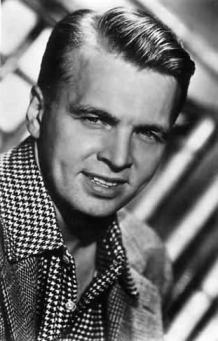
John Lund

When an insured purchases a painting that has questionable authenticity, Johnny is brought in to represent the insurance company.

Original Air Date: October 20, 1953

Save more and combine hotel and airline fare at http://www.johnnydollarair.com

Become one of our friends on Facebook…http://www.facebook.com/radiodetectives

Take the listener survey at http://survey.greatdetectives.net

Click here to add this podcast to your Itunes, click here to subscribe to this podcast on Zune, click here to subscribe to this feed using any other feed reader

Sherlock Holmes: The Fabulous Windmill (EP0714)

Sherlock Holmes is brought in when a Dutch dike  inspector disappears under mysterious circumstances.

Original Air Date: October 24 1948

Take our listener survey: http://survey.greatdetectives.net

Become one of our friends on Facebook… http://www.facebook.com/radiodetectives

Call 208-991-4783 to leave a voicemail.

Click here to add this podcast to your Itunes, click here to subscribe to this podcast on Zune, click here to subscribe to this feed using any other feed reader.

Update: The Return of the Site

A special podcast to thank listeners and let them know that the site has returned.

Let George Do It: A Crime Too Simple (EP0713)

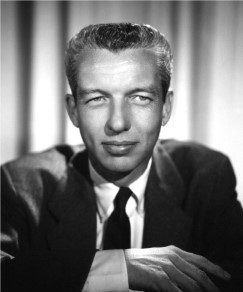
Bob Bailey

Two Coast Guardsmen shoot a professional hitman who had been hired to kill a cook. The crime is very simple. George is convinced its too simple to solve and the only way to solve it is to make it more complicated.

Original Air Date: October 22, 1951

Take our listener survey…http://survey.greatdetectives.net

Become one of our friends on Facebook… http://www.facebook.com/radiodetectives

Call 208-991-4783 to leave a voicemail.

Click here to add this podcast to your Itunes, click here to subscribe to this podcast on Zune, click here to subscribe to this feed using any other feed reader.

Leonidas Witherall: Dead Man In the Closet (EP0712)

Walter Hampden

At a party for a local organization at his home, Leonidas finds a corpse in the closet.

Original Air Date: June 4, 1944

Take our listener survey…http://survey.greatdetectives.net

Become one of our friends on Facebook…http://facebook.com/radiodetectives

Follow us on http://www.twitter.com/radiodetectives

Click here to add this podcast to your Itunes, click here to subscribe to this podcast on Zune, click here to subscribe to this feed using any other feed reader.

Barrie Craig: Two Dead Men (EP0711)

William Gargan

Barrie is protecting a woman’s jewels at a tennis match and then witnesses a tennis player dying by poison.

Original Air Date: June 23, 1955

Become one of our friends on Facebook… http://www.facebook.com/radiodetectives

Take the listener survey at http://survey.greatdetectives.net

Give us a call 208-991-4783

Follow us on Twitter @radiodetectives

Click here to add this podcast to your Itunes, click here to subscribe to this podcast on Zune, click here to subscribe to this feed using any other feed reader.

Yours Truly Johnny Dollar: The Philip Morey Matter (EP0710)

John Lund
When the start of a television  show that’s insured has a breakdown, Johnny is called in to investigate.

Original Air Date: October 13, 1953

Save more and combine hotel and airline fare at http://www.johnnydollarair.com

Become one of our friends on Facebook…http://www.facebook.com/radiodetectives

Take the listener survey at http://survey.greatdetectives.net

Click here to add this podcast to your Itunes, click here to subscribe to this podcast on Zune, click here to subscribe to this feed using any other feed reader.

Sherlock Holmes: The Adventure of Black Peter (EP0709)

An old sea captain who stole a fortune is found stabbed with a harpoon. The son of the man who the old captain robbed and murdered is quickly suspect by a Holmes protege on the police force, but Holmes believes someone else is behind the plot.

Original Air Date: October 17, 1948

Take our listener survey: http://survey.greatdetectives.net

Become one of our friends on Facebook… http://www.facebook.com/radiodetectives

Call 208-991-4783 to leave a voicemail.

Click here to add this podcast to your Itunes, click here to subscribe to this podcast on Zune, click here to subscribe to this feed using any other feed reader.

Let George Do It: No Way Out (EP0708)

 Bob Bailey

A young man has stumbled into working for a racket and needs George’s help to get out of it.

Original Air Date: October 1, 1951

Take our listener survey…http://survey.greatdetectives.net

Become one of our friends on Facebook… http://www.facebook.com/radiodetectives

Call 208-991-4783 to leave a voicemail.

Click here to add this podcast to your Itunes, click here to subscribe to this podcast on Zune, click here to subscribe to this feed using any other feed reader.

Pete Kelly’s Blues: June Gould (EP0707)

 Pete Kelly

Pete tries to find a missing female singer at the request of her worried mother.

Original Air Date:  September 19, 1951

Take our listener survey…http://survey.greatdetectives.net

Become one of our friends on Facebook…http://facebook.com/radiodetectives

Follow us on http://www.twitter.com/radiodetectives

Click here to add this podcast to your Itunes, click here to subscribe to this podcast on Zune, click here to subscribe to this feed using any other feed reader.

Barrie Craig: Sucker Bait (EP0706)

William Gargan

A small college’s strong basketball team loses to two no-account schools feeding talk of the games being fixed.

Original Air Date: June 9, 1955

Become one of our friends on Facebook… http://www.facebook.com/radiodetectives

Take the listener survey at http://survey.greatdetectives.net

Give us a call 208-991-4783

Follow us on Twitter @radiodetectives

Click here to add this podcast to your Itunes, click here to subscribe to this podcast on Zune, click here to subscribe to this feed using any other feed reader.

Book Review: Inka Dinka Doo

In Inka Dinka Doo, Jhan Robbins writes a biography of Jimmy Durante, beginning with his birth to a large immigrant family in the family’s kitchen to his early days playing dives in New York as a ragtime piano players to vaudeville success and motion picture hits and misses all the way to his death in 1980.

To Robbins, its a mystery. In the introduction, he lays out well what the mystery is, “Durante wasn’t a singer like Sinatra any more than he was a comic technician like Bob Hope. He lacked the polish of Johnny Carson, the bluntness of Humphrey Bogart.  When malapropisms and errors were deliberately inserted into his scripts he would mispronounce the mispronunciations. Other entertainers squeezed laughs out of vulgarity but not he. What was his secret?”

Robbins had gotten to know Durante over more than 20 years. The book is chock full of stories that tell the tale of Durante’s uncommon decency and kindness. Robbins’ book could seem one-sided but as Robbins stated, he looked desperately to find Durante detractors but couldn’t find any. The secret to Durante’s success was his genuine warmth and heart which spills out over the nearly 200 pages in Inka Dinka Doo. 

We learn of Durante’s closest and deepest friendships with his longtime partners Lou Clayton and Eddie Jackson as well as Eddie Cantor. His rocky career during Prohibition and his even bumpier landing at MGM in the 1930s where he continually drew forgettable roles even after getting a high dollar star contract.  We learn of his career on radio and triumphant entry into the new age of television.

The book is littered with anecdotes that show Durante’s heart and spirit. Durante was an extremely friendly person. In fact, Hollywood tour buses made a point to stop by his house knowing that he would run out and greet the bus, sometimes with a pitcher of lemonade to sell. It was Durante’s friendliness that got him out of the speakeasy business as an undercover prohibition agent came to the door and asked for him. Durante came down and the agent greeted him by name and Durante responded warmly. Then the agent complained of not being admitted and Durante let the guy in and the agent gathered evidence and the The Club Durant was shuttered the next evening.

Robbins also wrote of Durante’s loyalty and concern for others. When a fading Buster Keaton was released by MGM, Durante pleaded with Louie B Mayer on Keaton’s behalf and won Keaton’s reinstatement. When attending  a Dodgers’ game, Durante silenced a heckler who was mocking young future Hall of Fame Catcher Roy Campanella because he was black. Durante was kind and considerate even though he pronounced Campanella’s name as “Cantorbella.”

The book is full of such stories and makes for a light and engaging read with chapters slice up perfectly in digestible chunks.

I’d offer two criticisms of the book. First, I think Robbins did a bit of an injustice to both Durante’s first wife (who left Durante a widower in 1943) in the degree of his negative portrayal of her. Much of the source material for this information appears to be Durante’s longtime friend Eddie Jackson who the first Mrs. Durante didn’t get along with. What Robbins ended up with was a somewhat one side portrayal of Jeanne Durante. In addition, as Robbins stated, Durante never criticized or spoke negatively of Jeanne and so Robbins’ portrayal of Jeanne wasn’t quite in the spirit of Schnozolla.

In addition, the book has a somewhat uneven quality to it. For example, Robbins writes in painstaking detail about the one flop after another that MGM put Durante into. He then tells us that Durante’s pictures from the mid-1940s were better, but mentions no film by name between In the Army Now (1941) and The Last Judgment (1961). The book also tells us little about Durante’s latter day career as a ballad singer, a remarkable new direction for his that occurred at age 66.  Of course, Inka Dinka Doo was released before Sleepless in Seattle which created new interest in Durante’s ballads with Durante’s performance of “As Time   Goes By” and “Make Someone Happy” featuring prominently in the film.

Overall, there’s more to Durante’s life and career than this 200-page volume provides, however Robbins wrote with obvious affection for his subject and this book is not a bad place to start if you’re interested in learning about one of America’s best-loved entertainers. The book is out of print but may be available at your library (or through an interlibrary loan) or also as a used book through Amazon.

Rating: 3.75 out of 5.0 stars.

If you enjoyed this post, you can have new posts about Detective stories and the golden age of radio and television delivered automatically to your Kindle.
This post contains affiliate links, which means that items purchased from these links may result in a commission being paid to the author of this post at no extra cost to the purchaser.

Carry Me Back to Old Mayberry

Andy and Barney
Andy Griffith passed away at the age of 86. Griffith was the star of one of the most beloved programs in television history, The Andy Griffith Show. 

Griffith’s legacy was not limited to that, however. Prior to Andy Griffith, he was a solid movie actor with He had a second great series two decades after in Elia Kazan’s masterpiece, A Face in the Crowd (1957) and the comedic classic No Time for Sergeants (1958). Then nearly two decades after Andy Griffith ended, Griffith spent nine years as high priced yet thrifty great suited lawyer Ben Matlock, and then after Matlock ended he enjoyed a state of semi-retirement as a character actor who could still create magic in movies like The Waitress. 

That said,  none of Griffith’s other work has had near the impact on his fellow citizens than  those eight years in Mayberry.  In 1998, 5 million people daily tuned into reruns of the Andy Griffith show. I doubt that number has declined much. Along with I Love Lucy, Andy Griffith remains one of those few shows that have not been forgotten by the sands of time.

What makes Mayberry stay strong?

Barney Fife: Any analysis of the show has to begin with Barney Fife. His five seasons on the show were the best of the series. He brought home four Emmy Awards for the role.  And won another as a guest star. Barney was the lovable buffoon and braggart who provided the show’s greatest comedic moments in shows, “Barney Joins the Choir” and “Citizen’s Arrest.” However, he could occasionally pull off the great dramatic moment as he did, “Andy on Trial.”

Gentle Human Comedy: If I could use one word to describe the Andy Griffith Show’s comedy, it’d be “gentle.”  Comedy today is often about put downs, denigrating women, denigrating men, denigrating different religions or political viewpoints, but Andy Griffith was about the foibles of frail human beings just like us who made mistakes and had their flaws.

It’s a show that makes you laugh without leaving you to question whether what you laughed was really funny or just cruel.  On Andy Griffith, the comedy often came from efforts to spare people’s reputation and feelings.  The Andy Griffith Show made more people laugh with its efforts to be kind than most shows that have tried to obtain laughter through cruelty.

Love and Music: The show in the midst of its hilarity would often create a beautiful dramatic moment that would touch the hearts of viewers as parents, as children, or just as plain humans who could relate to what the characters were going through.

Music was an important part of Southern life and played a significant role in the program with Sheriff Taylor, the Darling Family, Rafe Hollister, or others.  It gave the show a feeling of authenticity.

The Truest Show on Television:  Our trips to Mayberry would invariably come with a moral. The insertion of morals into the show was quite intentional. One man even used it as Curriculum for a Bible Study and a Baltimore pastor used it to create a sermon series when he observed that every one of the gifts of the Spirit could be illustrated by an Andy Griffith show.

The program taught good morals while rarely being “preachy.” You’d laugh at the events, but then turn off the TV and then you’d come away with a nugget of truth.

Of course, the show is often considered unrealistic with its often idyllic portrayal of small town life. Yet The Andy Griffith Show was more about truths that endure rather than the passing reality of the moment.

The strongest criticism of Andy Griffith was  the lack of black characters. There was only one Black character with a speaking role in the eight year run of Andy Griffith. We should note that the problem was not limited to Mayberry. In the far more urbane Dick Van Dyke Show,  I recall only two Black Characters with speaking roles in the five seasons. I’ve also seen the first three seasons of Green Acres and again no black actors. This problem has more to do with a Hollywood culture that had failed to cultivate black stars and character actors than it does any racism on the part of the producers of Andy Griffith. 

More to the point, it doesn’t matter in the long run to the show’s staying power of the program as Rochelle Riley wrote for the Detroit Free Press:

 “For me, and for many generations before me, ‘The Andy Griffith Show’ was about our lives, regardless of color or background…

“My family didn’t watch ‘The Andy Griffith Show’ to count black people. We watched to see our way of life, one that included spending hours picking plums in the plum orchard, then sitting under a chinaberry tree eating them, or walking along ponds to collect cattails.”

And many generations after will continue to enjoy the simple lessons of life in Mayberry.

If you enjoyed this post, you can have new posts about Detective stories and the golden age of radio and television delivered automatically to your Kindle.

Yours Truly Johnny Dollar: The Alfred Chambers Matter (EP0705)

John Lund

Johnny investigates the murder of an insured man in the middle of nowhere.

Original Air Date: October 6, 1953

Save more and combine hotel and airline fare at http://www.johnnydollarair.com

Become one of our friends on Facebook…http://www.facebook.com/radiodetectives

Take the listener survey at http://survey.greatdetectives.net

Click here to add this podcast to your Itunes, click here to subscribe to this podcast on Zune, click here to subscribe to this feed using any other feed reader.