Author: Yours Truly Johnny Blogger

Telefilm Review: The Clocks


In, “The Clocks” a woman from a secretarial service is found running away in terror from a house in which a man has been found murdered by a young naval intelligence officer.. The secretary’s employer had sent her there in response to a phone call but the owner of the house claims never to have called to request the secretary’s services. In addition at the scene of the crime, four clocks are found each set to 4:13 P.M. but one of them disappears.

The police belive the woman committed the murder, but the Navy intelligence man doesn’t. However, it becomes clear that his judgment has been clouded, and it’s up to Poirot to sort out the truth.

The novel on which the telefilm was based was written Post World War II, though the film is set in the 1930s. There are a few signs of this, the biggest of which is the treatment of Poirot. The post-WW2 novels tended to have Poirot viewed with less respect by the local police. Instead of getting a compliant, respectful and cooperative colleague like Japp, the Clocks leaves Poirot with Inspector Hardcastle (Phil Daniels) who is not sure of Poirot despite assurances from Scotland Yard and Naval Intelligence. Hardcastle lives by a simple axiom that “somebody saw something” and doesn’t take much stock in Poirot’s hunches or vague statements include Poirot’s pronouncement that when it came to the unidentified victim “It doesn’t matter who he is, but who he is,” leading Hardcastle to mock Poirot, though it turned out Poirot had a serious point. There’s a great interplay and Hardcastle is a fine police foil for Poirot.

As usual, the production values are great with a beautiful period feel, and a superb cast. The mystery is complicated without being too convoluted and there are some very believable motivations for the criminals.

Overall, a very satisfying adaptation.

Rating: 4.5 out of 5.0

If you enjoyed this post, you can have new posts about Detective stories and the golden age of radio and television delivered automatically to your Kindle.

This post contains affiliate links, which means that items purchased from these links may result in a commission being paid to the author of this post at no extra cost to the purchase
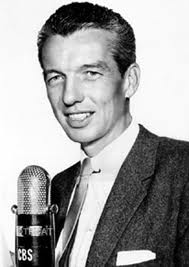
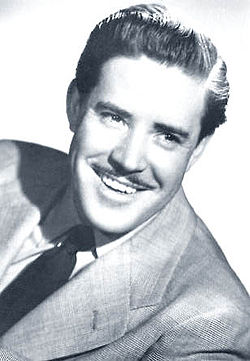
EP1537: Yours Truly Johnny Dollar: The Hapless Hunter Matter

Bob Bailey

Johnny is called to investigate a clear cut case of a hunting guide killing an insured and injuring his beneficiary, but is this the whole story?

Original Air Date: December 8, 1957

When making your travel plans, remember http://johnnydollarair.com

(more…)

EP1536: Nick Carter: The Case of the Priceless Prose

Lon Clark

Nick is called in to find a valuable manuscript and solve the murder of its owner.

Original Air Date: December 14, 1947

Support the show.

(more…)

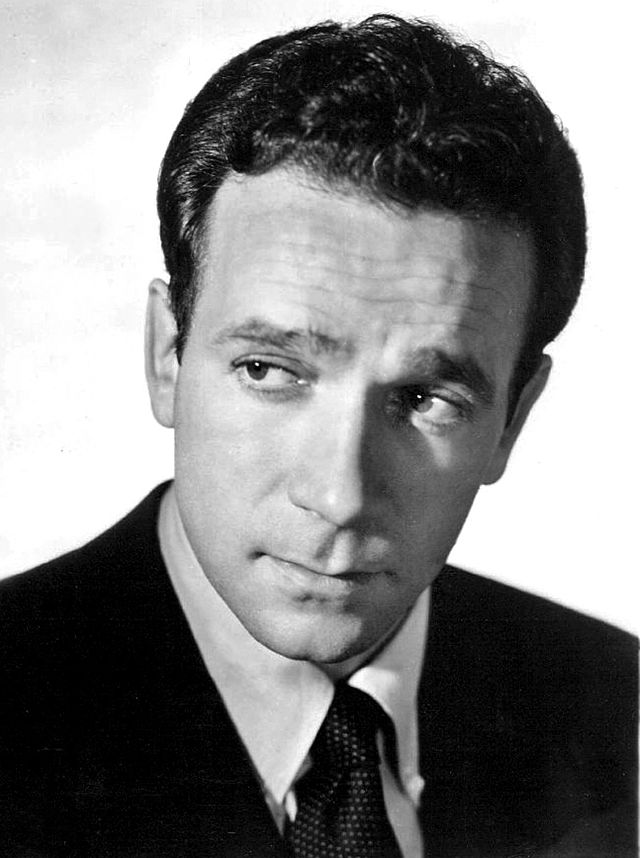
EP1535: Philip Marlowe: The Strangle Hold

Gerald Mohr

Marlowe has to prove that a big-time wrestler crooked or his client radio producer will face a slander judgment.

Original Air Date: October 15, 1949

Support the show.
(more…)

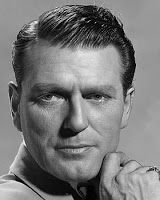
EP1534: Man From Homicide: The Winthrop Case

Charles McGraw

Lt. Dana investigates the murder of a man killed at a shady love nest.

Audition Date: September 16, 1950

Support the show.

(more…)

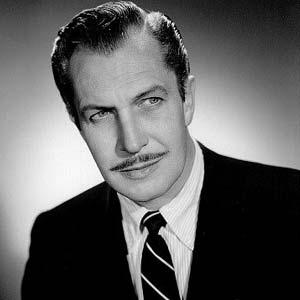
EP1533: The Saint: Marvin Hickerson, Private Eye

Vincent Price

Simon helps a wet behind the ears farmer turned private detective after he appears to have committed murder.

Original Air Date: December 3, 1950

Support the show.

Take the listener survey.

Give us a call 208-991-4783

Follow us on Twitter @radiodetectives

Click here to add this podcast to your Itunes, click here to subscribe.

TV Series Review: Broadchurch Series 1


In the first series of Broadchurch from 2013, a small English town is shaken by the death of eleven year old Danny Lattimer (Oskar McNamara) and Alex Hardy (David Tennant), a detective inspector newly arrived in Broadchurch and lifelong local Detective Seargeant Ellie Miller (Olivia Colman) are charged with investigating the case, and along the way they unearth many buried secrets of Broadchurch’s citizens.

While Tennant is the best known star in the series internationally, it’d be a mistake to assume that this a series about the investigators alone or primarily a David Tennant vehicle. The series is just not about the mystery, though there are plenty of clues and red herrings, but how this affects an entire community and then there are separate plots that work their way through Broadchurch: How the family handles this as well as learning of the husband’s infidelity, a discouraged minister, an ambitious young reporter, a self-proclaimed psychic telephone repairman, and then the suspects: some are hiding something, but in a few cases, we learn that people we’ve been suspecting have only been trying to hide a very painful past. It’s not a story with disposable characters.

As such, the middle four episodes feel like an ensemble piece and a very good one at that. What Broadchurch does is make characters who feel like real people.  There are secrets but most of them aren’t off the wall things. There’s real human conflict at work.

My favorite character outside of the leads was Reverend Paul Coates (Arthur Darvill of Doctor Who) who was really revealed to be a strong character despite starting off looking much more like

In the hands of an amateur or a weak creative team, this type of story becomes a mess of characters running around. At the same time, the series succeeds on a directorial level. The way the story of Broadchurch is told is superb and nearly flawless with music, acting, and storytelling working together to tell a narrative. This is brilliant filmmaking and art on television which is just not something you see.

The mystery is good, although it’s probably the weakest part of the series. There are a lot of clues and red herring thrown in throughout the series. It’s hard to sort through, and the most important clues are ones that Alex Hardy knows but doesn’t share with the audience. Still, there are a few clues to the killer that the attentive viewer can pick up.

While this is a great series, it’s one that really requires parental discretion and is definitely not for the whole family.  The series deals with serious issues that surround the death of a child and what could motivate it. While it was produced for broadcast television, it was produced for British broadcast television which has different standards than broadcasts in other countries. There’s very little sexual content or  violence  but some language that would not make it on American broadcast television.  For the most part, , the use of these elements in the series were not gratuitous which is a tribute to the talent of the creative team to tell a good story.

Overall, this is a great example of what Television can be but so often isn’t.

Rating: 4.5 out of 5.0

If you enjoyed this post, you can have new posts about Detective stories and the golden age of radio and television delivered automatically to your Kindle.

This post contains affiliate links, which means that items purchased from these links may result in a commission being paid to the author of this post at no extra cost to the purchase
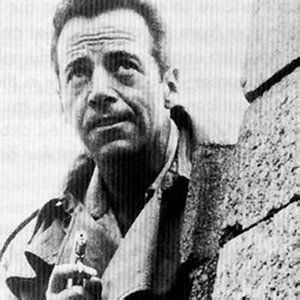
 

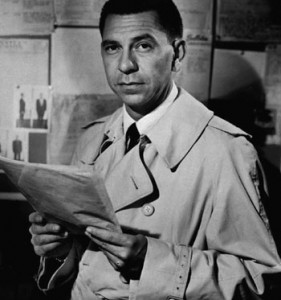
EP1532: Dragnet: The Big Boys

Jack Webb
On a slow day, Friday and Romero find clues to fugitive robbery suspects from San Francisco.

Original Air Date: March 16, 1950

Support the show.

(more…)

EP1531: Yours Truly Johnny Dollar: The Sunny Dream Matter

Bob Bailey

Johnny investigates a series of mysterious deaths happening at a retirement home where all of the victims made the retirement home their beneficiary.

Original Air Date: December 1, 1957

When making your travel plans, remember http://johnnydollarair.com

(more…)

EP1530: Nick Carter: The Case of the Explored Alibi

Lon Clark

Nick comes across a murder at an art museum on his way home and decides to solve it.

Original Air Date: December 7, 1947

Support the show.
(more…)

EP1529: Philip Marlowe: The Open Window

Gerald Mohr
An Amnesiac woman turns to Marlowe to find out who she is and why she thinks she should be in Vancouver, BC.

Original Air Date: October 8, 1949

Support the show.
(more…)

EP1528: Crime and Peter Chambers: Max Daly — Suicide or Murder?

Dane Clark

A woman hires Pete to prove her uncle didn’t commit suicide.

Original Air Date: September 7, 1954

Support the show.

(more…)

EP1527: The Saint: The Terrible Tintype

Vincent Price

A woman shows up at Simon’s apartment  threatening to shoot him unless he gives her a photo of her sister which he doesn’t have.

Original Air Date: November 26, 1950

Support the show

(more…)

EP1526: Dragnet: The Big Thank You

Jack Webb

Friday and Romero are called in when reports to a murderess’ parole officer are being forged and they find the friend whose custody the murderess was released to is missing.

Original Air Date: March 9, 1950

Support the show.

(more…)

Book Review: Playback


While the second to last Philip Marlowe novel was the longest, the last was the shortest, coming in at about 170 pages in its most recent reprint.

In it, Marlowe is hired by an attorney to follow a woman with very little explantion. He follows her to Esmerelda, a fictionalized version of LaJolla.

There Marlowe encounters blackmail and a corpse that disappears from the balcony of the woman he was hired to follow.

All things considered, this is a book that I wish Raymond Chandler hadn’t bothered to right. The beginning is promising, but 2/3 through the story begins to collapse.

Chandler, at his finest wrote involved and complex tales of mystery. There was always more than meets the eye to a Chandler mystery. Here, there is far less. I literally said out loud, “That’s it!” and tossed the book aside until my determination to finish books I start compelled me to read on.

Chandler’s characters are also far flatter than in previous works. You won’t find any characters who approach the level of those in other novels. There’s no one like General Sternwood, Moose Malloy, Bill Chess, or Terry Lennox in this entire novel.

While the dialogue isn’t as good as in other books, there’s still a few decent lines in this one and that’s one saving grace.

And then there are the other issues of Marlowe’s encounters with two different women. Thankfully, there’s nothing shown, which is the most artful thing about this portion of the book. The writing by Chandler is just embarrassing.  The dialogue is awful, and the set up is clumsy.   The relationship with Linda Loring in The Long Goodbye is elevated to some high exalted status of her being an old flame, when she just came over for an evening before leaving town.

Worse than that, Marlowe admits that sleeping with one of the women was unethical as an Investigator and then it does it anyway and it’s not like there’s some psychological reason for it or an internal struggle that Marlowe’s better nature loses, there’s no reason at all given.  At the end of the book, it appears that all that remains of the ethical core of Marlowe from The Big Sleep is an eccentric aversion to taking money for getting himself beaten up and inconvenienced.

The book is sad because it shows how much of a toll alcoholism and depression took on a great author. It’s one of the worst books written about a classic detective by his actual creator. It’s the one Marlowe book that’s never been made into a movie and hopefully never will be. It’s a forgettable or at least I hope it is as I’ll certainly be doing my best to forget it.

Rating: 1.75 out of 5.00

If you enjoyed this post, you can have new posts about Detective stories and the golden age of radio and television delivered automatically to your Kindle.

This post contains affiliate links, which means that items purchased from these links may result in a commission being paid to the author of this post at no extra cost to the purchase