Author: Yours Truly Johnny Blogger

EP2225: Richard Diamond: The Evans-Farmer Murder Case

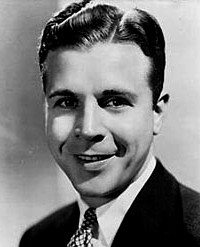
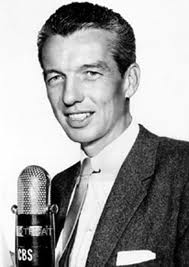
Dick Powell

A doctor calls Diamond and offers him an opportunity to earn $1200. Diamond finds the doctor dead before he can follow through.

(Original Air Date: August 23, 1950)

Support the show monthly at patreon.greatdetectives.net

Support the show on a one-time basis at http://support.greatdetectives.net.‘ (more…)

AWR0020: Screen Guild Theater: If Only She Could Cook (Summer of Bogart)

Amazing World of Radio

A stressed out auto company CEO (Herbert Marshall) isn’t sure about his upcoming marriage so he does what any rational person would do and becomes a butler to a picky racketeer (Humphrey Bogart.)

Original Air Date: January 26, 1941

Go to http://amazing.greatdetectives.net to subscribe to the podcast.

Brought to you by the support of our Patreon listeners…http://patreon.greatdetectives.net

EP2224: That Hammer Guy: The Florentine Dagger

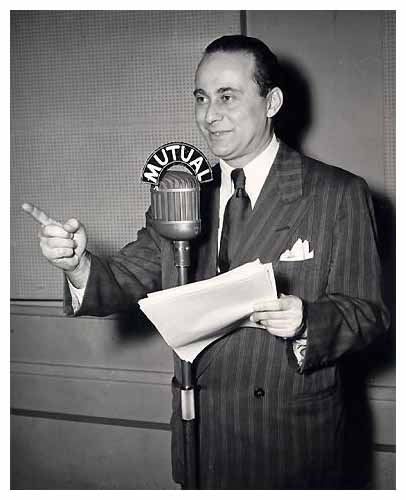
Larry Haines

A man in a wheel chair hires Hammer to locate a priceless stolen dagger.

Original Air Date: March 24, 1953

Support the show monthly at patreon.greatdetectives.net

Support the show on a one-time basis at http://support.greatdetectives.net.

Mail a donation to: Adam Graham, PO Box 15913, Boise, Idaho 83715
(more…)

EP2223: Night Beat: A Case of Butter

Frank Lovejoy

A hit and run case involve a refrigerator truck puts Randy on the trail of twenty tons of stolen contaminated butter.

Original Air Date: September 25, 1950

Support the show monthly at patreon.greatdetectives.net

Support the show on a one-time basis at http://support.greatdetectives.net.

Mail a donation to: Adam Graham, PO Box 15913, Boise, Idaho 83715

Take the listener survey…http://survey.greatdetectives.net

Give us a call 208-991-4783

Become one of ourfriends on Facebook.

Follow us on Twitter@radiodetectives

Video Theater 110: Richard Diamond: The Big Score

Diamond goes undercover as a Canadian businessman to connect with a gambling racket and find out if a client’s husband actually witnessed a murder.

Original Air Date: August 12, 1957

Season 1, Episode 7

Ten Things I Love About Dragnet, Part Two

Continuing with our look at the ten things I love about Dragnet (See Part One)

7) The Music

The show’s incidental and theme music was one of it’s big assets starting from its third episode on radio until it went off the air in 1970. The show’s signature opening notes, followed by the disclosure that what you’re about to hear/see is true, ranks among the most iconic show openings ever.

But the music does more than that. After the opening notes, both the 1950s and 60s versions have different opening and closing themes, both of which are good, though I prefer the 1950s version as it’s just a bit more dramatic.

And once you get into the episode, the incidental music is able to convey sadness, excitement, or bemusement equally well. It’s a particular stand out over radio. In the 1950s, radio producers began cutting back on music, particularly on detective programs. Once you got to the mid-1950s, every single NBC program other than Dragnet was using the same set of canned and generic incidental and transition music. Dragnet continued to use high-quality music that set the mood and helped to tell the story.

6) Those Quirky Characters…

Dragnet had some wonderfully quirky characters throughout its run in terms of the witnesses, victims, and criminals.

The many memorable characters include:

  • the cranky religious book store owner in, “The Big Little Jesus” who was playing a long-term game of chess by mail.
  • the drifter killer in, “The Big Cast.”
  • the tortured woman who stole a baby in, “The Big Mother.”
  • the guy who collects exotic fish in, “The Big Frank.”
  • the young thief dressed in a superhero costume in “Burglary: DR-31.”  He stole movie memorabilia to further fantasies that let him escape for a few moments from school bullies and an overbearing mother.

Dragnet has the best guest characters. They only showed up for one story but they left an impact on audiences. The best Dragnet side characters could be funny or tragic, but they’re memorable. They also added a touch of humanity. While some of them are funny, just like the banter between Smith and Friday, they rarely went over the top, which makes them feel grounded and like real people.

5) The Sound Effects

The radio version of Dragnet has the best sound effects of any program during the Golden Age of radio. Most programs took the philosophy of doing the bare minimum, maybe an effect or two to ground the listeners in the scene.

Dragnet employed five sound effects men to create rich scenes where the sound showcases the location or activity going on perfectly. The many fine details in the sound of a Dragnet episode create a feeling of authenticity. You feel like you’re there with Joe Friday and his partner rather than hearing a radio episode. Even today, most modern radio producers don’t put this much effort into their soundscapes. Dragnet was decades ahead of its time in terms of the detail and quality of sound effects they used.

4) The Variety

Most detective programs and police programs have focused on murder investigations. There’s a reason for that: murder is a heinous crime. We all understand why it’s wrong and why the killer needs caught.

While Dragnet has its fair share of murder cases, Joe Friday works out of nearly every division in the LAPD at one time or another: Burglary, Juvenile, Robbery, Bunco, as well as more specialized divisions. This allows us to see procedures and parts of the police force that never are prominent on other shows.

Dragnet was cognizant that we may not care about these other crimes as much as murder, but they highlight victims hurt by activities like the obituaries racket, so we’ll care and understand why this crime is a real problem.

This approach has its drawbacks. The biggest is in the Dragnet 1969 series where they had Friday and Gannon working out of a lot of departments (like public affairs) which didn’t arrest people. Some were still interesting, but others were dull. Police officers sitting at a cabin in the woods and talking about race relations is something even Jack Webb couldn’t make interesting.

It also compromises on realism to have Friday switching departments every week, but it serves the show’s dramatic purposes and allows us to see a whole other side to police work you just didn’t see in other programs.

Next week, we wrap up the series by looking at the three things I like most about Dragnet.

If you enjoyed this post, you can have new posts about detective stories and the golden age of radio and television delivered automatically to your kindle. 
EP2222: Dragnet: The Big Donation

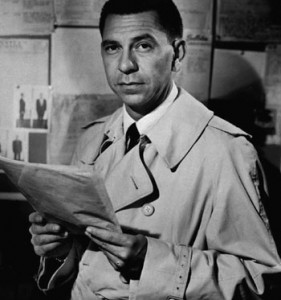
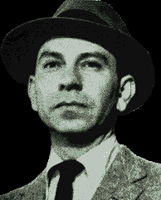
Jack Webb

Friday investigates con men pretending to be charity solicitors.

Original Air Date: June 12, 1952

Support the show monthly at patreon.greatdetectives.net

Support the show on a one-time basis at http://support.greatdetectives.net.

Mail a donation to: Adam Graham, PO Box 15913, Boise, Idaho 83715
(more…)

EP2221: Yours Truly Johnny Dollar: The Back to Back Matter

Bob Bailey

Johnny is rushed off to New York to try and protect an insured man who fears his business partner will kill him.

Original Air Date: July 17, 1960

When making your travel plans, remember http://johnnydollarair.com

(more…)

EP2220: Boston Blackie: The Joe Garland Murder

Richard Kollmar
A wealthy gambler is murdered while Blackie is in the other room. The murderer leaves behind a fortune in jewels in order to steal a piece of flagstone.

Original Air Date: June 25, 1946

Support the show monthly at patreon.greatdetectives.net

Support the show on a one-time basis at http://support.greatdetectives.net.

Mail a donation to: Adam Graham, PO Box 15913, Boise, Idaho 83715
(more…)

EP2219: Richard Diamond: The Madame Tanya Case

Dick Powell

A carnival fortune teller hires Diamond when three different people who have shown interest in her turn up murdered.

Original Air Date: August 16, 1950

Support the show monthly at patreon.greatdetectives.net

Support the show on a one-time basis at http://support.greatdetectives.net.‘ (more…)

AWR0019: Screen Guild Theatre: The Petrified Forest (Summer of Bogart)

Amazing World of Radio

The lives of a waitress and a drifter are shaken up when a gangster (Humphrey Bogart) takes refuge in an Arizona roadside diner.

Original Air Date: January 7, 1940

Go to http://amazing.greatdetectives.net to subscribe to the podcast.

Brought to you by the support of our Patreon listeners…http://patreon.greatdetectives.net

EP2218: Pat Novak for Hire: John St. John

Jack Webb

An old man is killed and with his dying last word, he asks Novak to deliver a letter to John St. John.

Original Air Date: October 13, 1946
Support the show monthly at patreon.greatdetectives.net

Support the show on a one-time basis at http://support.greatdetectives.net.

Mail a donation to: Adam Graham, PO Box 15913, Boise, Idaho 83715
(more…)

EP2217: Night Beat: Wanna Buy a Story?

Frank Lovejoy

A young woman offers to sell Randy a story about the murder of an infamous mobster and the identity of the killer.

Original Air Date: September 18, 1950

Support the show monthly at patreon.greatdetectives.net

Support the show on a one-time basis at http://support.greatdetectives.net.

Mail a donation to: Adam Graham, PO Box 15913, Boise, Idaho 83715

Take the listener survey…http://survey.greatdetectives.net

Give us a call 208-991-4783

Become one of ourfriends on Facebook.

Follow us on Twitter@radiodetectives

Video Theater 109: Dragnet: The Big Light

Friday and Smith investigate the death of a hated director on a Hollywood Sound Stage.

Season 2, Episode 20

Original Air Date: March 26, 1953

Watch it on YouTUbe

Top Ten Things I Like About Dragnet, Part One

I first began old-time radio podcasting in 2007 with the Old Time Dragnet show. The Great Detectives of Old Time Radio began in 2009 based on suggestions I received from fans of the Dragnet podcast and it’s safe to say my initial subscribers to this podcast were fans of Dragnet. In 2013, when my Dragnet podcast was finishing its run, I added a sixth weekly episode to this podcast for procedural shows and Dragnet took that stop a year and a half later.

Since beginning, the Great Detectives of Old Time Radio fan base has expanded to include people who don’t care for Dragnet. This is fine. With every series we’ve played on this podcast, someone hasn’t cared for it. Since we started, the strength of this podcast has been that we play a variety of shows so most mystery fans will have some series they can enjoy.

However, a few people have asked genuinely what I like about Dragnet because they just don’t get it. There’s a lot you can point to with Dragnet that shows it was popular and successful. If you’ve listened to the series in recent months, you’ve heard the series given multiple on-air awards, including the Edgar Award for outstanding mystery writing. However, this doesn’t explain the show’s appeal anymore than the box office success of the Harry Potter or Twilight films explains their success to people who don’t get that.

I’m not under the illusion this column is going to persuade everyone to love Dragnet. It’s not to everyone’s tastes and what I love about it may be what someone else despises about it. If anything, I hope some people who’ve never really seen it will check it out and maybe people with limited experience with it might get a fresh perspective.

The Dragnet franchise was actively produced for the better part of two decades across two TV series, a movie, and a radio series, and some of what I talk about will only apply to one of those. With that said, let’s get started with listing ten of the things I love about Dragnet:

10) The Zinger Lines

Many of these lines ended a scene or an episode. It would be rare for the last line in a Dragnet to be something like, “Thanks for your time,” or, “Alright, let’s get going.” The scene had to end with music being played and the show had a sense that the music had to be earned.

Whichever version you’re enjoying, that structure is there. Sometimes, it is humorous, such as in the episode, “the Badge Racket” where Friday is questioned by a detective who sees him making an arrest of two men who’d been pretending to be police officers at police headquarters. This lead to this bit of dialog to wrap up the episode:

Police detective: You make your cases right in the building now?
Joe: No, these two just made a simple mistake.
Police detective: What’s that?
Joe: They thought they worked here.

Other times, it was Joe Friday’s smack downs of the criminal and cowardly. In the 1954 film, a man backed out of testifying against a gang out of fear and asks Friday, “If you was me, would you do it?”

Friday: Can I wait awhile?
Witness: Huh?
Friday: Before I’m you.

In, “The Big Betty,” Friday and Smith had spent the episode on the trail of a gang who took advantage of the families of recently deceased people to find the mastermind half-drunk at a New Year’s Eve Party and blathering about how she cries at midnight at New Years. She declares she does it even though she, “Never had any reason for it.”

Friday frowned and said, “You’re going to have one this year, lady.”

The show’s zingers give it a unique and memorable style. Admittedly, not every zing line works, and some take too long to set up. Still, most hit the mark, and the zinger lines really gives the show a unique rhythm.

9) The Joe Friday Speeches

This one was only prominent in the 1960s revival and is a  controversial element of that series. Overall, I like them.

Probably the closest Friday came to giving big speeches  prior to the 1960s was the episode, “The Big Fraud” where he let his fury fly at con men who had pretended to be policemen and then in the 1954 movie where he detailed his salary to the villain of the film, Max Troy. Both speeches were under sixty seconds but still packed a punch.

It’s in the 1960s when things got epic with speeches like, “A Quirk in the Law” in the Dragnet TV movie or his “To Be a Cop” speech or his speech from, “The Big Departure.”

The best of the Joe Friday speeches were snappy but eloquent. They express their ideas well and often have evocative imagery. There’s nothing original about the idea that police have a challenging job, but the imagery used in his, “To Be a Cop” speech is so vivid:

“And then there’s your first night on the beat. When you try to arrest a drunken prostitute in a Main Street bar and she rips your new uniform to shreds. You’ll buy another one out of your own pocket. And you’re going to rub elbows with all the elite: pimps, addicts, thieves, bums, winos, girls who can’t keep an address, and men who don’t care. Liars, cheats, con men, the class of Skid Row. And the heartbreak: underfed kids, beaten kids, molested kids, lost kids, crying kids, homeless kids, hit-and-run kids, broken arm kids, broken leg kids, broken head kids, sick kids, dying kids, dead kids. The old people that nobody wants: the reliefers, the pensioners, the ones who walk the street cold, and those who tried to keep warm and died in a three-dollar room with an unvented gas heater.”

It’s a great use of language with good delivery that gives authority to the material. Of course, there’s a question of how this works with the idea of realism in Dragnet. Real life police officers don’t give big, eloquent speeches. They’ll give lectures to motorists but nothing like a Friday speech, particularly in debating non-criminal antagonists of the police force as Friday does in several episodes.

The important thing to remember is Jack Webb had spent many years working with the LAPD at this point and gotten to know several real officers. In many ways, in the 1960s, he made Friday their voice about issues that bothered them such as drugs, family decline, and what being a cop meant. Friday said things that most on-duty cops wouldn’t dare say but that most of the cops Jack Webb associated with really thought. So, it compromises realism but so does Joe Friday switching departments every week.

8) The Banter

This was an element that came into the show in 1952 with Ben Alexander coming on board as Friday’s partner Frank Smith and continued even into the 1960s TV series with Harry Morgan as Bill Gannon.

From 1952 on, this was in the vast majority of episodes and usually right at the start of the episode. Most episodes would begin with some good-natured banter between Friday and his partner, with the conversation often taking a comedic turn. This initial conversation would occasionally be followed up later on in the episode, but usually it was paid off in that one scene.

The scenes are always funny, but not too funny or over the top. Frank Smith and Bill Gannon aren’t sitcom characters or caricatures, they’re just a couple of friends with some personality quirks.

This serves several purposes other than being fun to watch. First, it makes you feel like they are real people with real personalities that play off one another. It also can serve the dramatic plot of the story. Most often, it creates a contrast. In a week where the show deals with a heavy topic, the light scene at the beginning serves as contrast and makes a heavier plot seem more serious and grim by comparison.

Next week, we’ll continue our look at what I think makes Dragnet so great to watch and listen to.

If you enjoyed this post, you can have new posts about Detective stories and the golden age of radio and television delivered automatically to your kindle.