40 search results for "Kidnapped part 1"

Radio Drama Review: Powder River, Season Two

Season 2 of Powder River finds Britt MacMasters (Jerry Robbins) having resumed his role as a US marshall, a new sheriff  (Joseph Zamberelli) in town, and the continued process of Chad MacMasters (Derrick Alerud) coming of age.

As the season begins, Sheriff Dawes takes over as the town’s full time law man and immediately clashes with the town’s  people, arresting the town’s best shot Doc (Lincoln Clark) for carrying his pistol on the city streets. Dawes also seems uncomfortable with having a US Marshal in town and wants to assert his authority. However, the coming of Indian raids forces him to abandon these pursuits in order to ensure the town is protected.

While the first season of Powder River (originally intended as a limited series) was good, Robbins and the Colonial Theater players really stepped it up a notch, producing a  consistently great Western adventure series.  The highlights for me:

  • Jenny White singing: Due to an Indian attack on the Overland stage, a great singer from back East ends up stranded in Clearmont and she agrees to perform at the local saloon while she’s there.  The singing was authentic and the sound quality on the musical performance: superb. It’s fantastic for a series that really didn’t deal much in music.
  • Chad MacMasters kidnapped:  This four part story arch has so much going for it. The basic premise of Chad being kidnapped by a vengeful enemy of the Macmaster clan has a very old school feel to it.  Colonial really took their time on this and developed this story perfectly.  It’s one of the most emotionally engaging radio stories you’ll ever find. The drama and suspense reach high levels as the villain drags Chad into the unforgiving Eastern Montana winter, with Britt and friends right on their trail. This is a story that works on every level from start to finish.
  • General Custer shows up:  The appearance of General Custer in Clearmont is a great story. Chad is grabbed by the idea of becoming an Army Scout under Customer, but as a former Army man that served under the egotistical general, Britt knows better. My favorite scene in this three part story was Britt’s confrontation with General Custer.
  • The Stunning Season Finale:  The last two episodes of the second season really created a fantastic contrast. The fourteenth episode of the season found Clearmont celebrating America’s Centennial in grand fashion. The season finale, “Nothing Lasts Forever” is about the day after as the citizens of Clearmont learn of General Custer’s defeat at the Battle of Little Big Horn. The contrast between the celebratory mood of one episode and the mournful feeling of the other was striking.  The programs originally aired in 2005, and the reactions of the people of Clearmont to the news seemed similar to how Americans felt on September 11, 2001 with the terrorist attacks. Chad decides to take a dramatic new step in his life, but his father doesn’t approve, leading to a tense conclusion that reveals a lot about the tough as nails US Marshal. In many ways, the whole season led up to this moment, particularly a shooting contest that father and son competed in earlier in the series.

I’m not a huge fan of westerns, but Season 2 of Powder River is just a very well-produced radio drama that’s worth a listen. If you’re curious about Powder River, I’d probably recommend starting with this season first as it’s a higher quality production and it’s not necessary to listen to season one to understand the series.

Overall, Season 2 has plenty of action, adventure, and drama and is a must listen to for your radio drama library.

Rating: 5.0 out of 5.0 stars.

If you enjoyed this post, you can have new posts about Detective stories and the golden age of radio and television delivered automatically to your Kindle.

 This post contains affiliate links, which means that items purchased from these links may result in a commission being paid to the author of this post at no extra cost to the purchaser.
Book Review: Archie Meets Nero Wolfe

When Rex Stout took paper to pen to write the first Nero Wolfe story, the house hold at the old Brownstone was all ready mostly established. On the heels of the Maltese Falcon prequel Spade and Archer, Robert Goldsborough, author of seven Nero Wolfe books from the 1980s and 90s sets down the account of the first meeting between Wolfe and Goodwin guided by clues Stout left in his novels.

Goldsborough anchors the story in the 1920s which is a departure as Wolfe stories have always been set in the “present” but a story of a beginning requires a certain timeframe.  The book begins when Archie arrives in New York, gets a night watchman’s job and has no choice but to shoot two thugs. Even though, his decision was appropriate, he was fired by upper management concerned about trigger-happy guards. However, Archie finds his ideal career when he snags a job at the Bascom detective agency.

Bascom is brought on a kidnapping case along with some other operatives including the ever-familiar Orrie Cather, Fred Durkin, and Saul Panzer. The initial goal is to merely ensure the safe return of the boy, who is the son of a wealthy New Yorker. But having done that, Wolfe is determined to catch the kidnappers. To facilitate this, Archie goes to undercover as the boy’s bodyguard in hopes of uncovering some information that Wolfe can use to solve the case.

The book’s strong point is its overall narrative that tells of the beginning of Archie Goodwin’s legendary career and his first encounters with some of his best known associates and foils include Cramer, Stebbins, and the the detectives who worked with Wolfe and Goodwin the most including the teers as well as the less used Bill Gore and Del Bascom. We get to see them a bit more than we would in a typical Wolfe yarn.  While the mystery is not earth-shattering, it’s fair and the resolution is handled well in typical Wolfe fashion.

The weak point in the story is that Nero Wolfe doesn’t sound quite sound like himself and Archie sounds nothing like himself. Usually, Goldsborough’s portrayal of Wolfe was close enough usually but a few times sounded dissonant. Perhaps, the most jarring section was when Wolfe made the statement that prohibition laws were wrong because they were attempting to “legislate morality.” However, you feel about “legislating morality,” it’s become a modern cliche and Nero Wolfe certainly never spoke in cliches.   In addition, one Amazon review points out that Wolfe used “infer” as a synonym for “imply,” something that Wolfe would never do.

It’s even worse with Archie Goodwin. It would be unreasonable to expect a 19 year old fresh out of Ohio to sound the veteran New York Private eye Rex Stout wrote about for 40 years. However, there wasn’t even a hint. This Archie Goodwin is a completely serious and respectful young man who helps to teach the father of the kidnapped the importance of spending time with this boy. To imagine this character developing into a wise cracking lady’s man seems almost beyond belief. Whatever can be said of the corrupting influence of a big city or a big city changing someone, the change necessary in Goodwin is too incredible.

Overall, the story lacked the fun of the Stout Wolfe books. However, it answers a lot of questions fans have had about the characters particularly the lesser known ones and provides some satisfaction and Nero Wolfe is still mostly himself. Overall, this could have been a great book if Goldsborough had done a better job of capturing the essence of Stout’s characters particularly young Archie Goodwin. As it was, it was only a fair-to-good one.

Rating: Barely Satisfactory

This post contains affiliate links, which means that items purchased from these links may result in a commission being paid to the author of this post at no extra cost to the purchaser.

If you enjoyed this post, you can have new posts about Detective stories and the golden age of radio and television delivered automatically to your Kindle.

The Line Up

Listen to “The Line Up Presented by the Great Detectives of Old Time Radio” on Spreaker.

With the smash success of Dragnet, many networks and producers began to play follow the leader. On NBC, Dragnet was followed up with Tales of the Texas Rangers which dramatized real life tales from the Texas Rangers. CBS countered with The Line Up and later 21st Precinct,  and then Nightwatch which while following an actual policeman in the field was as realistic as it got in a show that was pre-cursor to modern police reality dramas like Cops.

The Line Up was a hard boiled drama of police action. Like Dragnet, it realistically showed police doing their jobs. Unlike Dragnet, it was not based on “cases taken from police files.” Rather The Line Up made its fictional cases seem realistic, from kidnappings and murders to thefts and obscene phone calls. The Line Up radio show was not set in any particular city. However, when the series moved to television, it was set in San Francisco.

The Line Up, as the title indicates, centered around the police line up. The show always began with one. The Sergeant in charge of line would say, “May I have your attention please? You people  on the other side of the wire in the audience room, may I have your attention please.” He would then give his name and say, “I’ll explain the line up to you. Each of the suspects you will see will be numbered.  I’ll call of their number, their name, and charge.  If you have any questions or identifications, please remember the number assigned to the prisoner as I call his name. At the end of each line when I ask for questions or identifications, call out the number.  If you’re sure or not too sure of the suspect, have him held.   The officers who took your name will assist you, they’re seated among you. Please be prompt with your questions or identifications. When the prisoners leave here,  they are sent to the washroom and dressed back into their jail clothes. It makes it quite difficult to bring them back after they leave here. The questions I ask these suspects are merely to get a natural tone of voice so do not pay too much attention to their answers as they often lie. Bring on the line.”

While the line up was rarely the key to solving the case, it did give the show a rhythm and it also allowed for humor in the interrogation of the suspects by the sergeant. The series began as a Summer Replacement for The FBI in Peace and War in 1950, but quickly got its own time slot and would remain on radio until the Spring of 1953 before becoming TV only.

About the Stars:

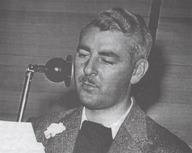
William JohnstoneWilliam Johnstone (1908-96)  is best known as the second voice of the shadow beginning in 1938 a. However, Johnstone’s radio career goes far beyond that. Johnstone was also a solid and indispensable character actor appearing regularly on a wide variety of programs from Cavalcade of America to Yours Truly Johnny Dollar. In 1950, he got his second starring role for CBS in The Line Up playing Lieutenant Ben Guthrie for 3 seasons.
Wally Maher (1908-51): Maher was the consumate radio character actor. He was probably best known for playing policemen,  playing the police foil to George Valentine in the first several seasons of Let George Do It and then later as Sergeant Matt Groebs on The Line Up.  Maher also starred in Mutual’s  Private Detective Michael Shayne from 1944-48.

Program Log:

Log information courtesy of the Digital Deli’s fine Line Up log.

*Played out of order

**Played out of Order, Original commentary indicates title incorrectly as Pitiful Patricide Case.

***Played Out of Order, Original commentary indicates title incorrectly as The Luger Lugging Laddie.

End of Log.

TV Series Review: Sherlock Series 2

The 2010 First Series of Sherlock introduced a clever re-imagining of what the character of Sherlock Holmes would look and act like if he were born in modern times.  Episodes were based very loosely on original Doyle stories, though they added their own twists.

Series 2 has some of the appeal going, but too often heads off the rails into extreme improbabilities that takes its post-modern approach way too far.

To begin with, the series opener, A Scandal in Belgravia radically changes the character of Irene Adler from a brilliant talented opera singer to a clever sex worker. The episode works fairly well up to the point as she ends up leaving her locked camera phone with Sherlock for safekeeping, attracting the attention of the CIA, who want the contents of the phone.  Sherlock needs to unlock the phone to find the secrets it holds but has to move carefully as he can only make four attempts. But breaking this cypher is beyond him. The battle with Adler has a somewhat satisfying conclusion, despite a few turns that are implausible such as an unbelievable faked death and an ending that was simply impossible.

The episode included an absolutely amazing heart to heart conversation between Holmes and brother and  fellow sociopath Mycroft wonder what it’s like to feel things. Really.  I felt like the conversation was reworked from a vampire movie to apply to a sociopath.

From a social standpoint, “Scandal in Belgravia” represented a serious downgrade of Adler both in terms of character and mental acumen.  Stephen Moffatt insists that he’s defined the characters accurately and that they both “are clearly defined as deranged – it’s love among the mad. He’s a psychopath, so is she.” I would challenge anyone to read, “Scandal in Bohemia” and come away with the conclusion that Irene Adler was a psychopath.This was Moffat’s decision to play to today’s audiences and it had little to do with the way Doyle originally told the story.

Rating: B

The Hounds of  Baskerville

This updating of The House of the Baskervilles to modern day best captured what made Series 1 work well. The story took the basic plot and put a modern day spin on it. A young man named Henry Knight believes his father was murdered by a giant hound more than twenty years previously and that it occurred as a result of government experiments occurring at Baskerville.

Holmes and Watson get into the government facility using Mycroft identification to bypass security and gather a few quick points that make Henry’s father’s theories seem plausible. Then Sherlock actually goes out on the moor at night with Henry and encounters the H.O.U.N.D. and finds himself gripped by true terror.

The mystery is cleverly done and as it turns out, there are two parts to the mystery: the first being what caused Henry’s death and the second is what’s behind all these other sightings of the Hound.  Watson plays a prominent role in each. The solution is off the wall, but certainly not out of bounds for this type of story.

Rating: A

The Reichenbach Fall  begins promisingly enough when Holmes begins to rise to fame by solving a series of celebrated cases beginning with recovering a stolen painting of The Reichenbach Falls (where Doyle killed off Holmes in 1893). At the same time, Moriarty breaks into the case containing the crown jewels, opens the vault of the Bank of England, and  unlocks the doors of Pentonville Prison simultaneously. Moriarty is arrested and then acquitted by threatening all the jurors.

He then proceeds with a plan to discredit Holmes after a visit to Baker Street and assassins move in all around Holmes. Holmes solves the mystery of two kidnapped children of the Ambassador to the U.S. and then the wheels start to fall off.  Because the kidnapped girl screams when she sees Sherlock, Sgt. Sally Donovan reaches the astonishing solution that Sherlock must have done it as he was the only one who could have solved the case and he did it all on the basis of one footprint. Of course, she doesn’t add that it also included analyzing all the elements present in that footprint which was far more complex.

The story then turns to Moriarty’s attempts to discredit Holmes capped off by the allegation that there was no Moriarty but that Holmes had hired an actor to play the part and that Holmes faked all of his cases. This blew the mind of some reviewers who praised the piece, mine was unblown after about twenty seconds when I thought, “Hired him with what?” Holmes did not have the money to pull off this fraud, so the whole thing was beyond ridiculous. If not for the police buying the story and Holmes’ response, this would have been an interesting farce about media sensationalism.

As for the ending, Emily Perrin wrote a piece for Tor.com in which she explained how “The Empire Strikes Back” ruined many sequels which tried to copy Empire’s formula. This may be the case with The Dark Knight and the first in the case study may be Sherlock, Season 2. 

The bright spot of this episode was Martin Freeman.  He turned in a solid performance as Dr. Watson, the only character who didn’t seem to lose his  mind in the midst of this episode.
One question raised by this episode and never really answered is why Holmes fights “on the side of the angels.” And its never answered.” In the “The Final Problem,” Holmes risks death to challenge Moriarty because he planned to rid England of Moriarty’s influence. Holmes declares, “In over a thousand cases I am not aware that I have ever used my powers upon the wrong side. ” These considerations don’t seem to figure in for the post-modern Holmes. So it remains an unsatisfying question.

Overall, I’d give this episode a C.  From here on out, I’d say my review becomes spoiler-laden, so be advised.

The ending has Holmes and Moriarty atop a high building where Moriarty informs Holmes that the key to hacking any system that assassins thought Holmes possessed didn’t exist. He’d used paidconfederates to achieve his criminal trifecta. He then gives Holmes the choice of jumping off the building in order to complete the disgrace narrative or Watson, Lestrade, and Mrs. Hudson will all be shot by assassins. Holmes figures out that he can extract the information from Moriarty to call off the attacks. However, Moriarty thwarts this by shooting himself in the head.

Why would he commit such a dramatic suicide?  Because ” Some men just want to watch the world burn. ” Then Holmes, rather than looking for alternatives such as using an ever-present cell phone to contact Lestrade and warn him, plunges to his death to save his friends, but before doing that, he calls Watson and tells him that the newspaper accounts were correct and that he faked everything including doing research to find out about Dr. Watson. In post-modern stories,  sacrifice of life is not enough. Rather, a hero must sacrifice his reputation to feed the cynicism of the masses. so Holmes does so.

Of course, Holmes was alive by the end of the episode. Earlier, he’d met with a forensic scientist, asked for her help, and then the camera cut away. If she gave him a pill that would help him survive a 100 foot drop and bleeding out on the pavement, they ought to sell it in drugstores.

As one reviewer on IMDB put it, “….the saddest part was that was I wasn’t even surprised he lived through that ordeal. That is what this series is about….giving you ‘surprises’ that you never expected…. because said surprises are totally unrealistic.” We can only hope that in Season 3, with Moriarty and the death of Holmes out of their system, that the series moves closer to reality.

Overall series 2 rating: B-

If you enjoyed this post, you can have new posts about Detective stories and the golden age of radio and television delivered automatically to your Kindle.

Movie Review: The Adventures of Tintin

Tintin may be one of the most fun characters that most Americans have never heard of.  Tintin was the creation of the Belgian Cartoonist Herge over a period of nearly 50 years. Tintin is a Belgian investigative journalist who travels the world, getting caught up with one adventure after another, along with his faithful dog, Snowy and usually accompanied by his friend, Captain Haddock. The character came to Americavia HBO and later Nickelodeon through the BBC series which has the same name as the 2011 film, The Adventures of Tintin. 

In the Adventures of Tintin, our intrepid hero buys a model boat at an outdoor market. Two separate buyers are desperate to get the boat and offering top dollar, Professor Sakharine and an American named Barnaby. Tintin’s curiosity is aroused by their  and he begins to investigate.  The boat is stolen and Barnaby is murdered on Tintin’s doorstep but he finds the key clue, which is then lost to a pick pocket right under the noses of the ever-incompetent Scotland Yard duo of Thompson and Thomson. Not knowing the clue was lost, Sakharine has Tintin kidnapped and brought on board the SS Karaboudjan and imprisoned in the hold until he’ll reveal the location of the clue. Tintin breaks out of the hold with the help of his intrepid dog,  Snowy and encounters Captain Braddock for the first time. Braddock, an alcoholic who has lost control of his own ship, holds the key to the treasure that Sakharine’s after. Tintin and  Braddock must stay alive, stop Sakharine and find the treasure.

It’s rare that a movie made in 2011 will get a review here, but The Adventures of Tintin has a definite golden age feel to it. Much of the credit for that has to go to Director/C0-Producer Steven Speilberg. Speilberg has a great respect for the golden age of Hollywood and he’s able to tap into that to create works that appeal to modern audiences such as the Indiana Jones movies or Speilberg’s animated programs in the 1990s, such as Animanics.

The Adventures of Tintin could be best described as a new old movie. It’s brand new in it’s stunning performance capture animation, particularly if you were able to watch it in 3D at the theaters as my wife and I did last week.  The movie was a feast of visual effects and stunning animation.

But it also was old in the sense that there was no attempt to update the characters or plot lines. Captain Braddock still starts out as a drunk, Thompson and Thomson are still incompetent, Tintin remains his tough but virtuous self, and through the nearly two hour film, only one woman appears on screen. All this creates a sort of rollicking and bloodless adventure flick that’s become increasingly rare in recent years and was far more common in the 1930s and 40s. The only part of the film that seems more modern is a “believe in yourself” heart to heart between Tintin and Braddock, which was actually pretty well done.

Tintin lacks the rugged looks of Indiana Jones, with a very mild appearance, but he’s plenty tough when the chips are down. In one of my favorite scenes, Braddock and Tintin are caught in the middle of the ocean on the remains of a lifeboat when the villain sends an airplane after them to finish off Tintin and capture Braddock.

Tintin: I’ve got bad news! We’ve got one bullet left!
Haddock: Oh, great. And what’s the good news?
Tintin: We’ve got one bullet left.

Tintin then fires a perfect shot that brings down the airplane.

The Adventures of Tintin is somewhat overlong as the plots for three separate books were combined. This leaves plenty of time for Tintin to show its fantastic action scenes. However, given the films length, it was almost too much of a good thing. Speilberg has stated that  future installments will only be based on two books, so hopefully that will lead to more compact films.

Overall the movie was a lot of fun, a technical marvel, and a showcase of the Talent of Spielberg, and the enduring fun of Herge’s stories.

Rating: 4 out of 5 stars.

Book Review: The Final Deduction

In The Final Deduction, Wolfe is hired as insurance by a woman whose husband has been kidnapped. However, Wolfe’s client is being particularly cagey about the information she’ll share with Wolfe. Wolfe does manage to get a meeting with the woman’s secretary who has said she heard the call from the kidnapper. Wolfe and Archie both conclude that she was part of the kidnapping plot.

After the money drop, the husband is returned alive, but soon afterwards the secretary and the hush and are both murdered while Wolfe and Archie find themselves in a spot as their client had told them not to tell about the kidnapping until 48 hours after it occurred.

However, along with trouble comes opportunity. With their duty complete, the son of their original client wants Wolfe’s help to recover the half million dollars in ransom money which his mother has told him he can keep if he finds it. In exchange for this, Wolfe will get a 20% cut.

This book was a very well-balanced Nero Wolfe mystery. Plenty of Archie and Wolfe interactions, a good cast of characters in the victim’s family, and a decent mystery. Stout also has some clever word play. The word “deduction” is worked throughout the book in both its meaning to tax law and its meaning to the detective.

It’s also of somewhat historical interest as a peek at the world of the pre-JFK Income Tax Code. Wolfe’s reason for accepting the 2nd case was that if he managed to collect, he’d work himself into the 80% Tax Bracket. At which point, it wouldn’t make sense for him to take on any more work as he’d end up in the 90% bracket and only keeping a dime of every dollar earned. His clients were in the slightly higher 91% tax bracket. Both would play a key factor in the story, so you have to wrap your mind around that which can be difficult when the current top marginal rate is 36%.

Rating: Very Satisfactory

You can find all the Nero Wolfe books in Kindle, Audiobook, and book form on our Nero Wolfe page.

If you enjoyed this post, you can have new posts about Detective stories and the golden age of radio and television delivered automatically to your Kindle.

Hard Boiled Poirot: Three Murders on the Orient Express

Recently, I decided to start watching some of the David Suchet performances as Poirot. Of obvious was that famous title, Murder on the Orient Express which Suchet made in 2010.

It was different, different than anything I’d seen, heard, or read featuring Poirot. Starkly different. The story as done by Suchet reminded me more of The Dark Knight than a cozy Agatha Christie mystery. Checking IMDB, I found an interesting phenomena which would also apply to another Poirot TV movie, Appointment with Death. Viewers rate this version of Murder on the Orient Express a solid 7.9, but fan reviewers take a more negative view. I decided to begin an investigation to find which was the best adaptation of the story. So, in addition to having watched the 2010 David Suchet version, I viewed the 1970s movie and purchased the BBC Radio 4 version from Audible.

Some spoiler warnings below follow for those who haven’t seen, heard, or read Murder on the Orient Express.

(more…)

Nero Wolfe: The Case of the Killer Card (EP0342)

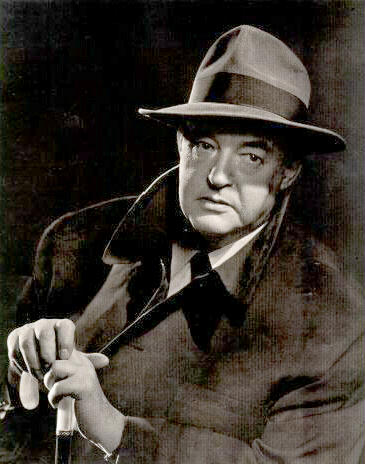
Sidney Greenstreet

At a card game to divide a lucrative business, one of the partners is killed. Archie Goodwin is kidnapped to get Nero Wolfe to solve the case, or both he and Archie will die.

Original Air Date: January 12, 1951

Try Audible free for two weeks and get a free audio book at http://audiblepodcast.com/oldtimeradio

Take our listener survey at http://survey.greatdetectives.net

Cast your vote for the show at http://podcastalley.greatdetectives.net

Click here to download, click here to add this podcast to your Itunes, click here to subscribe to this podcast on Zune, click here to subscribe to this feed using any other feed reader.

The Overlooked Mrs. North

In the discussion of great female detectives of the golden radio era, one name is invariably left out of the discussion: Pamela North.

Part of the challenge may be that Mrs. North was a part of a detective team and a husband-wife team at that. There are at least four Couple Detective teams with a substantial number of episodes surviving including the Thin Man, the Abbots, It’s a Crime, Mr. Collins, and of course, the Norths. In most of the shows, the wife is the sidekick to the husband. In all three other shows, the husband is a licensed private investigator.

Pamela North is different. She and her husband, Jerry are both amateurs in the field of detection. Pam is a housewife and Jerry is a successful publisher. To stumble into one murder would be improbable, to stumble into 500 as they did in the era of Alice Frost and Joseph Curtain requires a suspension of disbelief to say the least.

On the radio, the Norths were often equally matched . Jerry was most helpful when there was obviously foul play afoot. If they were kidnapped by two mugs, this was right up Jerry North’s alley. However, cases that required more use of intuition and outside the box thinking were ones were Pam North thrived. Given the dearth of female detectives in radio, it’s hard to ignore Mrs. North.

The show hit the radio in 1943 with Joseph Curtain and Alice Frost in the title roles. Richard Denning and Barbara Britton from the TV version would take over on the radio in June, 1953 and stay with the show until April, 1955. The series began as a blend of comedy and mystery. A great many of the exemplars surviving from the war years are from the Armed Forces Radio Service’s Mystery Playhouse, which brought one mystery show a week to America’s servicemen around the world. The number of appearances by the Norths attest to their appeal to American servicemen. The charming Norths with their light mysteries and cute romance were good medicine for men thousands of miles from home and missing their own loved ones.

The show evolved over the time. In the middle-40s, it became a so more serious mystery show and towards the end of its run, it took what I view as an unfortunate turn towards crime melodrama. The vast majority of the episodes featured overacting by guest actors behaving badly for the great majority of the show, and Pamela and Jerry North showing up for a few minutes to solve a painfully obvious mystery.

Barbara BritonWhile the radio show was declining, CBS was bringing the North’s to Television with Richard Denning and Barbara Britton in the title roles. This version of the North’s would be quite different. In the premiere episode, The Weekend Murder, Pam solves the murder case while Jerry is sleeping. This was an indicator of how the series would go. Jerry North was the sidekick.
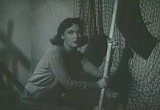
 Jerry had always been the more level-headed of the two, but on television, he was completely incurious and practical. 90% of the time, he either just wants to relax or is obsessing about the latest manuscript to come across his desk. Pam’s curiosity pulls the Norths into mystery after mystery and proceeds to solve them. In the episodes I’ve seen, Pam can also hold her own in a fight with another woman, though Jerry will usually rush in to save Pam when a dangerous man is about to kill her.

Pam North prepares to jump into action.

Britton’s portrayal combined this curiosity, quick thinking, and toughness with sweetness, feminity, and charm that made the TV version of Mrs. North a joy to watch. The TV episodes succeeded in recapturing the fun and charm of the original radio series.

CBS had a good idea in bringing Denning and Britton to radio to replace Curtain and Frost, as having the same actors on TV and Radio promotes both versions. But the quality of the radio show didn’t improve as the Norths continued through a series of dreary crime melodramas that Denning and Britton could only do so much with.

Mr. and Mrs. North was one of four shows that CBS tried as a five-day-a-week serial before opting to do Yours Truly Johnny Dollar, but the serial version only lasted for a few weeks in 195

Married Couples detective shows made comebacks in the 1970s and 80s with McMillan and Wife and Hart to Hart, however the subgenre seems to have waned in popular media in the 21st century. This may be the result of changes in society and society’s view of marriage. However, to the fan of good mysteries, there’s no question of the values of Mrs. North on television as well as in the 1940s radio version.

Additional resources:

Public Domain TV episodes of Mr. and Mrs. North

Old Time Radio Mr. and Mrs. North

What I’ve Been Listening To

I’ve gotten ahead a little bit ahead on my shows. (In fact other than Yours Truly Johnny Dollar, I’ve completed recording every episode until the end of the Year.)

I don’t want to get too far ahead of my listeners. I like to discover the stories with you as we go, not to have listened to everything. (Confession: I have been listening to some of the 5-part Johnny Dollars. They are excellent and can easily fit into my day.)

I’ll share some of what I’ve heard and my thoughts.

On the detective side, I’ve listened to Nick Carter, Master Detective, The Saint, Mystery is My Hobby, Philip Marlowe, and Candy Matson, and I’ve loved them all. I’ll have a lot more to say when we get to show these old time radio classics.

Barrie Craig Confidential Investigator has to be one of the best characters, as a person that you’ll find in the radio eye world. He’s a true good guy, who cares about his clients, ethics. The most moral PI you’ll find.

I was surprised by Charlie Chan, who has been the subject of much controversy in recent years. Some have viewed Charlie Chan as little more than an offensive racial stereotype. However, I was plesantly surprised when I listened to a Charlie Chan episode from the 1940s where Inspector Chan’s daugther was kidnapped. What struck me while listening to the episode was the real core of Charlie Chan. He was dealing with a parent’s worst nightmare, and it was effecting drama that everyone could relate to. In the show, the Chan kids are helping with the war bond effort and Inspector Chan pledges to do his part. The message of this World War II-era Charlie Chan radio show was not that Chinese Americans are different from us, but that they were Americans, particularly the kids who sounded like any other kids.  Earl Derr Biggers wrote the character to combat racial bigotry against Asians.

I think the one rule for enjoying a story is you have to take it not according to what we’d expect from a modern character, but the Spirit in which the story was written, which was one of good will. The late Fletcher Chan had a balanced look at the character from a modern Asian perspective. We’ll have to wait a while to hear Chan, and we don’t have that much to play.

I listened to Ellery Queen and I’m truly sorry that more episodes of that great detective show haven’t survived.  There are generally about 20 actual Ellery Queen Mysteries (not counting the minute mysteries, which I don’t) still in existence.

The show’s got some clever plots and a very unique format when they step away from the radio show and ask an in-studio armchair detective their thought on the solution. You get a reminder of the fleeting nature of celebrity as most of these “celebrities” are totally obscure in the 21st Century.

One show has been the source of some confusion. The episode, “The Armchair Detective”  is often listed as guest starring Orson Welles. While, I could definitely see that based on the fact that the character has a Wellesesque voice and delivers a death line line include the word “Rosemary,”  I seriously doubt it was Welles himself.  At the end of the show, they let us know who’d been in the cast. It’s really hard to imagine if Orson Welles had played a role in a radio show that his name would have been left out.

Frank Race is a favorite of mine, and truly had the best use of an organ in a detective show. It’s really stirring.

Three that I’m not sure of are Bulldog Drummond and A.I. Moto. Bulldog Drummond seems to just not connect with me. A.I. Moto is okay, but it feels like it’s a spy show rather than a detective show. And Bold Venture feels more like an adventure show than a detective show.

Non-Detective Shows

The Family Theater (a show made on the premise of the importance of family prayer and showcasing episodes about faith and family)…Simply incredible. Really, beautifully put together family drama. Don’t want to listen to those in a public place. A grown man shouldn’t be walking around with tears running down his face.

Greatest Story Ever Told (stories from the life of Christ and stories that kinda could have happened)…This show’s okay, though I think some of the messages end up a little more ham-handed than Family Theater and their addition of extra-biblical details is hit and miss.

You Are There (A CBS News show doing radio news broadcast re-enactments of history): Simply awesome. I found this show stunning.  I’ve listened to a couple episodes, one about the passage of the Declaration of Independence and one providing news coverage of the shooting of Abraham Lincoln. They really took you back.  I was really emotionally moved by the Lincoln episode. My wife asked me what was going on. I told her I was listening to information about the assination of the President.  And had to clarify, it was Lincoln, not Obama I was hearing about.  This is an educational experience that really takes you THERE.

Life with Luigi: This is a really sweet comedy series about the little immigrant coming to America, and his experiences. I loved this show.

Couple Next Door: A late 1950s fifteen minute show with more than 700 episodes. Don’t know quite how I felt about it. The first episode didn’t tickle my funny bone, but maybe I’ll take anothe rlisten.

Abbott and Costello: I listened to an episode where Abbott actually lost his place. Costello said, “Hey Abbott, what page are you on?” Those guys were a hoot.

Horatio Hornblower: I like this show, even though I find myself having mixed feelings about the protagonist. This is the first old time radio show I’ve found that actually had swearing in it (though relatively mild.)  and nudity (though that’s not much of an issue over the radio.)  Horatio Hornblower is imperfect and insecure, but a good man who’s got an often-unpleasant job to do. The sea battles are fairly realistic, but you have to use your imagination. This radio show definitely helps.

Finally, I have listened to more of the Shadow. Some of the shows are detective shows, others are more superhero stuff. It’s all fun listening. I do think that Orson Welles was truly the best Shadow.