Many old time radio shows made their way to television. In the 21st Century, are we ready for one more?
Broadway’s My Beat was one of the finest radio detective dramas and an underrated one at that. It aired from 1949-53, and again in the Summer of 1954. It was written by Mort Fine and David Friedkin. Friedkin and Fine went on to produce the 1960s TV hit, I Spy. Broadway’s My Beat has remained little more than a forgotten gem in radio history.
Fast forward to 2010 and Gregory Friedkin (David’s son) produced a pilot for a television adaptation of, Broadway’s My Beat with the series transported from New York to Los Angeles, with references to “Broadway” rewritten as references to “The Boulevard,” which is also the title of the new series, set in 1953. The episode was posted online, so I got a chance to take a peak.
The pilot episode that’s been released has a very noirish feel to it as Danny Clover (played by Jon Jacobs) searches for the kidnapped wife of a bank teller before the case becomes a murder investigation.
The music helps to establish a fittingly haunting mood for the story and they manage to make most of the scenes look old enough to be in the 1950s. Jon Jacobs was far older than I imagined Clover to be. Larry Thor, who voiced Clover on the radio was 33-38 during the show’s run. Jacobs appears to be in his 50s.
Jacobs, does however do a solid performance as Clover. His voice is perfect for the part. If anything, his age tends to add a bit of credibility to the world-weariness of Clover.
If the pilot has a weakness, it was the performance of some of the supporting actors. Michael Wayne James was too hammy in the role of the missing woman’s husband. Give Friedkin and Jacobs a good cast and I think this could be a solid program.
Of course, whether it will make it remains an open question. If the writers keep to adapting Broadway’s my Beat episodes, it will most likely end up a half hour TV-PG rated period cop show. They don’t make them like that anymore. Still, over the years I’ve learned is that there’s a demand for this type of program.
Of course, Friedkin may want to write new Danny Clover cases that could be stretched to an hour. It could be done with actual Broadway is My Beat episodes being mixed with originals. It could definitely work.
Whether Friedkin can a right network and get them to realize the potential for this show t is an open question. Either way, I wish him well.
Dragnet has a reputation for its no-nonsense, tough-on-crime stories. Particularly in the 1960s, Sergeant Joe Friday was known for bringing down the hammer on scummy criminals, which was particularly cathartic in the midst of rising crime. Friday told off criminals in a satisfying way, as when he confronted a racist child molester. “Now you listen to me, you gutter-mouthed punk. I’ve dealt with you before, and every time I did, it took me a month to wash off the filth.”
Yet Dragnet was dedicated to realism and reality, which is often more complex in the ways that human brokenness can lead to crime. Among the perpetrators Sergeant Friday came upon were kids with negligent parents, desperate people, lonely people, and others who’d just lost their way. Despite the pop culture image, Friday didn’t try to throw the book at everybody, and the series didn’t try to make the audience hate them. There are many more examples from both the 1960s TV series and the original radio and TV series of criminals getting a more sympathetic portrayal.
Below are my Top Five. Note when I refer to Friday’s partner, he had one partner in the radio version and another in the TV version.
Spoilers ahead for programs that were all broadcast more than 50 years ago.
Mrs. Sterling (Peggy Webber) isn’t an obvious choice for a sympathetic criminal. She is the well-dressed wife of a wealthy doctor who commits a string of acts of shoplifting that throws suspicion on an innocent sales associate and costs that sales associate her job. When she finally confesses, she reveals that her shoplifting is part of a long-running kleptomania that is aggravated by her loneliness and feelings of low self-esteem. After telling her story, she asks Friday if there is an answer. He laments that there is, but she won’t find it in jail.
Stover (Tim Donnelly) commits a series of burglaries of superhero movie memorabilia. He is in costume as “The Crimson Crusader” and claims to be such. The costume looks silly, as it reflects both being homemade and a bit of 1960s color palette. It is only under questioning that Stover reveals what drove him into a fantasy world and a life of crime. He reveals that he was abandoned by his father and was bullied and beaten up in school. He says the pain didn’t bother him as much as the fact that he hadn’t done anything. He was a fat kid. “Why should people hate a kid for being fat? It’s hard enough being a fat kid without people hating you for it.”
Lewis (Virginia Gregg) reports that she found a seven-week old baby that had been abandoned by his mother on a bus Lewis had been riding from Phoenix. Friday and his partner investigate and find the truth: the young mother was invented. The driver tells them that Lewis got on the bus with the baby. They confront her with the evidence and she tells them what happened. She had been married to an Army Captain who left her alone when he went overseas. She had gone to a party and ended up having one night stand that led to the pregnancy. She had to choose between her husband and her baby. She asks Friday to help tell her husband about what happened and he and his partner agree to help.
Friday and Smith are searching for a burglar who has committed eighteen small burglaries and leaves behind a bottle of milk at each robbery. The culprit turns out to be a nearly fifteen-year-old boy named Elroy Graham (Sammy Ogg). He refuses to talk until he can be assured he’ll appear in the newspaper. One of the other officers pretends to be a newspaper reporter. Eventually, he breaks down and tells his story in tears. He has been bullied by the other kids because he’s small (4’7″, 85 pounds). The only way he could think of to gain respect was do something big, and the only he could think of was the burglaries. “I didn’t mind the kids saying I was little, but I didn’t want them to think I was small.”
Friday and his partner are called to a hospital where a baby has been kidnapped from a nursery. They get a few tips and are able to locate the baby. A Mrs. Salazar (Peggy Webber) had taken the baby from the hospital and claimed him as her own. They arrive at the Salazar home to find a party going on for the baby’s baptism. When confronted, Mrs. Salazar reveals what had happened. She and her husband had gone through more than a decade of infertility, and finally got pregnant. Her husband (Harry Bartel) had to continue to work but sent her to a relative in Phoenix to have the baby because he thought the climate would be better. However, the baby died at birth and she feared having to tell him what happened, when she walked by the hospital and saw her chance due to a hospital security lapse.
Webber turns in a beautifully tragic performance, and Bartel deserves plaudits for his performance in the TV version as he conveys Mr. Salazar’s heartbreak that he doesn’t really express verbally, as he’s trying to be there for his wife. It’s one aspect that the TV version offers that the radio performance can’t.
Of course, these sort of episodes could stir up controversy. Some accused the TV version of The Big Show of condoning adultery.
None of these episodes pretends the crimes committed were right or somehow excusable. Dragnet maintained a strong moral core throughout its radio run and both TV runs. However, the series also reflected compassion and understanding for those whose crimes were the result of mental disturbances and human frailty. Dragnet saw no contradiction between those two ideas.
James Earl Jones passed away on September 9th. He was a part of American culture in so many ways. His voice was Darth Vader and Mufasa, and his “People Will Come” speech from Field of Dreams is something every good baseball fan watches every year.
Yet there were other roles. One of my earliest experiences with James Earl Jones was in the 1980s “Mathnet” sketch on PBS’ Square One TV, where Jones plays Chief Thad Green. These programs helped build my love of mysteries. I decided to review one of these cases that made its way onto the Internet.
Background:
Square One TV aimed to teach kids mathematic principles through a series of sketches. These included game shows, sitcom parodies, a Pacman-themed video sketch called “Mathman”, an animated do-gooder called Dirk Niblick, and there was even music videos. Who could forget the Meatloaf-inspired 8% of My Love?
But the segment I loved the best, and which came to dominate the show in its later seasons was “Mathnet.” This Dragnet pastiche features two mathematicians who use math to solve criminal cases. The narrator/Joe Friday parody was Kate Monday (Beverly Leech). In later seasons, she’d be replaced by Pat Tuesday (Toni Di Buono). The partner throughout was Office George Frankly (Joe Howard), who leaned into the zaniness Harry Morgan brought to the role of Bill Gannon. Jones played their boss, Chief Thad Green.
The character’s name is a major Easter egg for fans of the original Dragnet. The name of the second boss on the Dragnet radio series and during the first Dragnet TV episode in 1951 was Thad Brown. This indicates the level of awareness and respect the creative team had for the source show, even though they were making a kids’ TV sketch.
“The Problem of the Passing Parade” was aired as a 9-minute segment on each daily episode of Square One between February 9 and February 13, 1987. The program begins when Green asks the two mathematicians to help him use some math to plan the logistics for a parade to honor music legend Steve Stringbean (a Bruce Springsteen knock-off played by Alan Schrock). They work out various aspects of security and crowd control using math, but then get word that Stringbean has been kidnapped. With the aid of a young eyewitness, and drummer nicknamed Rimshot (Andre Gower), who is a friend of the kidnapped superstar, they set out to solve the case.
Educational Value:While I was very entertained by the series as a kid, watching it as an adult nearly forty years later, I realized, “They were teaching us some things.” Some of the mathematics in this particular episode may have been a bit over viewers’ heads, likely with the hope that they would retain them long-term as they dealt with some of the mathematics of music and the chromatic scale. But for the purpose of the episode, they make it simple enough that your average elementary school kid can follow it. Beyond just the type of math, the episode teaches problem-solving skills. It also introduces kids to the ideas of databases and gives an understanding of how those work, which is something that would become very relevant in the lives of many viewers. In addition, the whole episode makes math look like something relevant that viewers would use in their everyday lives, without being preachy about it. It’s a very solid and worthwhile approach that still stands up.
Comedy: Joe Howard is a delight as George Frankly, making the character hilarious and lovable. While he’s a bit kookier than Gannon, that works for fine on children’s television. Yet he’s never too wacky, can contribute to the problem-solving and knows his math. However, whenever they’re not calculating, George can deliver the most unexpected lines as Kate Monday somehow tries to keep the case moving along despite George’s beautiful strangeness, such as when he does an oral recitation of “I Love a Parade.”
Kate Monday begins segments after Monday by saying they’re watching clips from the previous day’s show, which is an amusing bit of fourth wall breaking.
The Mystery: The case has a reasonable benefit. Like Dragnet, it’s a procedural approach, as they use different mathematical methods and follow clues in order to locate Steve Stringbean. One of the key clues involves touch-tone dialing, which many children of the 1980s and 1990s might appreciate, but might be unfamiliar to more recent arrivals to the planet. Beyond that, it’s a good mystery story that, due to the nature of being told in nine-minute segments, requires big cliffhanger moments every few minutes.
The episode also captures some of the key stylistic beats of Dragnet without becoming farcical about it. Two scenes in particular stood out: a press conference in Green’s office where they speak to reporters about the case, and the capture of the criminals. This was a series that (when it wanted to) could really capture the cadence of the show was imitating.
The Chief: Given that Jones’ passing led to me taking this trip down memory lane, I focused a bit more on his performance. Chief Green, like the captains on the old Dragnet series, has the job of being the voice of authority, and the one who assigns cases to our heroes. In this episode, Green also interacts with the press. Jones was a pro and he delivers everything you could ask for. At this point in his career, he had already won a Grammy, a Tony, and a Golden Globe, and gotten nominated for an Emmy and Oscar. He was arguably overqualified for the part, but still, he adds an air of legitimacy to the proceedings.
Negatives: If there is one part of the proceeding that’s a bit off, it’s Rimshot, in particular, some of his dialogue, which seemed weirdly anachronistic and unnatural. It feels like dialogue from the late 1950s or 1960s, not the 1980s. For me, this sounded a discordant note.
Overall thoughts: This is a fun “Mathnet” story that has all the elements that would make it a beloved favorite that connected with so many viewers. It’s a great mix of math, mystery, and clever nods to Dragnet. Some elements (such as the evolution of databases and telephone technology) do make the story a bit of a cultural artifact that shows how things used to be done rather than providing insight into the way things are currently done. However, it also represents an approach to educational TV that’s not often taken in the 21st century and deserves another look.
In this Season Five episode of The Rockford Files, Jim Rocko (James Garner) is hired by an industrialist to find his kidnapped daughter. However, Rocco runs into an obstacle in the form of fellow private eye Lance White (Tom Selleck) who, despite claiming to be there just as “a friend”, becomes Rockford’s partner and annoys him with his almost perfect luck.
The episode is a comedy gem. As a series, The Rockford Files was known for having a somewhat cynical view of the world. Lance’s sunny optimism and classic do-gooder hero status clashes beautifully with that attitude, and Rockford’s annoyance with Lance makes for good comedy. Lt. Doug Chapman (James Luisi) is usually quick to bite Rockford’s head off about being involved as a private investigator in police manners. In this episode, he’s ridiculously chummy with Lance, and Rockford’s incredulity is priceless. Rockford has to deal with this sunny optimism while facing off against dangerous criminals and dealing with a client who is not being entirely straight with him.
“White on White and Nearly Perfect” was inspired by a 1959 episode of the Western series Maverick (which starred Garner as Bret Maverick) called “The Saga of Waco Williams”.
Selleck was a lot of fun in this role. His character was written in an absurd way and he leaned into it, making it a memorable outing. The episode is a treat for mystery fans, as Selleck was only a couple of years away from the premiere of his own hit detective series, Magnum, PI. The series features the most popular detective star from the 1970s with the most popular detective star from the 1980s.
This alone makes this a fun viewing experience for fans of vintage television. Add in Selleck’s comedy and this is a definite winner.
Rating: 4 out of 5
This episode can be viewed for free on Tubi on Freevee
Frank Graham created the character of Cosmo Jones for his radio series NightcapYarns, where he voiced all the characters in a Monday-Friday program. One of the more recurring stories to emerge was Cosmo Jones, an eccentric little “professor” who solved crimes whether the police wanted him to or not.
In 1943, the series received a poverty row adaptation as Monogram released Cosmo Jones in The Crime Smasher. The main plot centered around a socialite being kidnapped after a gangland killing.
The highlight of the movie was getting an actual on-screen appearance by Frank Graham, who also did radio announcing work and starred in the more serious detective program Jeff Regan, Investigator in the 1949-50 season. He had also served as narrator for a lot of short subjects and animated features (the most famous of which was Disney’s The Three Caballeros). Graham does a great job embodying the character of Cosmo Jones, the small, eccentric professor. He shows some decent physical comedy skills and is fun to watch as far as that goes.
The rest of the movie is weak. It feels unfocused at times. Edgar Kennedy and Mantana Moreland, two Monogram mainstays, were in the film but the script didn’t give them a lot to work with. The story is simple enough, but seems to get sidetracked, and much of the humor doesn’t land. Like many films, they felt the need to tack on a boy-girl romance between two side characters that just isn’t that compelling. It mostly seems to take away from the main attraction of seeing Cosmo Jones work on-screen. The film is not horrible or particularly offensive, but it isn’t good, either.
The film’s an odd curiosity for modern viewers. It’s a movie adaptation for a radio character for whom we have scanty recordings. The one episode we do have from Frank Graham’s run on Nightcap Yarns that features Cosmo Jones includes a fight between Jones and several policemen that would have taken Monogram days to shoot and an elaborate stunt in a museum that would have probably blown their production budget for the entire year. All this occurred in a twelve-minute radio story with nothing more than Frank Graham’s voice and a few sound effects.
As such, this was one of those ideas that would never have worked as a film, but you can’t blame either Monogram for giving it a try in the midst of World War II. I can only recommend it if you’re curious to see Graham act or if you’re a completist fan of either Kennedy or Moreland.
The Morlington Mysteries are a series of murder mysteries that have been produced for many years live onstage in Brighton in the UK. While each mystery stands alone, it also could be enjoyed as a series. Producer/Writer/Sound Designer Nigel Fairs brings the Morlington Mysteries to audio in Shillings and Sixpence Investigates which is part of Big Finish’s new “Originals” range.
The series title characters Miss Lavinia Sixpence (Celia Imrie) and Desmond Shilling (David Warner) are new characters for the audio dramas. Sixpence is in charge of a girls’ school with Shilling being the school’s new English teacher. The series also features Doctor Who alumni Lisa Bowerman, Louise Jameson, and Matthew Waterhouse, along with many members of the stage company.
The stories are set in the small town of Morlington Hills at the start of the Second World War. The first series features four separate stories, each split into two half-hour episodes:
1) The Missing Year/The Dark Shadow: The series opens with a standard plot where the Lord of the Manor is murdered. The story serves to introduce the main characters as well to have them joining forces to investigate a murder for the first time. The characters are fun, if a bit broadly written, and they have some nice bonding moments. The mystery features a solid supply of suspects and a fair enough solution. Overall, the first story is a strong start that left me eager for the next story.
2) In the Silent Dead of Night / A Very Messy Business: Sixpence, Shilling, and several characters from the previous story go to the home of the eccentric Baroness Pippin to visit a medium. Murder follows.
This story has a decent plot, though unoriginal with a big hole at the end where the Baroness misses something that was unbelievably obvious.
The performances were mostly solid with Lisa Bowerman doing a great job as the housekeeper. At the same time, Miss Sixpence comes off as particularly unlikable with a mix of arrogance and coldness. Add to that most of these characters aren’t that likable and you’ve got a so-so story.
3) An Appointment with God/The Dying Room: The story focuses on questions raised in the first story and has Miss Sixpence visiting the first murderer and subsequently being kidnapped. It’s up to Shilling and the police to find her before her disturbed kidnapper has his vengeance.
The story is quite a bit darker than the first two stories as the more disturbing elements of the story press the boundary of the cozy mystery feel the first two episodes generated. Where the episode really succeeds is by putting Miss Sixpence through her paces by putting her in danger and making her deal with a past mistake. This makes her a lot more human and relatable. Overall, this is well-acted and well-paced.
4) The Face of An Angel/The Black Widow: In the final mystery, the man set to play St. Bernard in the town’s festival dies in an apparent accident. At the time, Shilling tries to find the Black Widow whose evil deeds connect the crimes in the first three episodes. The story comes to a resounding if not entirely unexpected solution. The story features a few good character moments, particularly for Lady Penelope and Inspector Cribbage.
Nigel Fairs deserves credit for how he manages to tantalize listeners for another series. He doesn’t leave the key cases unsolved, but he drops hints of many intriguing goings on about the village with hints of other unknown underhanded dealings. Inspector Cribbage states he has a reason for being there and is making an inquiry. Some characters have secret pasts. On top of that, three characters end the series in sticky situations. Thus Series 1 sets the stage for more cases in a future box set.
The production values on this series are pretty high. Fairs is as good, if not better, at the sound design and music as he is the writing and the sound makes the story feel true to the era. Overall, this is as good or better than anything you’re likely to hear on the BBC.
This solid historical mystery combines the mystery with a dash of melodrama to make for an engaging listen.
Rating: 4 out of 5 (8/10 for Countries on the Metric System)
If you enjoyed this post, you can have new posts about Detective stories and the golden age of radio and television delivered automatically to your Kindle.
Enter the Saint is the first short story collection featuring Simon Templar after he appeared in the novel Meet the Tiger.
The book collects three stories:
“The Man Who Was Clever” sees the Saint trying to take down a drug smuggler and blackmailer. It’s a good crime-busting yarn that allows the Saint to show his pure unadulterated nerve and ability to bait a trap.
“The Policeman with Wings” has the Saint investigating the curious case of a wealthy man who disappeared from his house after being escorted away by a mysterious policeman. This leads an elaborate and somewhat high-handed set up to uncover the true motives of the kidnappers and prevent them from harming the kidnapped man’s niece and heir.
Finally, there’s “The Lawless Lady” which finds the Saint in the background as one of his men. Dicky Tremaine goes undercover with a gang planning a big jewel heist at sea, and finds himself falling for female leader of the gang. Meanwhile, another member appears to be playing to eliminate him. The Saint does make his presence known at the end, but this is an unusual story to say the least.
The stories this book are enjoyable crime tales for the most part. It’s clear that Leslie Charteris is still developing the nature of the Saint. However, this book features most of what makes the Saint work. You have dashing escapes, the Saint’s absolute audacity and laughing in the face of danger, and you have three good rogues who are worthy adversaries. The third story is a little strange, but it’s still entertaining.
Probably, the book’s biggest shortcoming is giving the Saint an entire organization of agents in support of him. I can see why this was done. Other popular literary figures of the era such as Doc Savage, the Shadow, and Nick Carter had their men to support him. Besides that it supported Charteris’s attempt to brand the Saint the Robin Hood of Modern Crime. After all, what’s Robin Hood without his merry men?
Yet, the Saint is really best when working with one assistant or two at most. In effect, in most of these stories, that’s what he’s doing. We really don’t get to focus on the Saint’s band, and eventually, they’d be discarded as surplus.
If you enjoy some good crime stories from the Golden Age of fiction, you could do far worse than this book. Despite its flaws, the book showcases the talent and style that would make Leslie Charteris a literary fixture for decades to come.
Rating: 3.75 out of 5
This post contains affiliate links, which means that items purchased from these links may result in a commission being paid to the author of this post at no extra cost to the purchaser.
If you enjoyed this post, you can have new posts about Detective stories and the golden age of radio and television delivered automatically to your kindle.
Doc Savage and the Shadow are two of the greatest pulp heroes of all time. Yet, they’ve never met in their original book medium. There have been attempts to do this in comic book form, but the ones I’ve read have been somewhat underwhelming.
The Sinister Shadow by Will Murray takes an original idea by Lester Dent in order to bring these two legends of the 1930s together in one book.
In the books, “Lamont Cranston” was not the true identity of the Shadow. Rather, the Shadow forced Cranston to let him impersonate him when Cranston was away from the city (which was most of the time) on the threat that, if he didn’t, the Shadow would completely steal Cranston’s identity, leaving Cranston without a place in the world because somebody’s got to fight evil, right? In the pulps, Cranston’s amused by this and agrees. In this book, Cranston isn’t as much amused as resigned.
However, Cranston receives a blackmail notice from a villain identifying himself as the Funeral Director who threatens to kill Cranston unless he gives him $50,000. Cranston thinks the villain is the Shadow and turns to Doc Savage’s aide Ham Brooks for help. Before they can get to Doc, both are kidnapped. This leads to both the Shadow and Doc Savage being on the trail of the Funeral Director.
The book has a lot to offer. Much of it is spent with Doc and friends suspecting the Shadow as the creepy methods of the Funeral Director seem his style and the Shadow works outside the law while Doc is an honorary Inspector for the NYPD. In addition, Doc and his men have a no killing rule, while the Shadow has no qualms about dealing out rough justice to the criminal world. Thus our two protagonists spend time hunting and battling each other before turning to the real bad guy. These parts of the book are fun and Murray does a good job writing both characters. Doc’s men are their usual selves while Doc remains ever the unflappable and brilliant man of bronze. The Shadow is mysterious and baffles the great Doc Savage with his strange methods. Doc’s assistants also are great though they’re pushed more to the background than usual. The Shadow’s henchmen are generic and lack a lot of personality.
As for the villain, the Funeral Director is a perfect foil for our protagonists. He’s a creepy, evil villain whose theme is centered around death and dying complete with coffins. It seems like an obvious idea for a supervillain but I’ve never read it done before. Why the Funeral Director came after Cranston is never satisfactorily explained and it comes off as a plot convenience.
This book is enjoyable, though it’s not Shakespeare or even Raymond Chandler. It’s a new pulp adventure team up from the man who is better at recapturing the spirit of the original pulps than any other writer today. While I won’t say it exceeded my expectations, it certainly met them. After nearly eighty years, Will Murray finally created a story worthy of these two great characters and if you’re a fan of either one, it’s a worthwhile read.
Rating: 4.0 out of 5.0
This post contains affiliate links, which means that items purchased from these links may result in a commission being paid to the author of this post at no extra cost to the purchaser.
If you enjoyed this post, you can have new posts about Detective stories and the golden age of radio and television delivered automatically to your Kindle.
The fourth volume of Avengers, The Lost Episodes offers listeners four more recreations of the lost first season of the Avengers.
The set kicks off with, “Kill the King,” in which Steed has to protect a visiting king who is key to the British gaining access to his country’s oil. The story becomes a pretty interesting thriller as we encounter three separate individuals who all appear to be setting out with the same assassin’s mission. The story has a very clever twist at the end that hits Steed like a punch in the stomach. It’s the best episode of a very good set and probably one of the most innovative stories in the Lost Episodes range.
Next up is, “A Change in Bait.” Originally, aired at Christmastime, this episode has a lighter tone than, “Kill the King,” as Steed tries to break up a complex insurance racket involving arson at warehouses. The story isn’t laugh-out-loud hilarious,or so over the top in its humor that it would feel like it didn’t belong in this season, rather the humor is mixed in in a way that feels quite natural. The arsonist is probably the most amusing guest character. His stance that they couldn’t steal money from a building they were burning because that would be unethical is priceless. Overall, a fun story.
In, “Hunt the Man Down,” a convicted robber is released from prison and immediately waylaid by two thugs who want to know where his loot is. Steed intervenes and Keel treats the ex-convict. Carol is kidnapped by the gang who believe she knows where the loot is. Overall, this is an exciting case with good twists, particularly as to who the boss of the gang is. A very solid outing.
Finally in, “Dead of Winter,” Steed investigates a body found in a shipment of beef and sends Keel undercover to a man he suspects is behind it after a a pathologist is murdered and the body disappears. This one of the more fantastic plots in the Lost Episodes and very reminiscent of the sci-fi like stories that would come during the show’s most well-known run with Mrs. Peal.
Overall, this is a strong set. It’s not as great as Volume 3, but there’s not a poor episode in this bunch.
Rating: 4.0 out of 5.0
This post contains affiliate links, which means that items purchased from these links may result in a commission being paid to the author of this post at no extra cost to the purchaser.
If you enjoyed this post, you can have new posts about Detective stories and the golden age of radio and television delivered automatically to your Kindle.
Nightbeat: Night Stories presents readers and listeners with six new stories based on the 1950s Radio series that starred Frank Lovejoy by Radio Archives.
Radio Archives offers an ebook of the stories for $3.99. There’s one reason to choose the audiobook version instead and that’s Michael C. Gwynne who does one of the flat out best readings that I’ve ever heard. He should read all the best hard-boiled detective novels. His voice carries the production and brings each tale to life. Gwynne doesn’t try to imitate Frank Lovejoy’s take on Stone, but his interpretation of the character captures Stone as the street wise yet warm hearted reporter.
The stories themselves have a very strong love for the series that comes through loud and clear. While the tone varies a bit from story to story, they all carry the idea that Stone is a hero and friend to the ordinary people of Chicago that are so frequently the subject of the Night Beat column.
The book leads off with, “The Strangler” which finds Randy going to an ex-girlfriend who returned to town and began working as a stripper. She’d promised a clue in a series of serial killings. Instead she’s the next victim. It’s probably the most hard-boiled story in the collection and it’s brilliantly written with a decent mystery that I didn’t figure out until 2/3 in. The atmosphere is perfect. It’s a little darker story than would have been played on the radio but I don’t think it went over the top.
In, “The Chicago Punch,” Randy is called in to help a boxer who is at risk of being drawn into an illegal fight scene that could ruin his career and maybe cost him his life. It’s a terrific story with the mix of knowing skepticism about the manager’s proclamation that the kid has what is to be champ, along with an interesting concept that seems plausible for the time.
“The Puzzle in Purple,” finds Randy walking into the police department only to find a lieutenant sweating over a puzzle that’s a potential clue to the location of a kidnapped woman. It’s a two act story with the first being Randy helping the lieutenant and how the two relate to each other as they try to solve the puzzle, and the second finds Randy trying to save the woman on his own when he solves the puzzle. The first half was superb as the interactions between the lieutenant and Randy are brilliantly written. The second half was okay but is probably one of the stupider things Randy Stone ever did, though not unbelievably stupid.
“Down Addison Road,” has a mother with an absent husband asking Randy’s help to get her teenage son out of a racket he’s become involved in. This story works well because it features some well-written action and also the type of quirky characters that made the best Night Beat episodes so interesting to listen to.
“Lucky” is inspired by a couple quirks in the show’s history. In the pilot episode of Night Beat starring Frank Lovejoy, the character was known as Lucky Stone rather than Randy.
In addition, there’s a division among fans as to whether the series is Night Beat or Nightbeat*. So it happens Randy Stone had a competitor, a guy nicknamed Lucky with a first name that starts with an “R.” And he started at a rival paper around the same time Randy started at his and he had a column on Chicago after dark and it was called Night Beat while Randy’s was called Nightbeat. However, he was fired for plagiarizing one of Randy’s stories. When Randy gets word that Randy Stone’s dead, it’s actually Lucky who’s been killed and Randy has to figure out who wants him dead before the murderers find out they killed the wrong Stone. This story manages to take radio show production issues and add some tense action and make a very enjoyable yarn.
Finally, “The One that Got Away” finds Randy meeting another old flame, this one a famous singer who stopped writing him quite a while ago. She’s back in town and she’s in trouble. This one has good atmosphere, but the characters aren’t as strong as in other stories.. Though, it’s probably my least favorite of the six, it’s still a solid well paced tale.
I was blown away by this collection. There are so many mistakes that you can make with a book like this. It can easily become weak fan fiction or modern ideas and concepts can be inserted and take readers and listeners out of the story. However, the authors avoided these pitfalls and they produced stories that feel genuine to the era and also the type of adventures that Randy Stone might actually have. If you love Night Beat or even good, 1950s, hard-boiled mysteries, this audiobook is definitely a must-buy.
Rating: 4.5 out of 5
*As best I can tell, the spelling of the show is Night Beat based on promotional materials from the time. However, Radio Archives uses the spelling, “Nightbeat.”
If you enjoyed this post, you can have new posts about Detective stories and the golden age of radio and television delivered automatically to your Kindle.
Boston Blackie was created by writer Jack Boyle as a jewel thief and safecracker with a heart of gold. The character was featured in nine silent films. In 1941, Blackie returned to film in the era of talkies. Much like the Saint, the character reformed from a thief into a detective. Blackie was always Inspector Farraday’s prime suspect in any major crime. The films were very popular with fourteen films made starring Chester Morris.
Morris brought Blackie to the radio in a summer replacement radio series for NBC in 1944. Then in 1945, first-run syndication king Frederick Ziv created a new series starring Broadway Actor Richard Kollmar as Blackie and featuring the best talent in New York radio. The series was the most successful first-run syndication program of its era, producing 288 episodes of which at least 190 are in circulation.
Ziv took the series to television in 1951 for two syndicated series featuring Kent Taylor as Blackie.
Throughout his many iterations in the 1940s, Blackie remained a smart and clever crime-solver whose past gave him a slight edge and made him a bit of a lovable rogue who fought on the side of the angels. He was the type of guy you wanted in your corner when the chips were down. “Enemy to those who make him an enemy. Friend to those who have no friend.”
Star Bios:
Chester Morris (1901-70): Chester Morris began his career on Broadway playing alongside the great Lionel Barrymore at age 15, and made his film debut in 1929 in Alibi and was nominated for an Oscar. His career faltered in the late 1930s, but he enjoyed renewed popularity as the Boston Blackie film series. After the Boston Blackie film series ended 1948, the remaining two decades of Morris’ life and career were spent on Television and stage productions.
Richard Kollmar (1910-71): A Broadway actor and producer, Kollmar was the long-time husband of newspaper columnist Dorothy Kilgallen, with whom he hosted a daily talk show for eighteen years, “Breakfast with Dorothy and Dick.” Kollmar was also the host of the game show, “Guest What.” Kollmar also operated a supper club in New York called, “The Left Bank,” until 1965.
To call The Ordeals of Sherlock Holmes ambitious would be an understatement. It’s a collection of four-hour-long, original audio dramas from the life of Sherlock Holmes that spans nearly forty years, has an underlying plot that ties together through the set, yet each story holds up fairly well on its own.
The stories are an interesting mix. The lead off tale is set before Holmes and Watson met and has Holmes having his first meeting with Lestrade in England, while Watson is kidnapped from his unit to care for a dying Englishman in Afghanistan.
The second story is set shortly after Holmes’ return from being presumed dead and after the Adventure of Empty House and a series of great successes which leads to arrogance and a failure that leads to a well-deserved dressing down. The third part tells the reason why Holmes retired so young from Detective work. The final story is set after World War I and finds Holmes and Watson on their way to Europe to apprehend an old enemy only to discover the mastermind behind the entire affair.
The stories are well-written both individually and as a collection. It really hangs together quite well. The acting by the leads is superb as Briggs and Earl really inhabit the roles. The set manages to highlight the warmth and strength of the Holmes-Watson friendship that has survived so much. This combination is a really a pleasure to listen, particularly with stories as strong as these. The music and sound design are also up to the high standards Big Finish has established on all its releases.
Overall, The Ordeals of Sherlock Holmes is a great box set that offers fans of Sherlock Holmes fresh stories that feel true to the spirit of Sherlock Holmes.
In the 1980s, the Saint returned to television with a series of TV movies starring Simon Dutton. “The Brazilian Connection” originally aired in 1989. In it, the Saint takes a hand to investigate when a baby is kidnapped in broad daylight.
The best thing about this updated Saint story is that Simon Dutton isn’t Val Kilmer. The second best thing about it is everything that doesn’t have much to do with the main mystery. There’s the early scene which has the Saint robbing a couple of criminals and getting away in style and then busting up an art fraud ring. Inspector Teal’s got a new boss who believes the Saint needs to be brought to heel, despite Teel’s support of Templar.
There’s lovely location shooting in London as well as some nice effects.
As a leading man, Dutton isn’t in the same league as the great Saint Actors: George Sanders, Roger Moore, or Vincent Price. He’s more like Hugh Sinclair, who played the role in two films in the 1940s. He’s certainly adequate, looks up to the part, and can be charming when the script lets him be. The problem is, far too often, the script doesn’t.
While this is better than the 1996 movie by a country mile, it seems the creative team doesn’t really understand the Saint and thus we’re given a story that could feature any 1980s Detective/Action hero.
The big failing of, “The Brazilian Connection” is it’s mystery story. It’s told with little style or real intrigue, and it’s hard to buy into the plot.
You could applaud the story for being years ahead of its time by its discussion of human trafficking, but the way the movie addresses the issue is unbelievable.
I’m not spoiling anything to explain the couple who kidnapped the baby in London worked for a black market baby ring that kidnapped babies from Brazil, particularly rural areas, taking advantage of local corruption to kidnap babies and smuggle them out of the country. The mystery is who the boss is.
So these kidnappers who have this Brazilian deal set up where due to their connections, they can easily smuggle babies out of the countries. So they are walking down the street, see a stroller, and do an impromptu kidnapping in the middle of London where they have none of the advantages they do in Brazil. Why? They figured they could pick up some extra bucks.
The story also does a disservice to adoptive parents who are concerned with overly strict regulations that made it difficult for them to adopt by tying people who support their cause to a baby smuggling ring.
Overall, the story isn’t awful, but it’s not great, either, and it didn’t leave me at all curious to see future episodes of this incarnation of the Saint.
Rating: 3.0 out of 5.0
If you enjoyed this post, you can have new posts about Detective stories and the golden age of radio and television delivered automatically to your Kindle.
In the Big Finish Doctor Who audio drama The Condemned, the Sixth Doctor (Colin Baker) picks up a distress signal and rescues Charlotte “Charley” Pollard (India Fisher), not knowing that she was a companion of a future Doctor.
Wary of creating a paradox and uncertain what to do, Charley feigns amnesia, but the Doctor is immediately suspicious. However, the question of who Charley really is is put aside when the Doctor lands the TARDIS in an apartment in Manchester where a murder just been committed. And when Detective Inspector DI Menzies (Anna Hope) finds him in the murder room which no one else could have entered, he’s arrested while Charley is kidnapped and locked in the apartment of one of the building’s tenants.
The story features the Doctor playing detective as he ends up teaming up with Menzies to solve this locked room mystery. Of course, calling this an “old fashioned” would be a bit of a misnomer as this story also involves aliens. It’s a Sci Fi mystery that reminded me a lot of Men in Black. The ending has a mix of tragedy, and a bit of light horror that feels almost Noirish in a sci fi sort of way.
The guest characters are well-written and the casting is superb. Hope’s performance as DI Menzies is top notch. The character is tough and realistic with a rye sense of humor. Everyone else is pitch perfect including Will Ash as the tragic Sam and Sara De Freitas who plays Charley’s surprisingly mellow captor.
As for the leads, Colin Baker turns in a great performance as the Doctor. I was generally surprised as I’d heard very bad things about Baker’s doctor as an arrogant and annoying guy in a garish costume. However, Condemned portrays a Doctor who has mellowed much since the time of the TV series. He’s superb in the role of the sleuth, also kind, particularly towards Charley who he lets travel with him despite distrusting her.
India Fisher is solid as Charley, a character who loved the Eighth Doctor and finds herself really disoriented with this prior doctor and having to keep this secret or risk severe consequences to time itself as well as being barred from future travels. One of the oddities of The Condemned is that this new Doctor/Companion pair spends so little time together in their first adventure. In this story, it works because Charley really needs time to process this new situation. The scenes between Charley and the Doctor in the TARDIS particularly at the start of the story are strong and would set the tone for the rest of this duo’s run.
In one classic bit of dialogue, Charley explains her surprise at seeing the Sixth Doctor in his TARDIS by saying she was expecting someone. The Doctor replies, “I hadn’t realised dimensionally transcendental time machines disguised as police boxes were so common!”
The story also represents a good entry point for those who want to listen to Doctor Who Audio. The first Big Finish Doctor Who Audio Drama I listened to over BBC Radio 4 Extra related so much to things that had happened in TV episodes I hadn’t seen that I felt lost. In comparison, this makes a solid jumping on point even if you’re not a fan of Baker’s run as the Doctor or even the Classic Series. To understand this episode, all you need to know is that: 1) The Doctor travels in time and space in the TARDIS and 2) That Charley previously traveled with a future version of the Doctor. The same can be said of the entire run of seven Big Finish stories featuring this pairing. It is very self-contained.
Overall, The Condemned works as a fun Sci Fi mystery with solid acting and a superb story. It’s a great jumping on point for anyone who’s curious about Doctor Who audios but doesn’t want to figure out 50 years of continuity.
If you enjoyed this post, you can have new posts about Detective stories and the golden age of radio and television delivered automatically to your Kindle.
This post contains affiliate links, which means that items purchased from these links may result in a commission being paid to the author of this post at no extra cost to the purchaser
In January 1934, newspaper readers were introduced to the adventures of Flash Gordon, an athletic Yale graduate who is kidnapped by Doctor Zarkov and taken in a rocket to the planet Mongol along with the lovely Dale Arden.
In 1935, Hearst brought Flash Gordon to radio a 26-part adventure starring Gale Gordon as Flash Gordon in The Interplanetary Adventures of Flash Gordon. Radio serials from this era are relatively rare, so I was surprised to find the whole 26 part story is available for listeners.
The serial is actually not all that good to start with. While it’s a faithful adaptation of the comic strip, the writers seemed to struggle with being faithful while transitioning Flash Gordon from a visual to an aural medium. One big thing was that very important scenes were skipped over in the early going, so you felt someone was giving highlight of the story rather than you listening to it.
The serial got much better around the sixth episode as the scene shifted to Flash’s goal of taking over the Blue Magic land from the witch Queen Azura. What followed over the next eighteen episodes was a dazzling display of imagination and plot twists with hypnosis potions, invisibility machines, angry dwarfs and a wide variety of reversals of fortune. This was radio fantasy for kids with all its gusto.
The series did break with continuity in the comic books, so it could bring listeners another program. Episode 24 ended with Flash, Dale, and Zarkov accidentally heading back towards Earth in a rocket ship and in Episode 25 they crashed in the Jungle near long time radio character Jungle Jim. In Episode 26, the two were finally wed to wrap up the series, so that Jungle Jim could take over its time slot. This wouldn’t be the last Flash Gordon was heard on the radio, but it would be the last complete program.
Overall, the serial was good. Some people might be offended by Flash’s active conquest, but in the end it’s just fantasy. While the beginning was rushed, and the end while good was a little out of place, the middle chapters are packed with great story. The acting quality varies quite a bit from character to character and there are a fair share of hams on the story, but the series works.
It particularly works as a promotion for the Flash Gordon comic strip. Characters like the Blue Magic Men, Hawk Men all sound exciting, fun, and worth seeing as well as hearing.
Rating: 3.5 out of 5.0
If you enjoyed this post, you can have new posts about Detective stories and the golden age of radio and television delivered automatically to your Kindle.
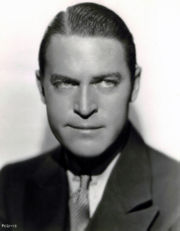 Chester Morris (1901-70): Chester Morris began his career on Broadway playing alongside the great Lionel Barrymore at age 15, and made his film debut in 1929 in Alibi and was nominated for an Oscar. His career faltered in the late 1930s, but he enjoyed renewed popularity as the Boston Blackie film series. After the Boston Blackie film series ended 1948, the remaining two decades of Morris’ life and career were spent on Television and stage productions.
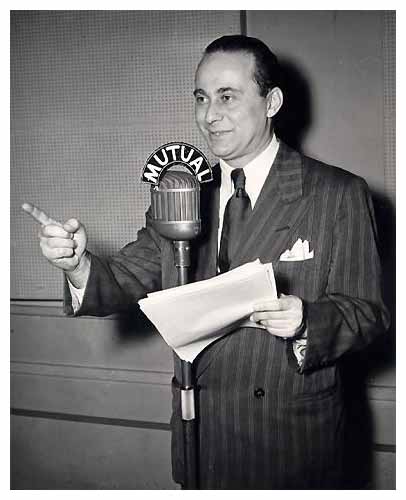 Richard Kollmar (1910-71): A Broadway actor and producer, Kollmar was the long-time husband of newspaper columnist Dorothy Kilgallen, with whom he hosted a daily talk show for eighteen years, “Breakfast with Dorothy and Dick.” Kollmar was also the host of the game show, “Guest What.” Kollmar also operated a supper club in New York called, “The Left Bank,” until 1965.