We Still Love Lucy

Well, sometimes special days in the life or Golden Age figures pass me by. Such was the case with today’s anniversary of the birth of one of the world’s great comediennes, Lucille Ball.

Google paid tribute to Lucy with a doodle honoring Lucy’s landmark ratings hit with then-husband Desi Arnez, which ran from 1951-57 and left the air the number one sitcom on television.

The show’s popularity continues to endure. It still airs on local television in Los Angeles and reruns continue on cable 53 years after leaving. Lucy’s zaniness, her facial expressions, and her strong on-screen chemistry with Arnez make the show a huge win that brings a smile to most people’s faces.

The greatness of Lucille Ball is shown in the fact that the 1950s had a lot of great comedies on the air: The Life of Riley, Burns and Allen, Jack Benny, Jimmy Durante, Abbott and Costello, and several other very good servicable comedies. Yet, only I Love Lucy and the Honeymooners really seem to endure in the popular imagination.

There’s a certain charm about these shows that makes them connect with listeners across time. With all the changes from 1951-Present, Lucy has remained a constant that is enjoyed by fans of all ages, which is a truly remarkable achievement.

IMDB has 86 episodes online for your viewing pleasure. 

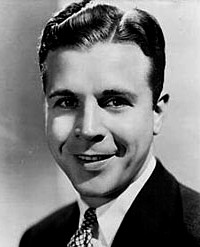
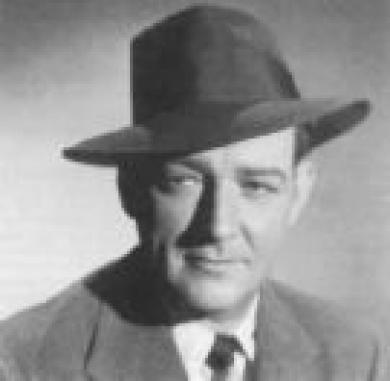
However, Lucy did have roots on radio. Prior to coming to television, she starred with Richard Denning (Michael Shayne, and Mr. and Mrs. North)  in My Favorite Husband, a domestic comedy. The writers recycled and reworked several My Favorite Husband  scripts for I Love Lucy. So, this gives a great opportunity to here the first draft of some of these fine comedic episodes.

If you enjoyed this post, you can have new posts about Detective stories and the golden age of radio and television delivered automatically to your Kindle.

Religious Dramas on Radio, Part Two

In part one, we took at radio shows that were (for the most part) broadcast over major networks and began broadcasting in the 1940s. But a new age was dawning in American entertainment.

In the late 1940s headed into the 1950s, commercial radio drama was on the way out. Television was capturing the hearts of Americans, curious about the new box and the ability to see their favorite shows for the first time and watch movies from their living rooms.

For Religious Groups interested in radio, the decline was good news. Radio production costs fell exponentially. There also was an audience that would always gravitate towards the theater of the mind. As the Golden Age of Radio came to close, many of the most successful radio dramas that followed were created by religious broadcasters

There have been many shows that simply been forgotten by  time. I”ve tried to cover as many as possible. If you’re aware of others, please share in the comments.

Moody Radio (1950s)

In the 1950s, Moody Radio in Chicago began making Juvenile Adventure stories, most prominent among them, Sailor Sam and Ranger Bill.  Sailor Sam was a 15-minute adventure serial, set mostly at sea. So, it followed much the same model as previous sea serials such as Cruise of the Poll Parrot and Magic Island while Ranger Bill was landlocked and ran for half an hour.  Both shows provided kids the same level of action packed adventures as was found in radio’s prime, while mixing in moral and religious lessons. The shows mixed educational content, adventure, and softly told religious lessons.

Complets sets of both shows are available at MoodyAudio.com. In addition, one episode per week is available for listening at HisKids.net and episodes of Sailor Sam can be heard every day Monday-Friday on Harbour Light Radio at 4:15 p.m. Eastern Time.

In more recent years, Moody has produced Fables of Faith, a program for younger listeners with animals as the featured characters.

Pacific Garden Missions  (1950-Present)

Pacific Garden Missions launched Unshackled in 1950 to tell real life stories of people whose lives were changed when they were “unshackled” by coming to Christ.  The show has remained popular for 61 years now.  It is translated into ten different languages and airs around the world.

Every Saturday, PGM  records the program before a live studio audience at Pacific Garden Missions, which provides a rare chance to see radio drama in action. The show provides a powerful promotional tool for the work Pacific Garden Missions does with the homeless from its home base in Chicago.

While scripts are at times preachy, the show’s retelling of real life stories has made it the the longest running radio drama ever with more than 61 years in the books.  If the show lasts 11 more seasons, it will surpass Guiding Light as the longest running dramatic series of any sort.

The latest episodes of Unshackled are available in podcast at One Place. Pacific Garden Missions also offers an archive going back eight years on its website.

Salvation Army (1956-85):

The Salvation Army made its contribution to radio with nearly 30 years broadcasting, “Heartbeat Theater.” Unlike Unshackled, the radio production was not aimed at evangelizing for the Salvation Army, but rather at highlighting the Army’s work in communities as well as Its history. From Heartbeat Theater, listeners learned that the Salvation Army has its own missing persons division and the origin of the Organization’s ubiquitous red kettles.

The show originated from Hollywood and early episodes  featured many actors who had appeared during the golden age of radio. However, rarely did Heartbeat Theater land big stars. Instead, those who had been character actors in the golden age (such as Peter Leeds) or down and out has beens (such as Tom Conway) were likely to find themselves starring in the plays.

In addition to promoting the Salvation Army, Heartbeat Theater took on controversial issues, even in its early years, dealing with Communism and the Mau Mau uprising among others. The show ramped up its portrayal of social issues and edginess in hopes of maintaining relevancy. The Salvation Army spent half of its media budget on the program, but by 1985, it went off the air.

Unfortunately, Salvation Army has done little to guarantee the preservation of Heartbeat Theater, although somewhere between 70 and 100 episodes remain in circulation among collectors and fans. Many are available at Timespast.

The Episcopal Church (late 1950s):

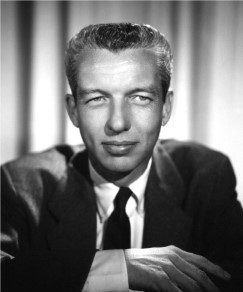
The Witness was a late entrant into radio and the Episcopal Church’s contribution. Unlike other shows mentioned, the Witness was 15 minutes in length rather than half an hour. The episodes were hosted by Robert Young, most famous for his lead role in Father Knows Best.  Issues like child abuse, friendship, loneliness, sorrow, and crime were featured in the series. The opening message read by Young summarized the point of the series:

“In the normal course of most any day everyone of us is witness to matters of life and death. The way we involve ourselves in these vital matters makes our own lives worthwhile . . . or meaningless.”

The Witness featured top notch radio talent that was hard to come by including Virginia Gregg, Janet Walsdo (Meet Corliss Archer), and J. Carroll Naish (Life with Luigi) and Alan Young (The Alan Young Show and later Mister Ed.) According to the Digital Deli, the Witness mas made sometime between 1958 and 1960.

All 16 episodes of the Witness are available for download at the Internet archive.

In addition to this, the Episcopal Church and Young teamed up to produce another series of radio dramas which focused on the importance of church attendance and faith. Two episodes have been discovered by Rand’s Esoteric OTR and are available here and here.

CBH Ministries (1942-Present)

The Children’s Bible Hour began in 1943. The formula for the program was divided into four parts:   Bible Question Time, Chorus Time, Bible Memory Time, and Bible Story Time. The dramas were simple stories that took fifteen minutes and were told by the friendly adults, Uncle Charlie and Aunt Bertha. The episodes were more sermons as stories.  However, the program remained popular throughout its run.

In 1999, the ministry took a different direction, taking a new approach with a new generation. They reorganized as CBH Ministries and introduced a brand new contemporary drama series  in, “Down Gilead Lane” which follows the life of the Morrison family.

The new series was described by Ministry Watch thusly, “One of the differences between ‘Children’s Bible Hour’ and ‘Down Gilead Lane’ is that in the former program the stories occasionally tended to sound like thinly-cloaked occasions for teaching good morals (as in a fable), while in the latter the stories tend to be interesting in their own right. In other words, ‘Children’s Bible Hour’ tended to preach spiritual truths; ‘Down Gilead Lane’ tends to portray such truths.”

The new series is now in its 12th season on radio. Episodes are available as Hiskids.net

Focus on the Family (1987-Present)

Focus on the Family took its first big steps into the world of radio drama with the launch of Adventures in Odyssey (originally Family Portraits and then Odyssey USA.)  The show was intended to provide an alternative to Saturday morning cartoons.
Hal Smith on the Andy Griffith ShowFrom the beginning, the show had a lot going for it. Particularly, in early years, AIO had some golden age magic going for it. The focal point of the show was John Avery Whitaker who ran Whit’s end. Whitaker was portrayed by Hal Smith (best known for playing Otis the Drunk on the Andy Griffith Show), later after Smith died, Alan Young would join the cast.
Alan Young AIO, now up to its 700th episode while focusing on the same town and same characters produced a stunning array of scripts, ranging from straightforward family dramas to suspenseful mysteries, and science fiction-like stories. While the show remained popular, it wasn’t without controversy. There were times when some parents felt the show was dealing with too many heavy topics that they weren’t quite ready to talk to their kids about. Still, the show’s popularity has continued. Odyssey has had numerous spin-offs in books, home video, and video games.

Odyssey has survived two nine month hiatuses tied to the deaths of the first two actors to play Mr. Whitaker. The show had a slightly retooled feel with its 2009 relaunch.

AIO Creator Paul McCusker led Focus to take on more radio projects. They created a series of three mini-series for The Last Chance Detectives. Focus on the Family’s Radio Theater came into being and took on a series of ambitious projects including adaptations of classics (The Christmas Carol, Ben Hur, Les Miserables among others,) Biographies (the Peabody Award winning Bonhoeffer: The Cost of Freedom and the Hiding Place.)

McCusker created  a mystery mini-series called Father Gilbert which followed the career of a Detective Inspector who became an Anglican Priest. Perhaps, the most critically acclaimed  productions were of two C.S. Lewis works, The Chronicles of Narnia (featuring Poirot’s David Suchet as Aslan) and The Screwtape Letters.

With the tight economy in recent years, most of Focus’ radio efforts outside of Odyssey have been put on hold.  Radio Theater productions and Odyssey Albums are available in most online outlets. Recent episodes of Adventures in Odyssey are available at the Whit’s End website.

Insight for Living (2001-Present)

The genesis of the Paws and Tales series began with a children’s book by pastor and best-selling author Chuck Swindoll called, “Paw Paw Chuck’s Big Ideas In The Bible” which emphasized 12 important lessons from the Bible.

From this story book in 2001 came the series, “Paws and Tales” which featured a group of animal children (bears, a beaver, a weasel, and a moose among others.) Paw Paw Chuck has no grandchildren of his own, so he serves as an elder and dispenser of wisdom to the young cubs.

The episodes feature a musical number or two every episode. It was designed with a younger audience in mind, but the characters have some solid backstories that add depth to many episodes.

Several episodes have been adapted to home video.

The latest episodes are available at hiskids.net.

Others shows that  I have little information on:

Life at the Pond: Another animal show, this one featuring on those that live close to water. This one is much more of a comedy wuth lessons worked in with humor.

Left Behind: In light of the popularity of the Left Behind books, a radio series was commissioned running 144 episodes over the length of the 12 books.

Jonathan Park: A kid’s adventure series, somewhat similar to Johnny Quest but focusing on creation science.

Danger is the Password:  I’ve been advised this series existed and was a Christian mystery/suspense show designed with a juvenile audience in mind. However, I’ve been unable to find any information on it.

If you enjoyed this post, you can have new posts about Detective stories and the golden age of radio and television delivered automatically to your Kindle.
Yours Truly Johnny Dollar: The Millard Ward Matter (EP0465)

Edmond O'Brien

Johnny investigates a case of foul play on the high seas where everyone seems to believe they know who the culprit is.

Original Air Date: October 13, 1951

Next time you travel, check http://www.johnnydollarair.com first.

Become one of our friends on Facebook…http://www.facebook.com/radiodetectives

Take the listener survey at http://survey.greatdetectives.net

Click here to add this podcast to your Itunes, click here to subscribe to this podcast on Zune, click here to subscribe to this feed using any other feed reader

Sherlock Holmes: The Red Headed League (EP0464)

Tom Conway

Holmes and Watson investigate a mysterious league for red headed men that hired a local shopkeeper to copy pages from the encyclopedia and then discontinued his services.

Original Air Date: June 2, 1947

Try Netflix for two weeks free of unlimited movie rentals… http://netflix.greatdetectives.net

Cast your vote at http://podcastalley.greatdetectives.net

Become of our friends on Facebook…http://facebook.com/radiodetectives

Take our listener survey at http://survey.greatdetectives.net

Click here to add this podcast to your Itunes, click here to subscribe to this podcast on Zune, click here to subscribe to this feed using any other feed reader.

Let George Do It: Mix Up in LaCruza (EP0463)

Bob Bailey

George receives a mysterious letter as a man hires George to steal something from him.

Original Air Date: April 17, 1950

For Superhero Adventure, buy Tales of the Dim Knight, http://www.dimknight.com

Become one of our friends on Facebook… http://www.facebook.com/radiodetectives

Call 208-991-4783 to leave a voicemail.

Take the listener survey at http://survey.greatdetectives.net

Click here to add this podcast to your Itunes, click here to subscribe to this podcast on Zune, click here to subscribe to this feed using any other feed reader.

Rogue’s Gallery: Special Added Attraction (EP0462)

Dick Powell

Rogue is hired to protect a circus prima dona who is knocked off right before his very eyes.

Original Air Date; January 31, 1946

Try Audible and get a free audiobook, visit http://audibletrial.com/greatdetectives

Take our listener survey at http://survey.greatdetectives.net

Cast your vote for the show at http://podcastalley.greatdetectives.net

Become one of our friends on Facebook…http://www.facebook.com/radiodetectives

Click here to add this podcast to your Itunes, click here to subscribe to this podcast on Zune, click here to subscribe to this feed using any other feed reader.

Barrie Craig: Death and the Purple Cow (EP0461)

William Gargan

The sister of a man in trouble hires Barrie to help him out. It all started over a purple cow.

Buy tales of the Dim Knight, http://www.dimknight.com

 Original Air Date: December 12, 1951

Click here to add this podcast to your Itunes, click here to subscribe to this podcast on Zune, click here to subscribe to this feed using any other feed reader.

Religious Dramas on Radio, Part One

Over the years, many religious dramas have appeared on the radio from the 19e0s right through the present. It’s probably fair to say that the bulk of long-lasting radio dramas produced since the end of the Golden Age of radio have either been underwritten by Foundation grants or religious organizations. Still, there were plenty of programs with religious themes or put on by religious organizations during the Golden Age, and often with the same type of talent appeared on the religious programs.

Of course, during the Golden Age of Radio, many shows that would hardly be considered religious would often pause around Christmas and refer back to Bethlehem. We won’t really discuss that here. Our focus is on those shows that were religiously produced or focused on religion. And of course, we’re not considered with non-dramatic religious programming such as Aimee McPherson’s sermons. In this first part, we’ll focus on the major golden age religious programs:

The Ava Maria Hour (1939-50s):

The Ava Maria Hour was perhaps the first religious drama to hit the air. It was a Catholic program, sponsored by the Greymoor Friars in Garrison, New York.  Early episodes appear to have focused on telling the stories of the lives of the Saints.

The program’s most ambitious undertaking was in 1951 when it produced an exhaustive mini-series on the Life of Christ that ran for a stunning 43 episodes. The stories were for the most part well done and well-researched, though in a serial that long, they’ll always be a few parts that don’t work.

Recently, the Franciscan Friars of the Atonement have begun to rebroadcast old episodes of the Ava Maria Hour on Blog Talk Radio hosted by Father Bob Warren.

Light of the World (1940s):

This program originated over NBC and had the unique premise of serializing the Bible with fifteen minute daily installments. It was broadcast mostly  during World War II and unfortunately the only known episodes in existence are from major news days when stations recorded full day broadcasts.

Eternal Light (1944-73)

The Eternal Light was a program born out of World War II which brought home to many Americans the dangers of anti-Semitism.  Eternal Light was produced by the Jewish Theological Seminary and aired over NBC. It began over radio but eventually found its way to television.

The topics of the episodes varied. While there were a few episodes that were directly based on Bible stories, more often Jewish-authored books about biblical events would be used as a basis for a drama. In addition, the series focused extensively on the history of the Jewish people, their trials and persecutions, as well as the lives of accomplished Jews throughout history. In some ways, it was similar to the black radio production Destination: Freedom in its overall focus. It remained a mainstay throughout the golden age of radio, though in latter years it moved away from drama and more toward  discussions.

While there’s no handy MP3 download site, OTRCat offers a 700 episode collection for sale as well a free radio sample you can listen to and download.

The Upper Room (1947)

This was somewhat of an odd series by Carleton E. Morse, the famous creator of One Man’s Family and I Love a Mystery.  While Morse’ fictional Barbour family was a cauldron of marital strife and unrest, the hope of The Upper Room was to promote strong families and marital togetherness. Unfortunately, the episodes come off as far too preachy, as a religious version of the industrial film. Only six episodes remain in existence, four of which are available here.

The Family Theater (1947-57)

Where Morse failed, Father Patrick Peyton succeeded.  Peyton also wanted to promote family  togetherness  and family prayer and approached the Mutual Broadcasting System about doing a series called the Family Theater. There was definitely interest in the series.  In the post-war era, concerns about juvenile delinquency, and the overall decline of morals made Family Theater a dose of just what the doctor ordered.

Mutual was clear that the series had to be non-denominational in nature, so most of the episodes have appeal to a wide audience. The show had no sponsor and its only product was family prayer which was encouraged by two motto, “More things are wrought by prayer than this world dreamed of” and “The family that prays together stays together.”

What aired between these two scenes were some of the finest radio dramas of the era. The programs originally written for the show  often pulled at the heartstrings as well as  encouraging courage, sacrifice, honesty, mercy, and love of family.  Later scripts dramatized parts of classic books  including Don Quixote, 20,000 Leagues Under the Sea, and Robin Hood.

Family Theater was an anthology program with a different cast every week, as well as a host who would talk about the importance of strong families and family prayer. Guets  included a who’s who of Hollywood: Jimmy Stewart, Bing Crosby, Bob Hope, Fred Allen, Jimmy Durante, Edward G. Robinson, William Gargan, Ronald Reagan, Edmond O’Brien, and many more. In addition, radio comedy power couples Fibber McGee and Molly and Ozzie and Harriet did special episodes of their programs for Family Theater.

Several sites sell DVD discs of the Family Theater, in addition otr.net has more than 300 episode available for online streaming.

Greatest Story Ever Told (1947-56):

The Greatest Story Ever Told focused on the life and time of Jesus. Unlike other programs mentioned,  the show was sponsored throughout its run by the Goodyear Tire and Rubber company.  However, Goodyear was sensitive to the fact that overt commercials would not sit well with many in the audience, and so they were  mentioned at the beginning of the show with a few second tag but without long form commercials.

The program also didn’t include any cast information, so when it comes to voices involved, it could be anyone. The voice of Jesus was given an echo effect which was thought to be similar to giving a picture of Jesus a halo. The writers also decided to use no fictional dialogue for Jesus, but to only have Him make statements that were written in the Gospels.

There were several sorts of episodes: some told stories directly from the life of Christ, some dramatized parables, and others focused on how the hearers of Jesus may have applied his lessons to their own lives in the first century.

Both the parables and the incidents from the Bible were expanded, using imagination, research, and dramatic license to take what may be a few verses out of the Bible and make it into a 30 minute episode. The results were usually pretty good with the incidents, but the Parables were weaker as sometimes in the expanded story, the original point of the parable ended up lost.

The most interesting episodes  follow a first century protagonist as they face a serious problem and find a solution in hearing a teaching of Christ. The applications were usually well-thought out, and rarely came off as preachy, and helped listeners to see well-worn passages in a new light.

The show was also enhanced by an orchestra and a choir, both of which were heard frequently.

76 episodes are available here.

Next week, we’ll turn our attention to the shows began in 1950s through the modern era. If you’re aware of a religious radio dramas from before the 1950s that we’ve not mentioned, please do so in the comments.

If you enjoyed this post, you can have new posts about Detective stories and the golden age of radio and television delivered automatically to your Kindle.
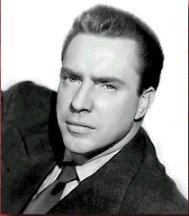
Yours Truly Johnny Dollar: The Douglas Taylor Matter (EP0460)

Edmond O'Brien

Johnny looks into the death of a private investigator who was killed while working for him.

Original Air Date: October 6, 1951

Next time you travel, check http://www.johnnydollarair.com first.

Become one of our friends on Facebook…http://www.facebook.com/radiodetectives

Take the listener survey at http://survey.greatdetectives.net

Click here to add this podcast to your Itunes, click here to subscribe to this podcast on Zune, click here to subscribe to this feed using any other feed reader

Sherlock Holmes: The Adventure of the Submerged Baronet (EP0459)

Tom Conway

Holmes and Watson witness an apparent accidential drowning, but Holmes suspects homicide. But how can he prove it?

Original Air Date: May 26, 1947

Try Netflix for two weeks free of unlimited movie rentals… http://netflix.greatdetectives.net

Cast your vote at http://podcastalley.greatdetectives.net

Become of our friends on Facebook…http://facebook.com/radiodetectives

Take our listener survey at http://survey.greatdetectives.net

Click here to add this podcast to your Itunes, click here to subscribe to this podcast on Zune, click here to subscribe to this feed using any other feed reader.

Let George Do It: Portrait by Priscilla (EP0458)

Bob Bailey

A man from out of town hires George after he’s assaulted after seeing a portrait by Priscilla. George meets the artist and finds she a gawdy woman and bad painter. She also ends up murdered.

Original Air Date: April 10, 1950

Click here to add this podcast to your Itunes, click here to subscribe to this podcast on Zune, click here to subscribe to this feed using any other feed reader.

Rogue’s Gallery: A Will In Question (EP0457)

Dick Powell

A friend of Rogue’s is made executor of an estate and hires Rogue to check the validity of the will.

Original Air Date: January 17, 1946

Try Audible and get a free audio book: http://audibletrial.com/greatdetectives.

Become one of our friends on Facebook… http://www.facebook.com/radiodetectives

Call 208-991-4783 to leave a voicemail.

Take the listener survey at http://survey.greatdetectives.net

Click here to add this podcast to your Itunes, click here to subscribe to this podcast on Zune, click here to subscribe to this feed using any other feed reader.

Barrie Craig: The Paper Bullets (EP0456)

William Gargan

Barrie is hired to track down a missing prize-winning manuscript.

Original Air Date: December 5, 1951

Become one of our friends on Facebook… http://www.facebook.com/radiodetectives

Take the listener survey at http://survey.greatdetectives.net

Click here to add this podcast to your Itunes, click here to subscribe to this podcast on Zune, click here to subscribe to this feed using any other feed reader.

Book Review: Before Midnight

How annoying can a client or set of clients get? Nero Wolfe finds out in Before Midnight.

After the death of a hot shot advertising executive, his firm hires Wolfe not to find the killer, but to locate the dead man’s wallet which contained the answers to a verse-guessing contest with $800,000 in prizes at stake.

To me, the story plodded along. While some of the suspects were interesting, I couldn’t seriously consider most of them as likely suspects for either the murder or taking the wallet. The focus was on the contestants, four of five whom came from out of town. To go to a place you don’t know, commit a homicide, and evade detection by the police is a tough task, and nothing made me believe any of these out of towners would do it.

What held the story together was watching Wolfe’s clients from the advertising firm of LBA who represented some of the most annoying and foolish clients Wolfe ever had the misfortune of taking on. There was a pleasure of seeing these guys in action that wasn’t unlike watching a trainwreck. Wolfe had been about his leisurely pace of crime solving for 20 years, LBA was in a mode of “hurry up and do something,” even setting a deadline for Wolfe.

The book continues on with their battles with each other and Wolfe for most of the book. Towards the end, just when we’re expecting Wolfe to spend a few chapters and several glasses of beer unraveling the mystery, we’re thrown for a loop with a surprise twist that leaves Wolfe reeling, embarrassed, and determined to get a daring soul who committed a murder right in Wolfe’s office.

The twist makes up for the weakness of the book which was a letdown after the pure brilliance of, Murder by the Book. Still with a twist ending and some classically annoying clients, I’ll give it a:

Rating: Satisfactory

You can find all the Nero Wolfe books in Kindle, Audiobook, and book form on our Nero Wolfe page.

If you enjoyed this post, you can have new posts about Detective stories and the golden age of radio and television delivered automatically to your Kindle.
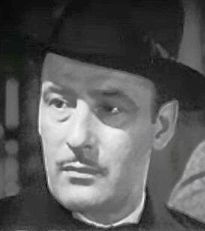
The Radio Adventures of Doc Savage

Doc Savage is an enduring character from the pulp fiction area that continues to boast a legion of fans to this day. However, unlike fellow pulp hero, The Shadow, Doc has not done so well in other media.

Doc Savage came to the big screen in 1975 in a widely panned movie. Doc did have two separate radio series from 1934-35 and in 1943, but neither amounted too much and no transcription from those shows survives in circulation.

However, in 1985, Doc Savage finally got a just treatment when he was brought to life by the Creative Arts Theater in a series of radio dramas that were eventually broadcast nationally over NPR.

The Man of Bronze

Doc Savage was raised to become the height of human perfection.  He had bronze skin and bronze hair. To say Doc was a jack of all trades would be a drastic understatement:

He was a physician, surgeon, scientist, adventurer, inventor, explorer, researcher, and, as revealed in The Polar Treasure, a musician.

In Savage, you can see shadows of other heroes who would become dominant forces in the comic books in years to come.  Such mixing of talents and abilities would be seen a few years later in Batman.

Of course, someone with Doc’s abilities could work mischief, but Savage was defined by an oath:

Let me strive every moment of my life to make myself better and better, to the best of my ability, that all may profit by it. Let me think of the right and lend all my assistance to those who need it, with no regard for anything but justice. Let me take what comes with a smile, without loss of courage. Let me be considerate of my country, of my fellow citizens and my associates in everything I say and do. Let me do right to all, and wrong no man.

With these ideals, Doc was joined by five well-accomplished and worthy assistants: chemist Monk Mayfair, sword-wielding attorney Ham Brooks, engineer Renny Renwick, electrical engineer Long Tom Roberts, and archaeologist Long Tom Roberts.  Doc had as fine a team as any hero had.

There were 13 radio episodes made. Originally, the creators thought of remaking the 1930s radio scripts, but found them unsatisfactory and decided to adapt the books. They chose to adapt Fear Cay and The Thousand Headed Man.

Fear Cay starts off a little slow as two villains plotting to capture Doc Savage discuss his many unique powers which only serves as informational dialog.  But once they have Doc the story takes off.  As Doc fools the kidnappers and finds that they were hired by a company called Fountain of Youth, Incorporated to stop him from meeting with Kel Avery who was due in from a flight to Florida.

Doc and his assistants seek  to unravel the secrets of Fountain of Youth Inc.  in an adventure that included lots of action, a couple explosions, and plenty of mystery.  My only criticism other than the beginning was that parts 4-6 of the 7 part series could have been a little tighter. But that’s a small issue with such an exciting adventure.

In The Thousand Headed Man, Doc is in London and while at the airport, a young British man tosses him a black stick.  This seemingly innocuous event draws Doc and the gang into a dangerous adventure that will take them into the jungles of Indochina and puts the men against a mysterious force that with sound can knock people unconscious.  This startling six part adventure is well-told and a lot of fun.

Overall, the Creative Arts Theater did a fantastic job bringing these characters to the 1930s.  Their goal was to create a faithful adaptation that wasn’t campy and they certainly succeeded.  With some of the most talented voice actors in Los Angeles, each character was brought to life in a unique and memorable way. They were particularly skilled with Doc’s assistants and the main villains of each series.

The set from Radio Archives is up to their usual high standards of audio quality. In addition to the complete 13 episodes of the Doc Savage Series, Radio Archives sweetened the deal with two extras.

First was a making of CD which provides a 40 minute story of how the series was produced and interviews with much of the original cast and crew as they discuss some of the decisions made including the most disappointing part of the series: Doc Savage signature “trill” from the books sounded like a tea kettle.

The only thing I took issue with on the extras is one star’s opinion that they had revived the golden age of radio. The Statement was a little silly as in the late 70s and early 80s, radio drama experienced a resurgence with The CBS Mystery Theater, The Mutual Radio Theater, The Sears Radio Theater, NPR’s Ear Play, and The General Mills Adventure Theater. Still, many of these productions remained lesser known to the extent that anyone starting a similar revival would think they were doing something unique.

The final extra is a sample disk from Radio Archives including two of their high quality masters of radio detective shows with one episode of Philip Marlowe and one episode of Michael Shayne, both of which were fairly enjoyable and added value to the set.

Overall, the Adventures of Doc Savage was a radio treasure and Radio Archives did a fine job with this beautiful set.

Rating: 4.5 Stars out of 5.

If you enjoyed this post, you can have new posts about Detective stories and the golden age of radio and television delivered automatically to your Kindle

This post contains affiliate links, which means that items purchased from these links may result in a commission being paid to the author of this post at no extra cost to the purchaser.