Book Review: The Rubber Band

The great thing about reading Nero Wolfe novels is you never quite know what to expect. The Nero Wolfe stories are a blend of hard-boiled stories as well as the genius/gentleman detective stories. The exact composition of the blend varies from book to book.

The Rubber Band is definitely closer to the cozy side of mysteries rather than the hardboiled detective story.  Published in 1936, it was the the third of the Nero Wolfe novels and came on the heels of much darker stories in Fer-de-lance and The League of Frightened Men.

The book begins with a corporate executive trying to engage Wolfe to investigate a theft of $30,000 in Cash. The person who has been fingered for the theft by the company’s vice-president is the beautiful Miss Clara Fox.

However, Miss Fox also wants to engage Wolfe to help her claim money owed to her father and his partner. An English nobleman in America in the Old West faced hanging by vigilantes. A band of men led by a Mr. Rubber Coleman formed “the Rubber Band” which helped the nobleman escape the vigilantes in exchange for 1/2 of his fortune. Clara recognizes the nobleman who is now quite wealth,  and she calls for  all of her father’s partners (except for Mr. Coleman who she can’t find)  and their heirs to claim their share of the fortune from the nobleman who is now staying in New York. She offers Wolfe a cut to help her collect.

One of  her father’s partners is killed after leaving the Brownstone to meet someone and the police want to question Clara Fox. Wolfe is determined to protect his client and hides her from the police.

This features the first appearance of Lieutenant Rowcliff, everyone’s least favorite police detective who gets a search warrant to find Ms. Fox, but Wolfe manages to foil him in a classic set up. This book is full of fantastic characters: A British lord, corporate robber-barons, and an old cowboy among others.

Fox is the first woman to successfully charm Wolfe in the series, with Wolfe even reading Hungarian poetry to her. By the standard of future stories, Wolfe’s reaction to her may be a bit bunch, but Stout was still getting a feel for the character when he wrote the Rubber Band.

The somewhat disappointing part of this story was Inspector Cramer. He was almost subserviant to Wolfe, and volunteered the fact that he liked Wolfe.  Clearly, it would take a few more books for Cramer to develop into the hardnosed belligerant cop that we all know and love.

However, for all the early hiccups in the series, The Rubber Band remains an enjoyable and well-paced mystery. In some points, its reminiscent of Agatha Christie stories as well as The Sign of Four. The mystery works out to a clever and satisfying conclusion.

It’s a shame that this one wasn’t made into a film like the first two books were. Both Fer-de-Lance and League of Frightened Men seemed like much more unlikely adaptations with their very convoluted plots. This one would have made a perfect 1930s mystery movie with the right cast.

Rating: Very Satisfactory

You can find all the Nero Wolfe books in Kindle, Audiobook, and book form on our Nero Wolfe page.

If you enjoyed this post, you can have new posts about Detective stories and the golden age of radio and television delivered automatically to your Kindle.

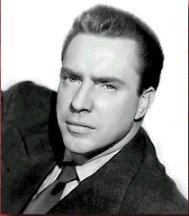
EP0430: Yours Truly Johnny Dollar: The Fairway Matter


Edmond O'Brien

Johnny investigates a plane bombing that left more than dozen people dead.

Original Air Date: July 11, 1951


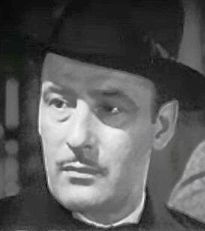
EP0429: Sherlock Holmes: The Adventure of the Carpathian Horror

Tom Conway

Holmes is hired by a count with a family history shrouded in mystery who fears he’s going insane.

Original Air Date: April 14, 1947

Try Netflix for two weeks free of unlimited movie rentals… http://netflix.greatdetectives.net

Cast your vote at http://podcastalley.greatdetectives.net

Become of our friends on Facebook…http://facebook.com/radiodetectives

Take our listener survey at http://survey.greatdetectives.net

Click here to download, click here to add this podcast to your Itunes, click here to subscribe to this podcast on Zune, click here to subscribe to this feed using any other feed reader.

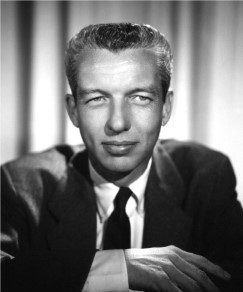
EP0428: Let George Do It: The Floaters

Bob Bailey

On an urgent two a.m. call, George and Brooksie travel to a rundown hotel and find an apparent double suicide.

Original Air Date: January 23, 1950

Take our listener survey at http://survey.greatdetectives.netCast your vote for the show at http://podcastalley.greatdetectives.net

Call in at 208-991-GR8D (4783)

 Click here to download, click here to add this podcast to your Itunes, click here to add to zune, click here to add to any other feed reader.

EP0427: Rogue’s Gallery: Little Drops of Rain

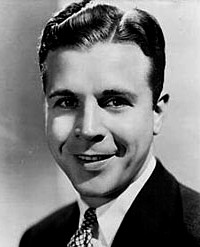
Dick Powell

A beautiful woman hires Rogue to get her husband to help her get her husband to come back to her. They find her husband dead.

Original Air Date: November 7, 1945

Quote of the show: “I left Liza burning Like Mrs. O’Leary’s barn.”

Try Audible and get a free audio book: http://audibletrial.com/greatdetectives

Take our listener survey at http://survey.greatdetectives.net

Cast your vote for the show at http://podcastalley.greatdetectives.net

Become one of our friends on Facebook…http://www.facebook.com/radiodetectives

Click here to download, click here to add this podcast to your Itunes, click here to subscribe to this podcast on Zune, click here to subscribe to this feed using any other feed reader.

The Nero Wolfe Movie that Guaranteed There Would be No More Nero Wolfe Movies

This is the first 7 minutes of the last of two Nero Wolfe Films,The League of Frightened Men (1937) which was a sequel to, “Meet Nero Wolfe” and was posted on YouTube by a company selling an out of print DVD.

Rex Stout decided not to allow any more movies to be made based on his books, displeased with Lionel Stander’s portrayal of Archie Goodwin. The punchdrunk Archie Goodwin portrayal we see in the clip seems to justify the conclusion..

On both the level of the artist and of business, it’s understandable why Stout didn’t want to make any more films. If films like this made their way into the cultural bloodstream, it would have turned people off to the books. And these movies came very early in the Wolfe franchise.

EP0426: Barrie Craig: Microfilm in the Fishtank

William Gargan

When Barrie’s tailor is killed and and a fire is set to the tailor’s shop. TO find the murder, Barrie investigates the rackets.

Original Air Date: October 24, 1951

Next time you travel, check http://www.johnnydollarair.com first

.Become one of our friends on Facebook… http://www.facebook.com/radiodetectives

Take the listener survey at http://survey.greatdetectives.net

Click here to download, click here to add this podcast to your Itunes, click here to subscribe to this podcast on Zune, click here to subscribe to this feed using any other feed reader

The Man Who Asked, “Why Me?”

A good autobiography requires a truly interesting life and a willingness to share it. By both accounts, William Gargan’s, 1969 memoir Why Me is a masterful example of how an autobiography ought to be written.

I knew Gargan for his TV and radio detective work with I Deal in Crime, Barrie Craig, Confidential Investigator, and Martin Kane, Private Eye. The Martin Kane series was Gargan’s best known role. Along with Ralph Bellamy’s Man Against Crime, it was one of the first successful TV private eye shows, enjoyed by fans if for nothing else than the novelty of doing a live TV detective series.

However, Gargan’s life was a lot more than TV and radio glitz.  Gargan’s acting career included stage work in the 1920s and movies in the 1930s and 1940s. Gargan’s varied life included  assisting his bookie father when he was a kid, being thrown out of high school, working as a store investigator/collector and a private detective, and being a bootlegger during prohibition.

In Why Me, Gargan shares inside stories in Hollywood: How his best-supporting actor Oscar  nomination for They Knew What They Wanted came out of a frustrating shooting experience with the hammy Charles Laughton. He tells a more fond story of actor hammyness when he and John Barrymore staged an epic battle with Lionel Barrymore to stop Barrymore from stealing a scene. You’ll also run into fun stories about James J. Corbett, Leslie Howard, Bing Crosby,  John F. Kennedy, and others.

Gargan’s life included meeting both famous and infamous people, some thanks to his father’s connections.  Gargan tells the story of a man operating a protection racket in Chicago who was shaking him down for $10 a week. He called his father. One of his dad’s friends contacted him about it. A friend by the name of Al Capone.  Gargan was never bothered after that, but did worry about what had happened to the wildcat shakedown artist.

Gargan knew there was a “dark side” to his father’s life and underworld connections, however in his youth, Gargan was mostly shielded from that side and had mostly fond memories of his father and mother. Gargan was endowed with an incredible love of family and zest for life. One of my favorite stories was about his mother’s funeral. The funeral director told him they planned a slow procession from the church to the cemetary. Gargan rejected the idea of a slow mournful procession, telling the undertaker, “She was a spirited woman. Go like hell.”

Gargan wrote, “Every morning to this day, I say a prayer for my parents. God love them. I love them.”

Gargan’s life included many ups as he made his way to a comfortable living making a lot of “B movies.”  and television. The title, “Why Me?” references the great turning point in his life. At age 55, while playing a dying ex-president in the stage version of The Best Man, he began to have pain in his throat.  He was diagnosed with cancer of the Larynx, which required surgery that would remove his larynx, silence his voice, and put an end to his acting career. When Gargan was brought home from the hospital, their TV repairman was fixing their set, and turned on the TV, and one of Gargan’s old films came on and he slammed his hand down on the table, wanting to scream to have it turned off, as pain and self-pity overwhelmed him for the moment.

Why Me is not a self-pitying book, rather it tells how Gargan came to answer the question.  It’s Gargan’s story of how he learned to talk again through esophagael speech and then began to work with the American Cancer Society: raising funds, making personal appearances, and helping scared patients as they prepared to go through the same process as Gargan did. It was in this that Gargan found an answer to the question, “Why me?” He’d gotten the cancer, so he could help others.

The book revealed the view that Gargan had taken of cancer as he listed one by one, every friend, and every great person who got lost to cancer. Cancer was an enemy and Gargan and the ACS were at war with it. Gargan, a former two pack-a-day smoker for more than thirty ended the book with an appeal for people to stop smoking cigarettes. Perhaps, the most surprising part of the book for twenty-first century Americans is that Gargan didn’t have any thoughts on how Martin Kane promoted tobacco use. Gargan took personal responsibility stating that even as a teenager, they’d referred to cigarettes as “coffin nails.”

Gargan’s faith also plays a part in the book. While he writes about his involvement with the Knights of the Holy Sepulchre and meetings with Pope Pius, the more interesting passages are those that show how his faith grew stronger through tragedy and helps him find new purpose in his 60s.

Mixed with honesty about his falings, and a fascinating life story, Why Me is an inspirational tour de force by Gargan. It is sadly out of print, but I was able to get my copy through an interlibrary loan and used copies are available on Amazon and Half.com.

If you enjoyed this post, you can have new posts about Detective stories and the golden age of radio and television delivered automatically delivered to your Kindle.

14 Carat Dramas

The mid-30s was an era in radio of forgetable and forgotten 15 minute syndicated radio programs. They were produced, put on transcription disks, and sold to a small number of stations with no name stars. Even those who research the shows may have little information as to where they actually originated or who starred in them.

While some shows are easy to forget, there are some good programs from this era that have survived as Diamonds in the Rough. (Pun Intended.)

I first learned of the Diamond Dramas series from the Digital Deli‘s definitive log. It was  a series of twenty-six programs produced between 1926 and 1927 and first aired in 1934 over KDYL in Salt Lake City.

Each installment included a diamond as part of the plot and was based on actual events in the history of great diamonds including the Mogul Diamond. The stories were tightly packed with a mix of romance, intrigue, and drama. Each 15 minute episode contained 4 minutes of Music (meant for local commercial fills) and an eleven minute self-contained story. The majority of the stories involved royalty: Kings, Queens, Empires, and a mix of love, hatred, and the lust for power. The program had a tremendous scope with episodes set in Russia, India, France, Hungary, and England.  Among those historic personages featured are Napoleon, Mary Queen of Scots, Marie Antoinette, the Marquis De Lafayette, a couple of King Louies, and Catherine the Great.

Some of my favorites in this series:

The Mighty Akbar:

The Mighty Akbar rules India and possesses the great mogul diamond.Despite his best efforts, his wife doesn’t love him and would like to leave him. She plans to escape to her father’s people with Akbar’s diamond. The story takes a surprising turn

The Queen’s Diamond Charm:

Mary Queen of Scots is in France where Charles reigns but is a weakling controlled by his mother. Can Mary outsmart Charles’ mother to save the life of a kinsman as well as her own?

The King’s Astrologer:

The cynical astrologer of the superstitious and ruthless King Louie XI tries to get the King to surrender a valuable diamond to him. Louie decides have the astrologer killed instead. Another great twist ending to this one.

The Diamond Necklace:

Napoloeon III offers a young woman diamonds and jewels, and everything but marriage.

25 of the 26 episodes of the Diamond Dramas are available at the Internet Archive.

If you enjoyed this post, you can have new posts about Detective stories and the golden age of radio and television delivered automatically delivered to your Kindle.

EP0425: Yours Truly Johnny Dollar: The Alonzo Chapman Matter

Edmond O'Brien

Johnny investigates the murder of a philandering salesman.

Original Air Date: July 4, 1951

Next time you travel, check http://www.johnnydollarair.com first.

Become one of our friends on Facebook…http://www.facebook.com/radiodetectives

Take the listener survey at http://survey.greatdetectives.net

Click here to download, click here to add this podcast to your Itunes, click here to subscribe to this podcast on Zune, click here to subscribe to this feed using any other feed reader

EP0424: Sherlock Holmes: The Adventure of the Tolling Bell

Tom Conway

While on vacation in a rural village, Holmes investigates the disappearance of a local woman’s son.

Original Air Date: April 7, 1947

Try Netflix for two weeks free of unlimited movie rentals… http://netflix.greatdetectives.net

Cast your vote at http://podcastalley.greatdetectives.net

Become of our friends on Facebook…http://facebook.com/radiodetectives

Take our listener survey at http://survey.greatdetectives.net

Click here to download, click here to add this podcast to your Itunes, click here to subscribe to this podcast on Zune, click here to subscribe to this feed using any other feed reader.

EP0423: Let George Do It: Juniper Lane

Bob Bailey

Instead of a letter requesting his help, George receives a thank you note for wristlets by mistake. George figures out a mixup was made, and goes to find the woman who got the thank you note. She finds her dead.

Original Air Date: January 16, 1950

Sample Tales of the Dim Knight… http://www.dimknight.comT

ake our listener survey at http://survey.greatdetectives.net

Cast your vote for the show at http://podcastalley.greatdetectives.netCall in at 208-991-GR8D (4783)

Click here to download, click here to add this podcast to your Itunes, click here to add to zune, click here to add to any other feed reader.

EP0422: Rogue’s Gallery: Murder with Muriel

Dick Powell

A man who owes Rogue $500 sends him and another man he owes money to, each half of a treasure map. Rogue hasn’t received his half and the other creditor  is killed for his.

Original Air Date:  October 25, 1945

For great comedy and golden age superheroes, buy Tales of the Dim Knight…http://www.dimknight.com

Take our listener survey at http://survey.greatdetectives.net

Cast your vote for the show at http://podcastalley.greatdetectives.net

Become one of our friends on Facebook…http://www.facebook.com/radiodetectives

Click here to download, click here to add this podcast to your Itunes, click here to subscribe to this podcast on Zune, click here to subscribe to this feed using any other feed reader.

EP0421: Barrie Craig, Confidential Investigator: The Judge and the Champ

William Gargan

Barrie Craig is hired to guard a columnist who has been hinting that a former champion threw a fight. When Craig hears his client murdered, he needs to find out who did it.

Original Air Date: October 17, 1951

Click here to download, click here to add this podcast to your Itunes, click here to subscribe to this podcast on Zune, click here to subscribe to this feed using any other feed reader.

The Zeck Trilogy: A Review


Holmes had Moriarty, but who did Nero Wolfe have?

For three books, crime boss Arnold Zeck served as an antagonist for Nero Wolfe and Archie Goodwin.

And Be a Villain

A man who writes a horseracing tip sheet is poisoned on a radio talk show while drinking the sponsor’s product. Wolfe is hired to solve the case by the sponsors and the show’s star.

On the positive side, this mystery had many twist and turns as to who was even the intended victim. At one point, Wolfe gets so disgusted with the show’s staff for lying to him and wasting days of his time that he turns a key piece of information over to Inspector Cramer in hopes that Cramer will find the killer and earn Wolfe’s fee for him. When this plan fails, Archie executes a daring move to get Wolfe back on the case.

This particular volume had a few moments where it became a tad tedious. It takes until Chapter 4 for an exact agreement to be reached as to who will be paying Wolfe and how much. Then we have pages consumed by detailing when the staff came in to be interviewed in what turned out to be pointless and fruitless and interviews because they had all agreed to conceal a vital fact. Perhaps, this helps us sympathize with Wolfe when he walks off the case as we’re tempted as well.

But, no one ought to walk away. The book’s look at the world of 1940s radio is worth the read for fans of old time radio. Also, when Wolfe does get back  on the case, the mystery continues to twist and turn as we wrestle with who was the target and who had opportunity commit the crime.

In And Be a Villain, Zeck plays a minimal role. He threatens Wolfe to be careful where he treads in investigating the case. Wolfe figures out what Zeck’s role in the crime the lead to the murder he’s investigating, but as the fact isn’t essential to the police investigation, he leaves Zeck out of it.

Perhaps, this is the one of the great challenges with the Zeck trilogy. While Holmes and Moriarity were driven by ego and intellectual vanity ever closer towards a fatal confrontation,  Wolfe would rather not deal with Zeck if he had to and all things considered, Zeck would rather not rid the world of Wolfe because it would make the world less interesting. Not, that they’re not willing to do what they have to do, but as I finished listening to the audiobook of  And Be a Villain. I knew it was going to take something big to get this rivalry off the ground.

Rating: Satisfactory

The Second Confession

Something would come in The Second Confession. Wolfe takes a case for a rich industrialist who suspects his daughter’s girlfriend is a communist. Zeck calls Wolfe and makes it clear that he doesn’t want the case investigated and punctuates his demand by shooting up Wolfe’s plant room and destroying thousands of dollars in plants.

However, when the young man is murdered, everything is reversed. Zeck wants the man’s killer caught and brought to justice. Wolfe begins an investigations with plenty of caveats offered to everyone involved. Along the way,  Wolfe takes on the American Community Party to get information needed to seal his case. The Second Confession shows both the anti-communist leanings of the Montenegrin-born Wolfe as well as Stout. With plenty of twists and a nice bit of political intrigue thrown in, this was a fun and multi-faceted Wolfe story.

Wolfe begins to realize that a confrontation with Zeck may be unavoidable and so he begins to make preparations just in case. However, all things being equal, he’d still rather leave Zeck alone.

Rating: Very Satisfactory

In the Best Families

As The Second Confession ended with Zeck congratulating Wolfe on solving the case and Wolfe once again reiterating his independence, readers have a sense that this can’t go on forever.  In The Best Families things at last come to a head. Wolfe agrees to help a woman who merely wants to know where her husband gets his money. Zeck shows his disapproval of Wolfe taking on the case, by intercepting a package of expensive sausages and putting tear gas in its place.

After yet another menacing phone call from Zeck, Wolfe and Archie confer on what to do. Archie figures that since their last encounter with Zeck, they’d taken 40 cases, and Wolfe thinks that running in Zeck every forty cases is quite likely. Wolfe and Archie had to decide whether to oppose Zeck or to acquiesce to him and back off whatever case he didn’t want them on. Archie thought that without the other, either one of them might have given in to Zeck, but neither wanted to be seen as cowardly by the other. So their course was set, though Archie didn’t know what that course would entail.

Archie goes to spend a weekend with the client and her family to get a feel for her husband, and while he’s there, the client is murdered. He calls up Wolfe and fills him in. True to that old saying, “When the going gets tough, the tough get going,” Wolfe got going, fleeing the Brownstone, setting up alternate arrangements for his orchids and servants, placing the house on the market, and ordering Archie not to follow him. as he leaves his old friend Marco as Power of Attorney.

The next few chapters after Wolfe’s disappearance are fascinating for fans of the Wolfe stories as we get an idea of what the characters would be like in Wolfe’s absence. Theodore sulks, Fritz shows almost maternal concern, and Cramer shows up to offer some friendly advice.  Cramer’s appearance is noteworthy as it begins with Cramer showing that he’s a smart cop and ends with him taking a swing with Archie when the latter suggests Cramer is on the take.

Archie takes center stage in these chapters. Wolfe’s disappearance in a bad spot as the DA believes that Wolfe knows who committed the murder and that Archie knows where Wolfe is. Due to Archie’s reputation as  a skillful liar, no one believes him when he insists he has no idea where Wolfe has disappeared to.

In addition to this, while Archie is allowed to collect his salary and  stay in the house until a sale occurs, he has been left with nothing to do other than follow up on unfinished cases and collect payments from clients on payment plans. Wolfe left instructions for Archie with Marco that are incredibly vague, “You are to act in the light of experience as guided by intelligence.”

Archie is clearly miffed by Wolfe not leaving him holding the bag. He also  misses working with Wolfe. However, unlike a more modern assistant, Archie follow Wolfe’s command not to search for him.

The Zeck series does a good job showcasing the complexity of the Archie-Wolfe relationship, with its various elements that are understood by the two, even if they are never spoken.  At times, the relationship seems close to Father-Son or a Mentorship.

Wolfe can be protective of Archie. Indeed, when Archie first learned of Zeck in And Be A Villain, Wolfe ordered Archie to forget he’d heard the name. And there’s a sense that Wolfe was continuing that protective behavior by leaving Archie out of the loop during the dangerous preliminary stages of his plan against Zeck, only bringing Archie in when it was absolutely necessary.

Archie doesn’t care for being protected, nor was Nero Wolfe’s legman meant to sit around for months waiting for Wolfe to make a move.  So, therefore Archie stops taking a salary from Wolfe and opens his own private detective agency.  He hopes his first case will be to solve the murder of Wolfe’s last client. When he fails to get cooperation, he drums up business and prides himself on clearly more than Wolfe paid him. Still, when Wolfe comes back, there’s no question of staying on his own.

Given that there were 25 years of Wolfe books after In The Best Families, it’s not a spoiler to say that Wolfe returns and triumphs over Zeck.  However, I will say that the final showdown is anti-climatic after the fascinating character drama that drives the middle of the story. The final showdown between the two (if we can even call it that) is disappointing.

In the final analysis, Zeck disappoints because he is really not equal to the task in going against  Wolfe. To be sure, he is a dangerous technocrat, but he’s  still a technocrat. Zeck builds systems that keep him safe: a network of B, C, and D operatives that shield him while turning a profit. The original racket that incited the murders in And Be a Villain.It seems that nearly every racket that Zeck is involved in is one where Zeck thinks he’s figured how to avoid any danger.

In the midst of his foolproof systems, and risk-free crimes, Zeck seems weak at anticipating human behavior, expecting it to fall into neat patterns. Zeck handles Wolfe with typical mafioso style and forces a confrontation that he can’t win. Wolfe’s understanding of human behavior and his ability to see the flaws in Zeck’s systems assured the outcome as soon as Wolfe stepped out of the Brownstone.

The actual mystery of who killed Wolfe’s client is relatively simple. And indeed, it’s surprising that it remained a secret for so long as the police and was given the key clue early in the book.   Readers could be excused as Stout directed our attention to the character driven story and Wolfe’s dealing with Zeck.

So on one hand, In the Best Families had  a weaker mystery and a disappointing villain, but it also offered some insights into Archie and the characters in Wolfe’s world. The middle part of the book is interesting enough to carry the rest of the book. So, overall I’ll give the book:

Rating: Satisfactory

You can find all the Nero Wolfe books in Kindle, Audiobook, and book form on our Nero Wolfe page.

If you enjoyed this post, you can have new posts about Detective stories and the golden age of radio and television delivered automatically to your Kindle.

This post contains affiliate links, which means that items purchased from these links may result in a commission being paid to the author of this post at no extra cost to the purchaser.